
In This Article
What Are E Collars? A Straight Answer Before You Shop
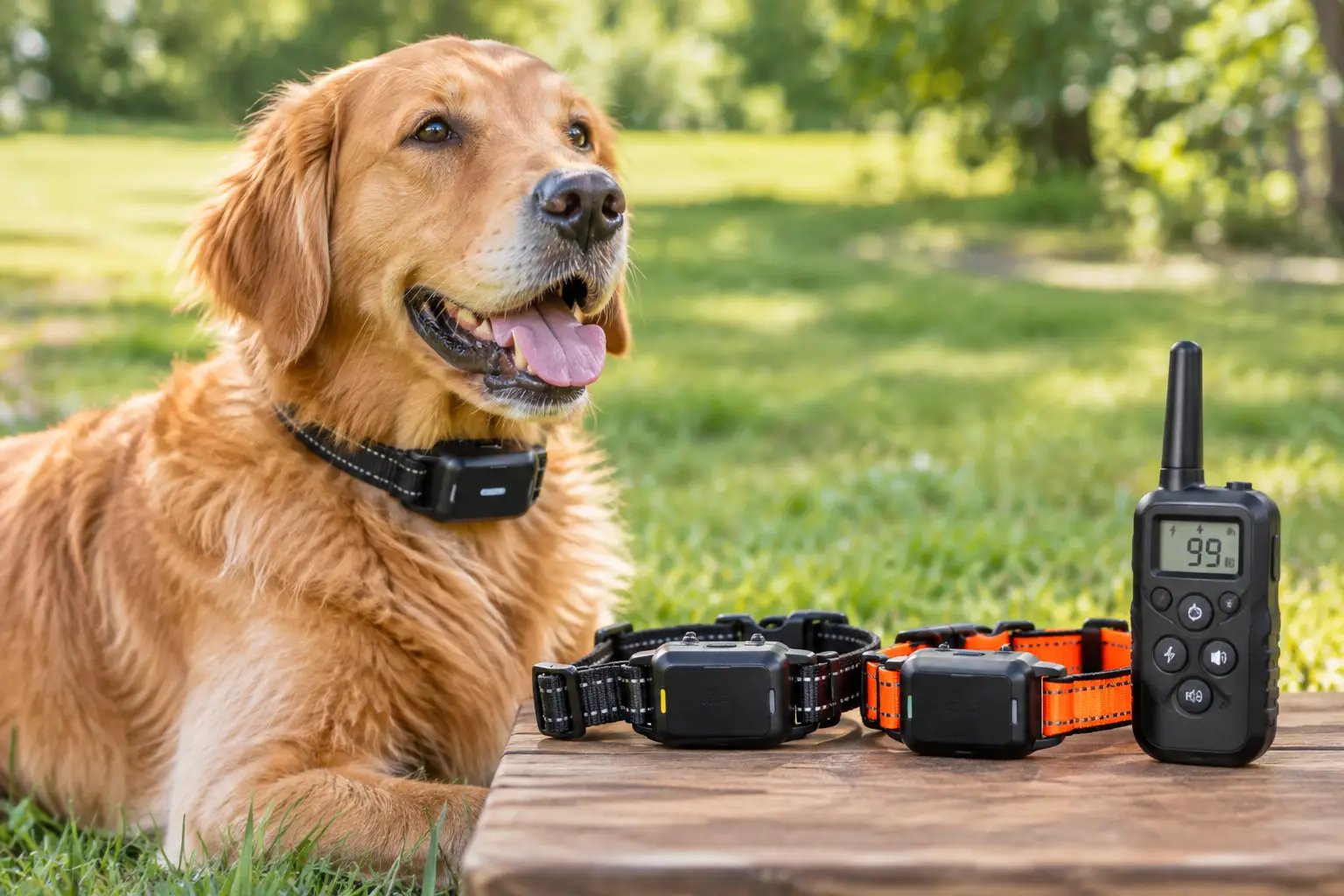
What are e collars? E collars (electronic collars, also called remote training collars) are two-part dog training tools: a handheld remote and a collar receiver. With a button press, the receiver delivers a tone, a vibration, or an adjustable static stimulation that the trainer uses as a cue or an interruption at a distance.
That’s the dictionary version. The real-world version is messier, and it’s why so many people type “what are e collars” into Google after seeing one on a neighbor’s retriever. You’ll hear them called shock collars by critics, “remote trainers” by manufacturers, and “e-collars” by hunters and working-dog handlers. The device is the same; the name usually tells you which camp the speaker belongs to. (For a neutral background read, the Wikipedia overview of shock collars covers the history, the terminology, and the ongoing controversy.)
Here’s what this guide does differently. We don’t pretend to have strapped seven collars onto our own dogs. Instead, we compared manufacturer spec sheets line by line, cross-checked them against retailer listings, read what owners and trainers consistently report, and weighed all of it against what veterinary behavior organizations actually say about these tools. You’ll get the good, the bad, and the “read this before you press any button.”
Why does that matter? Because the difference between a 7-level collar and a 100-level collar isn’t marketing fluff. It’s the difference between a tap on the shoulder and a shove. And the difference between a collar you understand and one you don’t is where most of the horror stories come from.
By the end, you’ll know how e collars for dogs work, which of the seven models fits your dog’s size and temperament, what they cost to own over five years, and when you’re better off skipping one entirely.
Quick Comparison: 7 E Collars at a Glance
Before the deep dive, here’s the snapshot. Ranges are manufacturer claims in open, line-of-sight conditions; real-world range in woods or suburbs is always shorter.
| Model | Rated Range | Static Levels | Min. Dog Size | Price Range | Best For |
|---|---|---|---|---|---|
| Educator ET-300 Mini | 1/2 mile | 100 + boost | 5 lb | Around $200–$240 | Educator ET-300 Mini: precision for most pet dogs |
| SportDOG FieldTrainer 425X | 500 yards | 21 | 8 lb | Around $120–$160 | SportDOG FieldTrainer 425X: simple, proven value |
| Dogtra 280X | 1/2 mile | 100 (low–medium) | 10 lb | Around $250 | Dogtra 280X: small and sensitive dogs |
| PetSafe 100 Yard Lite Remote Trainer | 100 yards | 15 | 8 lb | Around $70–$90 | PetSafe 100 Yard Lite Remote Trainer: backyard and in-home work |
| Garmin Sport PRO Bundle | 3/4 mile | 10 | Medium+ | Around $300 | Garmin Sport PRO Bundle: one-hand, multi-dog control |
| Dogtra 1900X | 3/4 mile | 100 (high output) | 35 lb | In the $300–$350 range | Dogtra 1900X: large, high-drive dogs |
| Bousnic 3300ft Training Collar | 3,300 ft | 1–99 | 5 lb | Around $40–$70 | Bousnic 3300ft Training Collar: tight budgets, tone/vibe use |
Looking at the table, the pattern is clear: price tracks precision and durability more than raw range. The Bousnic 3300ft Training Collar claims more distance than the SportDOG FieldTrainer 425X, yet most trainers would take the SportDOG’s proven reliability over a bigger number on the box. If you’re training a typical 20–70 lb family dog, the real decision is between the Educator ET-300 Mini and the SportDOG FieldTrainer 425X; the others solve more specific problems.
💬 One click helps other shoppers make an informed choice too! 😊
Top 7 E Collars for Dogs in 2026: Expert Analysis
Every pick below is a real, currently listed model. For each, we translate specs into what they mean on an actual walk, summarize the review sentiment we could verify, and flag the trade-offs listings tend to bury.
1. Educator ET-300 Mini — finest control for everyday pet dogs
The Educator ET-300 Mini earns its reputation by making the lowest useful level easy to find and hard to overshoot. It offers 100 static levels plus a programmable boost (1–60), tone, vibration, and a “lock and set” feature that caps the maximum level you can reach. In practice, 100 fine steps mean you can find the faint “working level” where your dog notices the sensation, turns an ear, and nothing more. The company markets its stimulation as “blunt,” a wider, less sharp feel than many budget collars.
The receiver suits dogs from about 5 lb, the remote floats and is waterproof, and both charge in roughly two hours. It’s expandable to two dogs through the ET-302 kit.
Based on comparing the specs, this is the most forgiving choice for first-time owners who plan to train at low levels and use tone or vibration most of the time. Heavy-coated breeds may need the long contact points to get consistent contact.
Across trainer forums and retailer write-ups, it’s the collar most often recommended as a “first serious remote.” The recurring caveat in owner reports is the learning curve on programming boost and lock-and-set, so read the manual before the first session.
Pros:
- ✅ 100 fine levels make a low working level easy
- ✅ Floating, waterproof remote survives creek and lake mishaps
- ✅ Lock-and-set caps levels to prevent accidental spikes
Cons:
- ❌ Menu programming confuses some first-time users
- ❌ Only expandable to two dogs, not three
Usually around $200–$240 (check the current price); strong value if you’ll actually use its precision.
2. SportDOG FieldTrainer 425X — best no-fuss value for close-range training
The SportDOG FieldTrainer 425X is the collar you hand to someone who wants a tool that just works without reading 40 pages first. Its seven-position dial offers low, medium, and high settings at each number, for 21 static levels, plus separate tone and vibration. That dial matters: you can change levels by feel without looking down, keeping your eyes on your dog.
The 500-yard range covers backyards, parks, and most close-working hunting dogs. DryTek waterproofing is rated submersible to 25 feet, and the lithium-ion battery charges in about two hours for roughly 50–70 hours of use. It fits dogs from 8 lb and can expand to three dogs with Add-A-Dog collars.
Here’s what to weigh: 21 levels are coarser than 100. For most dogs that’s fine, but very sensitive dogs may find the jump between adjacent levels noticeable. It’s a better fit for confident, medium-to-large dogs.
Retailer reviews consistently describe it as reliable and simple, and it’s widely cited as SportDOG’s most popular entry point. The main complaint pattern is that range drops in dense cover, which is true of every collar on this list.
Pros:
- ✅ No-look dial is fast and intuitive
- ✅ Submersible to 25 feet for water dogs
- ✅ Expands to three dogs on one remote
Cons:
- ❌ Fewer levels than precision-focused rivals
- ❌ 500-yard range limits big-field work
Typically around $120–$160; hard to beat for dependable, low-complexity training.
3. Dogtra 280X — gentlest output for small and soft dogs
The Dogtra 280X is built around a simple idea: small or sensitive dogs need a collar whose top end is still mild. It delivers 100 levels of low-to-medium output through Dogtra’s rheostat dial, plus nick (momentary), continuous, boost, a level lock, strong XPP vibration, and an audible tone.
The practical meaning of “low-to-medium output” is headroom without overkill. You can fine-tune near the bottom of the scale without ever reaching the intensity a 35 lb+ collar can deliver. Continuous stimulation auto-shuts off at 12 seconds, a sensible safety limit. It carries an IPX9K waterproof rating, charges over USB-C, reaches a half mile, and expands to three dogs.
What most buyers overlook: the 280X’s scale isn’t equivalent to the older 280C. Dogtra-authorized dealers note that the 280C’s maximum of 127 roughly equals level 80 on the Dogtra 280X, so upgraders must find a new working level from scratch.
Because it’s a newer model, review volume is still thinner than for older units. What exists is positive, and it inherits the long reputation of the 280C it replaces.
Pros:
- ✅ Mild output ceiling suits dogs from 10 lb
- ✅ USB-C charging and IPX9K waterproofing
- ✅ Strong vibration works well as a non-static cue
Cons:
- ❌ Too mild for large, high-drive dogs
- ❌ Smaller review base than older Dogtra models
Around $250 for the single-dog kit; worth it for small-dog owners who want precision.
4. PetSafe 100 Yard Lite Remote Trainer — simplest starter for in-home manners
The PetSafe 100 Yard Lite Remote Trainer targets a different job: interrupting counter surfing, door dashing, or lunging within your house and yard. It offers tone, vibration, and 15 static levels at a reduced intensity range versus PetSafe’s standard collar, plus a safety lock on the higher levels.
The “Lite” label is meaningful. PetSafe’s own support documentation describes a smaller receiver (about 1.4 oz) and a narrower strap for small or timid dogs. The 100-yard range sounds short, but it’s plenty for a home and suburban lot. Charging takes about two hours for up to 40 hours of use, and it fits dogs from 8 lb with 6–23 inch necks.
On paper, this is the least intimidating system here, with a digital remote that shows modes clearly. It’s not built for trail recall at distance, and PetSafe notes it isn’t for puppies under six months.
We couldn’t verify a large, consistent body of recent reviews specific to the Lite version, so treat review-driven claims cautiously. The PetSafe brand is widely stocked, which helps with replacement parts.
Pros:
- ✅ Reduced intensity range for timid dogs
- ✅ Clear digital remote with separate mode buttons
- ✅ Widely available replacement parts and support
Cons:
- ❌ 100-yard range limits outdoor recall work
- ❌ Only 15 levels, so steps are coarse
Around $70–$90; fair value for indoor and backyard use only.
5. Garmin Sport PRO Bundle — fastest one-hand control for multiple dogs
The Garmin Sport PRO Bundle wins on ergonomics. It has four dedicated buttons (continuous, momentary, vibration, tone) and a clicky top dial with 10 stimulation levels, so you can switch functions with gloves on without looking. It also includes remote-activated beacon lights and a built-in BarkLimiter with settable levels.
The 3/4-mile rated range suits upland hunting and big open spaces. The handheld is IPX7-rated and floats, battery life is around 60 hours, and the battery is user-replaceable, a real plus for long-term ownership. It trains up to three dogs with additional PT 10 dog devices.
Worth noting: several 2026 roundups describe it as a GPS collar. The spec sheets from Garmin dealers don’t list GPS tracking; that’s Garmin’s separate Alpha line. Buy the Garmin Sport PRO Bundle for training control, not for location tracking.
Owner and reviewer write-ups consistently praise its no-look handling. The main criticism is granularity: 10 levels is simple, but it’s a big step size compared with 100-level units.
Pros:
- ✅ Dedicated buttons make blind operation easy
- ✅ Beacon lights help in low-light conditions
- ✅ User-replaceable battery extends lifespan
Cons:
- ❌ Only 10 levels limits fine-tuning
- ❌ Not a GPS tracker despite some claims
Around $300; excellent for multi-dog hunters, overkill for a single couch companion.
6. Dogtra 1900X — most robust choice for large, high-drive dogs
The Dogtra 1900X is the workhorse: 100 high-output levels, nick and continuous modes, a boosted-constant button, XPP vibration, tone, a 1000-lux LED locate light, and a level lock. The receiver has a protective metal front frame and IPX9K waterproofing.
“High output” means the scale spans from very low to very strong. That’s why Dogtra limits it to dogs 35 lb and up with a 13-inch-plus neck. The receiver weighs around 5.6 oz (roughly a smartphone), so it’s designed for sturdy dogs, not small breeds. The rated range is 3/4 mile, and it expands to three dogs; a Handsfree version lets you trigger functions from a wrist-worn button.
Based on comparing the specs, this model makes sense for hunting dogs, large working breeds, or owners who train with a professional in high-distraction settings. For a mellow Labrador that walks around the block, it’s more collar than you need.
Retailer and field-trial dealer write-ups consistently recommend it for larger, stubborn dogs in rough conditions. The common caution is the receiver’s weight and bulk on medium dogs.
Pros:
- ✅ Rugged casing survives brush, water, and drops
- ✅ Wide output range for hard-to-reach dogs
- ✅ Bright locate light for dawn and dusk
Cons:
- ❌ Heavy receiver unsuitable for dogs under 35 lb
- ❌ Higher maximum output demands disciplined use
In the $300–$350 range for one dog (check the current price); worth it only for large, driven dogs.
7. Bousnic 3300ft Training Collar — lowest entry price with tone-first training
The Bousnic 3300ft Training Collar is the budget option that shows up in nearly every Amazon search. It offers beep (1–8), vibration (1–16), and a static scale of 1–99, with a claimed 3,300-foot range and versions for one or two dogs, marketed for dogs from 5 to 120 lb.
Here’s the translation: a big number range doesn’t guarantee fine, consistent steps the way premium units engineer them. Budget collars also tend to vary more from unit to unit. The receiver is water-resistant, but at least one independent review flags that the remote should be kept away from water.
This is most defensible for owners who plan to use tone and vibration only. That’s exactly what reviews on Chewy reveal: many buyers say their dogs respond to the beep and vibration, and that they rarely or never use static. A smaller number of reviews report malfunctions or concerns about the dog’s comfort, which is a reminder to inspect the neck daily.
Pros:
- ✅ Very low cost of entry
- ✅ Separate tone and vibration scales for gentle cues
- ✅ Two-dog kits available at low prices
Cons:
- ❌ Build consistency trails established brands
- ❌ Remote is less water-resistant than the receiver
Around $40–$70 depending on the kit; good value only if you stick mostly to tone and vibration.
Head-to-Head: Durability and Features Compared
| Model | Waterproofing | Multi-Dog | Boost / Lock | Best For |
|---|---|---|---|---|
| Educator ET-300 Mini | Waterproof, floating remote | Up to 2 | Boost + lock-and-set | Educator ET-300 Mini: precise low-level work |
| SportDOG FieldTrainer 425X | Submersible to 25 ft | Up to 3 | No boost | SportDOG FieldTrainer 425X: simple field use |
| Dogtra 280X | IPX9K | Up to 3 | Boost + level lock | Dogtra 280X: small dogs |
| Garmin Sport PRO Bundle | IPX7, floating handheld | Up to 3 | BarkLimiter | Garmin Sport PRO Bundle: multi-dog hunters |
| Dogtra 1900X | IPX9K, metal frame | Up to 3 | Boost + level lock | Dogtra 1900X: large, rugged use |
The safety features column is the one to study. Level locks on the Educator ET-300 Mini, Dogtra 280X, and Dogtra 1900X prevent the single most common e-collar accident: bumping the dial up in your pocket. The SportDOG FieldTrainer 425X compensates with a tactile dial you can feel, which is why its lack of a lock matters less in practice.
✨ Don’t miss the right fit for your dog!
🔍 Take your training to the next level with this carefully curated lineup. Click a highlighted model to check current pricing and availability. The right collar, used at the lowest effective level, can help you get calmer walks and more reliable recalls the whole family will enjoy!
How Do E Collars Work? Tone, Vibration, and Static Explained
Every e-collar has the same three parts: a transmitter (the remote), a receiver (the box on the collar), and two contact points that touch the dog’s skin. When you press a button, the remote sends a radio signal to the receiver, which delivers one of three outputs.
Tone is a beep. On its own it means nothing to your dog; it gains meaning when you pair it with something, such as a treat for “come” or a warning before another cue. Many owners who ask how do e collars work are surprised to learn that some dogs end up responding to tone alone.
Vibration is a buzz, like a phone on silent. It’s non-electrical but not automatically “gentler.” Some dogs find vibration more startling than a very low static level, so it’s worth watching your dog’s body language rather than assuming.
Static stimulation is a small electrical pulse between the contact points. At the lowest levels, most dogs show only a faint reaction, like an ear flick. At the upper levels, it is plainly painful. That range is exactly why level count, level locks, and output ceilings matter so much.
Collars also distinguish between momentary (a brief pulse regardless of how long you hold the button) and continuous (lasting while the button is held, up to a safety cutoff). Boost adds a preset number of levels for a single press.
Here’s the key idea: an e-collar communicates through timing and consistency. The device can’t teach anything by itself. It only marks a moment. What your dog learns depends on what you pair with that moment, which is why trainers who use them emphasize pairing cues with rewards and starting at the lowest perceptible level.
Getting Started: Your First 30 Days With an E Collar
If you’ve decided an e-collar is right for your situation, the first month determines whether it becomes a clear communication tool or a source of fear. Here’s a practical roadmap.
🗓️ Week 1: Wear it switched off
Put the collar on for everyday life (walks, meals, play) without using it. Your dog should associate it with nothing special. Fit is critical: snug enough that both contact points touch skin, loose enough to slide one finger under the strap.
🔍 Week 2: Find the working level
In a quiet room, start at level 0 or 1 and press the momentary button once, increasing one level at a time. Stop at the first level where your dog shows a small sign: an ear twitch, a head turn, a pause. That’s the working level. Write it down; it will change with distraction.
🎾 Weeks 2–3: Pair with what your dog already knows
Use the collar only for known cues (“come,” “sit”) on a long line. Tap, give the cue, and reward generously when your dog responds. The long line means you’re never relying on the collar alone.
🌳 Week 4: Add mild distractions slowly
Move to a quiet park. Distractions raise the level your dog notices, but increase in small steps rather than jumping.
⚠️ Common first-month mistakes
- Using the collar to punish a behavior after the fact
- Leaving the collar on for more than 8–12 hours, which risks pressure sores
- Never rotating the collar’s position on the neck
- Skipping a certified trainer when the problem is aggression or fear
Maintenance habit worth building: every evening, check the skin under the contact points for redness and wipe the points clean.
Which E Collar Fits Your Dog? Three Real-World Scenarios
Specs make more sense when you attach them to a real life. Here are three common profiles and how the reasoning plays out.
🏙️ Scenario 1: The apartment owner with a 15 lb terrier
Maya lives in a city apartment and walks her reactive terrier twice a day. She wants a tone or vibration cue to break fixation on other dogs at 20 feet, not 2,000. Budget: about $250.
The Dogtra 280X fits well: its low-to-medium output ceiling means that even a mistake stays mild, and the XPP vibration is strong enough to work as her main cue. The Educator ET-300 Mini is a close second. That said, reactivity often has a fear component, so a session with a veterinary behaviorist first is the smarter spend.
🌲 Scenario 2: The weekend hiker with a 60 lb shepherd mix
Derek hikes trails most weekends and wants reliable off-leash recall. Budget: around $200. Frequency: two or three outings a week.
The Educator ET-300 Mini gives him the fine control to stay at a low working level, a floating remote for stream crossings, and a half mile of range. If simplicity matters more than precision, the SportDOG FieldTrainer 425X saves him money.
🦆 Scenario 3: The upland hunter with two pointers
Carla runs two 50 lb pointers in open fields every season. She needs no-look handling and multi-dog control.
The Garmin Sport PRO Bundle is built for her: dedicated buttons, beacon lights, and three-dog capacity. If she later adds a large, hard-charging retriever, the Dogtra 1900X becomes the better upgrade.
Troubleshooting: 5 Common E Collar Problems and Fixes
Most complaints about e collars trace back to five fixable issues. Before you decide a collar “doesn’t work,” run through this list.
1️⃣ “My dog doesn’t react at all”
The contact points probably aren’t touching skin. Thick-coated breeds (Huskies, Newfoundlands, doodles) usually need long contact points, which the Educator ET-300 Mini, SportDOG FieldTrainer 425X, and Garmin Sport PRO Bundle support. Tighten the strap before raising the level.
2️⃣ “My dog reacts only when the collar is on”
This is called “collar-wise” behavior. Fix it by having your dog wear the collar for everyday life, including times you never use it, so it stops predicting training sessions.
3️⃣ “The range seems far shorter than advertised”
Rated range assumes open, line-of-sight conditions. Trees, hills, and houses cut it significantly. Hold the remote upright, away from your body, and keep the antenna clear.
4️⃣ “My dog seems anxious or avoids me”
Stop using static immediately. Stress signals (tucked tail, lip licking, yawning, avoiding the owner) are a sign the level is too high, timing is off, or the collar is the wrong tool. Go back to reward-only training and consult a qualified professional.
5️⃣ “There’s redness on the neck”
That’s usually pressure necrosis from contact points worn too long in one spot. Limit wear time, reposition the collar every few hours, and let the skin heal fully before resuming. See your vet if there’s broken skin.
How to Choose the Best E Collar for Dog Training
Choosing the best e collar for dog training comes down to seven decisions, in this order:
- Decide whether you need one at all. Many problems (pulling, jumping, basic recall) resolve with reward-based training alone.
- Match output to your dog’s size and temperament. Small or soft dogs need a low-output collar like the Dogtra 280X; big, driven dogs may need a wider range like the Dogtra 1900X.
- Prioritize level count. More levels mean smaller steps and an easier-to-find working level.
- Insist on a level lock or tactile dial. Accidental level jumps are the most avoidable mistake.
- Buy the range you’ll actually use. A backyard trainer doesn’t need a mile; a hunter does.
- Check waterproofing on both pieces. Receivers are usually waterproof; remotes vary.
- Look at the support ecosystem. Replacement batteries, contact points, and add-on collars keep a system useful for years.
If you’re shopping in the US, prioritize established brands with warranty service here. Replacement parts and battery availability often determine how long a collar stays in service more than the original build quality does.
E Collar vs Shock Collar vs Vibration Collar: What’s the Difference?
The phrase e collar vs shock collar causes more confusion than any other in this category, so let’s be precise.
Technically, a modern “e-collar” and a “shock collar” are the same kind of device: a remote collar that can deliver electrical stimulation. The terminology is a matter of framing. Manufacturers prefer “e-collar” or “remote trainer” and emphasize low-level stimulation; critics use “shock collar” to emphasize that the device delivers an electrical stimulus that can be painful. Neither label changes what the hardware can do.
A vibration-only collar is genuinely different. It has no electrical output at all, just a motor. Some owners of deaf dogs use vibration as a recall signal paired with food, which is a clever, reward-based use.
Bark collars and invisible (electric containment) fences are separate categories: they trigger automatically rather than by a person pressing a button, so timing is controlled by the device rather than the handler.
| Tool | How It Works | Handler Controls Timing? | Main Welfare Concern | Best For |
|---|---|---|---|---|
| Remote e-collar | Tone, vibration, static by remote | Yes | Misuse at high levels | Distance cues with an experienced handler |
| Vibration-only collar | Buzz, no electrical output | Yes | Can still startle sensitive dogs | Deaf dogs, gentle cues |
| Automatic bark collar | Triggers on barking | No | Can fire on the wrong dog or noise | Rarely the best first choice |
| Long line + rewards | Physical leash, food, play | Yes | Minimal | Recall training for most dogs |
The table shows why handler timing matters: automatic devices can’t tell why a dog barked. It also shows a long line with rewards covers much of what people buy e-collars for, at a fraction of the risk.
Are E Collars Safe? What Veterinary Behaviorists Say
This is where honesty matters most, so here’s the evidence as it stands. When people ask “are e collars safe,” they usually mean two questions: can they physically injure a dog, and can they harm a dog’s emotional well-being?
Physically, a properly fitted collar at low levels rarely causes injury, but skin sores from prolonged wear are a documented, preventable risk.
The bigger debate is behavioral. The American Veterinary Society of Animal Behavior’s position statement on humane dog training recommends reward-based methods for all dog training and advises against aversive tools, including electronic collars. It cites research linking aversive methods to stress-related behaviors, and it concludes there is no evidence that aversive training is more effective than reward-based training. The organization reaffirmed that stance on its website in 2026.
Across the Atlantic, the British Small Animal Veterinary Association’s statement on aversive training methods takes the same view, naming electric shock collars among the devices it recommends against.
On the other side, many hunting-dog handlers, working-dog professionals, and “balanced” trainers argue that low-level stimulation, carefully conditioned, gives off-leash dogs more freedom and safety. The American Kennel Club, for instance, has supported their use in some sporting contexts.
What does this mean for you? If your goal is ordinary pet manners, the veterinary consensus says you don’t need one. If you’re considering an e-collar for a specific distance problem, work with a credentialed trainer, and treat static as the last resort rather than the default.
Safety, Regulations, and Legal Status
In the United States, there is no federal ban on e-collars, and they’re widely sold. That doesn’t mean “anything goes.” State animal cruelty laws apply to any training tool, so misuse that causes injury can still carry legal consequences. A few local jurisdictions have also restricted them; Boulder, Colorado, is frequently cited as an example, though you should confirm current local ordinances before relying on that.
For electronics, look for FCC compliance markings on the remote, which indicate the radio transmitter is authorized for US use. For batteries, stick with reputable brands: lithium cells in cheap devices are more likely to fail, and replacing them with the manufacturer’s part matters.
Internationally, rules are stricter. Wales banned electronic collars in 2010. England drafted the Animal Welfare (Electronic Collars) (England) Regulations 2023 to ban remote-controlled collars from February 2024, and many outlets reported it as a done deal. However, that instrument was never brought into force, so e-collars remained legal to use in England as of late 2025. Several other countries, including Germany, Denmark, Switzerland, and France, restrict or ban their use.
Practical safety checklist:
- ✅ Use a level lock whenever the collar has one
- ✅ Keep maximum wear time under 8–12 hours
- ✅ Never use static on puppies under six months
- ✅ Never use an e-collar to address aggression without a professional
Features That Actually Matter (and Ones That Don’t)
Marketing copy on e collars for dogs is loud. Here’s how to cut through it.
✅ Features that genuinely matter
- Level count and step size. The difference between 10 and 100 levels decides whether you can find a faint working level. It’s the single most welfare-relevant spec.
- Level lock or lock-and-set. Prevents accidental spikes, as on the Educator ET-300 Mini and Dogtra 1900X.
- Separate tone and vibration buttons. They make non-static cues fast and habitual.
- Interchangeable contact points. Essential for thick coats.
- Momentary-only mode or auto shutoff. Limits how long stimulation can last.
❌ Features that matter less than you’d think
- Huge range numbers. A 3,300-foot rating is meaningless if you can’t see your dog at that distance, and timing requires seeing what your dog is doing.
- “Humane shock” labels. There’s no regulated definition; judge by levels and output ceilings instead.
- LED screens with dozens of icons. Clarity beats complexity when you’re reacting in real time.
- Automatic bark modes on a training collar. Handy for some, but it’s a different tool with different risks.
The takeaway: pay for precision and safety controls, not for distance you’ll never use.
Long-Term Cost and Maintenance
The sticker price is only part of what you’ll spend. Batteries, contact points, straps, and add-on collars add up over five years.
| Model | Upfront Price Range | Likely 5-Year Extras | Replaceable Battery? | Best For |
|---|---|---|---|---|
| Educator ET-300 Mini | Around $200–$240 | Battery, strap, contact points | Yes | Educator ET-300 Mini: long-term pet use |
| SportDOG FieldTrainer 425X | Around $120–$160 | Battery kit, strap | Yes | SportDOG FieldTrainer 425X: budget longevity |
| Garmin Sport PRO Bundle | Around $300 | Battery (user-replaceable) | Yes | Garmin Sport PRO Bundle: heavy field use |
| Bousnic 3300ft Training Collar | Around $40–$70 | Likely full replacement | Limited | Bousnic 3300ft Training Collar: short-term use |
The numbers flip the budget story. A Bousnic 3300ft Training Collar may cost less upfront, but budget units are more likely to be replaced outright when a battery fades. The SportDOG FieldTrainer 425X and Educator ET-300 Mini, with serviceable batteries and parts, often cost less per year of use.
Maintenance routine that stretches lifespan:
- 🔋 Charge fully before storage and every few months when idle
- 🧼 Wipe contact points and the receiver weekly
- 🔩 Check contact points are tight; loose ones cause inconsistent contact
- 🧴 Rinse off saltwater or mud after outings
Common Mistakes to Avoid When Buying an E Collar
Most regret comes from buying the wrong collar for the dog, not from a defective product. Here are the patterns to avoid.
Buying for the dog you imagine, not the dog you have. A 12 lb dog doesn’t need a 35 lb+ collar “for when it’s older.” Output ceilings exist for a reason.
Choosing range over precision. It’s tempting to see 3,300 feet and assume more is better. For most pet owners, 100 levels matter far more than an extra half mile.
Skipping the fit check. Receivers have weight. The Dogtra 1900X receiver is about the weight of a smartphone, which is fine on a Labrador and unfair on a Whippet.
Treating the collar as a shortcut. An e-collar doesn’t teach “come.” It marks moments during training you’ve already done. Buyers expecting instant fixes are the most likely to overuse it.
Ignoring the remote’s waterproofing. Receivers are usually waterproof; remotes vary. If you hunt waterfowl, a floating remote like the one on the Educator ET-300 Mini or Garmin Sport PRO Bundle matters.
Not budgeting for a trainer. A few sessions with a qualified professional often matter more than the model you choose.
Frequently Asked Questions About E Collars
❓ Is it legal to use an e collar in the US?
❓ What is the best e collar for a small dog?
❓ Can I buy an e collar with only vibration and tone?
❓ How long can a dog wear an e collar each day?
❓ Do professional trainers recommend e collars for puppies?
Conclusion: Should You Buy an E Collar?
So, what are e collars really? They’re remote communication tools that can send a beep, a buzz, or an electrical pulse to your dog from a distance. In skilled hands, used at the lowest perceptible level and paired with rewards, some owners find them helpful for off-leash freedom. In careless hands, they’re a fast way to damage trust.
If you do buy one, choose based on your dog, not the box. The Educator ET-300 Mini is the most versatile pick for everyday pet dogs thanks to its fine control and safety locks. The SportDOG FieldTrainer 425X delivers dependable basics at a lower price. Small-dog owners should look first at the Dogtra 280X, while hunters running several dogs will appreciate the Garmin Sport PRO Bundle. The Dogtra 1900X is for large, driven dogs only, and the PetSafe 100 Yard Lite Remote Trainer and Bousnic 3300ft Training Collar suit tight budgets and close-range, tone-first use.
And weigh the other side honestly. Leading veterinary behavior organizations recommend reward-based training for everything, and for many common problems, a long line, good treats, and patience work just as well.
Whatever you choose, start low, stay consistent, and keep your dog’s comfort at the center of every session.
🐾 Ready to find the right fit?
👉 Pick the collar that matches your dog’s size, temperament, and training goals. Click any highlighted model above to check current pricing and availability, and give your dog the clear, consistent communication they deserve!
Recommended for You
- Small Dog Shock Collar With Remote: 7 Smartest, Safest Picks (2026)
- Underground Electric Fence Wire for Dogs: 7 Smart Picks (2026)
- Above Ground Invisible Fence: 7 Best No-Dig Picks That Work (2026)
Disclaimer: This post contains affiliate links. As an Amazon Associate, I earn from qualifying purchases made through these links, at no additional cost to you.
✨ Found this article helpful? Share it with someone who needs it! 💬🤗