
In This Article
Introduction: Why a Removable Dog Fence Makes So Much Sense in 2026
What Is a Removable Dog Fence?
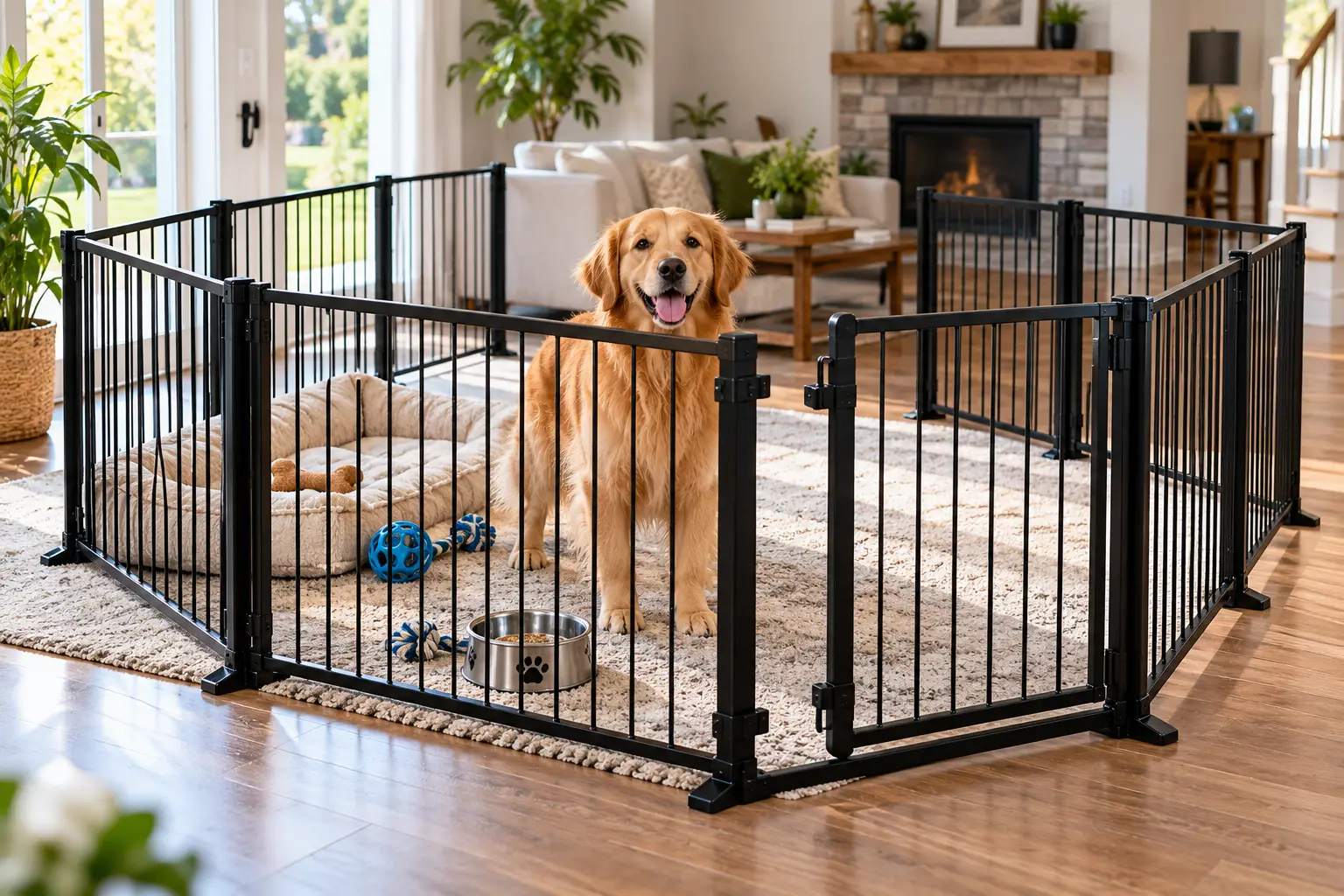
A removable dog fence is a pet barrier you can install without digging post holes or pouring concrete, then take down, move, or store when you no longer need it. It usually comes as staked metal panels, a folding exercise pen, rolled plastic mesh, or a wireless radio boundary paired with a receiver collar.
That simple idea solves a surprisingly long list of headaches. 🐕 Maybe you rent and your lease forbids anything permanent. Maybe your HOA has opinions about fences (they always do). Or maybe you just need to keep a new puppy off the vegetable bed this summer and away from the pool next summer. A removable dog fence lets you build containment around your life right now, instead of committing to a fence line for the next 20 years.
The catch? “Removable” covers wildly different products. A 24-inch puppy pen and a ¾-acre wireless system share a shopping category, but they solve completely different problems. The American Kennel Club’s overview of dog fence types makes a point worth remembering: every style has tradeoffs. Open bar designs, for example, let high-prey-drive dogs see every squirrel, and small dogs may squeeze between the bars.
So this guide does the sorting for you. You’ll find 7 real products across four styles, side-by-side comparison tables, a setup walkthrough, real-world buyer scenarios, and an honest cost breakdown. One note on method: our analysis is built from manufacturer spec sheets, published installation documents, and aggregated retailer reviews. We don’t claim hands-on testing we haven’t done. Instead, we translate the specs into what they mean for your dog, your yard, and your wallet. ✅
Quick Comparison: The Best Removable Dog Fence Options at a Glance
Short on time? This table sums up all seven picks. Prices are approximate ranges at the time of writing and vary by size and seller, so always check the current price.
| Product | Type | Height / Coverage | Approx. Price | Best For |
|---|---|---|---|---|
| MidWest Homes for Pets Folding Metal Exercise Pen | Folding exercise pen | 24″–48″ tall, ~16 sq ft | $35–$90 | MidWest fits puppies, small dogs, and travel |
| Amazon Basics Foldable Octagonal Metal Exercise Pen | Folding exercise pen | 24″–48″ tall, 8 panels | $25–$90 | Amazon Basics fits tight budgets |
| FXW Garden Fence 40in, 16 Panels | No-dig staked panels | 40″ tall, ~36 ft run | $70–$110 | FXW fits patios and yard sections |
| Zippity Outdoor Products 39in No-Dig Metal Fence (WF29006) | No-dig staked panels | 39″ tall, 15 ft per box | $130–$155 | Zippity fits curb appeal and small dogs |
| Tenax Pet Fence Select (4′ x 100′) | Rolled polypropylene mesh | 4 ft tall, 100 ft roll | $60–$95 (roll only) | Tenax fits big areas on a budget |
| PetSafe Wireless Pet Containment System (PIF-300) | Wireless boundary | Up to 90-ft radius (½ acre) | $180–$300 | PetSafe PIF-300 fits trained dogs, simple setup |
| PetSafe Stay & Play Compact Wireless Fence | Wireless boundary | Up to 105-ft radius (¾ acre) | $250–$370 | Stay & Play fits bigger yards, rechargeable collar |
Looking at the table above, the split is clear: the two exercise pens and the Tenax Pet Fence Select are the cheapest ways to create a physical barrier, while the FXW Garden Fence and Zippity panels trade a higher cost per foot for a cleaner, more “real fence” look. The two PetSafe systems cover far more ground than any physical option here, but they only work on a dog wearing a receiver collar, and they don’t keep other animals out.
If you remember one thing, make it this: choose the style first (pen, panels, mesh, or wireless), then choose the product. Most disappointing purchases come from buying the right product in the wrong category.
💬 One click helps other shoppers make an informed choice too! Tap a highlighted pick to check today’s price and availability. 😊
Top 7 Removable Dog Fence Picks: Expert Analysis
Each pick below includes what the specs mean in real life, who it suits, what buyers consistently report, and where it falls short. We’ve ordered them from simplest to most high-tech.
1. MidWest Homes for Pets Folding Metal Exercise Pen — most versatile height range
The MidWest Homes for Pets Folding Metal Exercise Pen stands out because it comes in five heights (24, 30, 36, 42, and 48 inches), so you can size the barrier to your dog instead of hoping a one-size product works.
Each pen uses eight 24-inch-wide hinged panels that form roughly 16 square feet of play space as an octagon. Because the panels hinge, you can also open the pen into a straight run to block a doorway, wall off a patio corner, or guard a flower bed. Versions with a door use a step-through gate with secure latches, and MidWest sells a 2-panel extension kit if you outgrow the footprint. Finishes come in black e-coat or gold zinc; on paper, zinc plating holds up better to outdoor moisture than paint alone.
This is the pick for puppies, small and medium dogs, and renters who want one product that works indoors, outdoors, and on the road. Keep expectations realistic, though: 16 square feet is a play zone, not a yard.
Across retailer listings, buyer feedback centers on quick setup and flat folding for storage. The recurring caution, common to all freestanding pens, is that a strong dog can shove an unanchored pen, so use the ground stakes on grass.
Pros:
- ✅ Five heights let you match your dog’s size
- ✅ Hinged panels double as a straight barrier
- ✅ Folds flat for car trips and closet storage
Cons:
- ❌ Small footprint unless you buy extension panels
- ❌ Freestanding pens can be pushed by strong dogs
💰 Expect roughly $35–$90 depending on height and door option, which is excellent value for a pen this flexible.
2. Amazon Basics Foldable Octagonal Metal Exercise Pen — best budget starter pen
The Amazon Basics Foldable Octagonal Metal Exercise Pen delivers the classic eight-panel pen layout at one of the lowest entry prices in the category.
It comes in heights from 24 to 48 inches, and the sizing guidance is refreshingly specific: the 30-inch pen targets dogs up to about 20 inches tall, while the 42-inch version is rated for dogs up to about 26 inches tall. That shoulder-height guidance is more useful than vague “small/medium/large” labels, because it helps you estimate jump-over risk. The pen includes a latching door and ground stakes for grass, and the listings note a one-year warranty.
Based on comparing the specs, the Amazon Basics pen is nearly a twin of the MidWest design, so the decision mostly comes down to price on the day you shop. It’s a smart choice for first-time puppy owners who aren’t sure how long they’ll need a pen.
Aggregated reviews are mixed but informative. Buyers frequently praise easy setup and adequate sturdiness for small pets, while a share of reviewers feel the build quality doesn’t match pricier pens. Some also note a bar across the bottom of the door that makes stepping in and cleaning up slightly awkward.
Pros:
- ✅ One of the lowest prices for a full-size pen
- ✅ Clear shoulder-height sizing guidance per model
- ✅ Door and ground stakes included
Cons:
- ❌ Build quality reviews are less consistent than premium pens
- ❌ Bottom door bar can be a tripping point
💰 Expect about $25–$90 by height, which makes it the best-value pen if your dog is small and calm.
3. FXW Garden Fence 40in, 16 Panels — longest no-dig run per box
The FXW Garden Fence 40in, 16 Panels gives you roughly 36 feet of 40-inch-tall metal fencing in one box, enough to close off a real chunk of a patio or backyard.
The panels install by pressing their ground rods into the soil, so there’s no digging or concrete. That 40-inch height is the practical sweet spot for many small and medium dogs. FXW also sells the same style in other heights (24, 32, and 45 inches) and in longer sets, so you can scale up later without mixing brands or styles. What most buyers overlook: gate options vary by listing, so confirm one is included if you need walk-through access.
This is the pick for homeowners or renters who want a fence that actually looks like a fence, around a patio, a dog run, or a section of yard. It’s not ideal for big athletic jumpers.
Published buyer reviews consistently mention easy installation and good packaging, and several owners describe coming back to buy additional panel sets to expand their enclosure, which says a lot about long-term satisfaction.
Pros:
- ✅ Long run per box at a reasonable price
- ✅ Multiple heights and expandable sets
- ✅ Decorative look suits front and back yards
Cons:
- ❌ 40 inches won’t stop athletic large breeds
- ❌ Holding power depends heavily on your soil
💰 Expect roughly $70–$110 for the 16-panel set, a strong value per foot for a metal no dig dog fence.
4. Zippity Outdoor Products 39in No-Dig Metal Fence (WF29006) — most polished semi-permanent look
The Zippity Outdoor Products 39in No-Dig Metal Fence (WF29006) is the one to pick when appearance matters as much as containment.
Each box holds five 39-inch-high by 36-inch-wide powder-coated panels plus six metal stakes, each about ½ inch in diameter and 48 inches long, for 180 inches (15 feet) of fence. You slide a stake through the loops of two adjoining panels and drive it into the ground, so each joint gets its own anchor, which is stiffer than single-rod designs. Zippity estimates about 30 minutes of assembly per box and backs the powder coating with a one-year guarantee against rust. A matching gate kit (WF29014) is sold separately.
Here’s what to weigh: Zippity itself labels this fence semi-permanent and not recommended as an enclosure for large dogs. That honesty is useful. It’s ideal for small dogs, garden protection, and blocking gaps, not for containing a 70-pound escape artist.
The review base at major retailers is small but very positive, with buyers highlighting easy installation and using it to stop small dogs from slipping between wrought-iron posts.
Pros:
- ✅ Stake at every joint for a stiffer line
- ✅ Clean, finished look with a matching gate option
- ✅ One-year powder-coat rust guarantee
Cons:
- ❌ Manufacturer says it’s not for large dogs
- ❌ Higher cost per foot than mesh or FXW panels
💰 Expect around $130–$155 per 5-panel box, fair value if a tidy look is a priority.
5. Tenax Pet Fence Select (4′ x 100′) — cheapest way to fence a big area
The Tenax Pet Fence Select (4′ x 100′) covers 100 linear feet at 4 feet tall for less than many single boxes of metal panels.
It’s UV-treated polypropylene mesh with roughly 1.77 x 1.97-inch openings, and retailers list a certified breaking load around 600–650 pounds. In practice, that means the mesh itself is rarely the weak point; the posts are. The roll doesn’t include posts, so you’ll need step-in or T-posts, or Tenax’s DIY kit, which bundles the roll with 10 adjustable poles, self-locking ties, and sod staples. The round black mesh is also hard to see from a distance, a big plus if you dislike the “cage” look.
This is the most practical option for larger dogs in a big area on a budget, as long as your dog isn’t a chewer. Tenax rates the Select line for a field life of over 10 years.
It’s well rated at farm retailers. The most important caution, raised in retailer Q&A, is that the fence is 100% plastic, so dogs prone to chewing can breach it.
Pros:
- ✅ 100 feet of 4-foot fence at a low price
- ✅ Nearly invisible once installed
- ✅ Rot-proof, rust-proof, and UV-treated
Cons:
- ❌ Chewers can bite through plastic mesh
- ❌ Posts and hardware cost extra
💰 Expect roughly $60–$95 for the roll alone (kits run higher), outstanding value per foot.
6. PetSafe Wireless Pet Containment System (PIF-300) — simplest plug-in wireless boundary
The PetSafe Wireless Pet Containment System (PIF-300) creates an invisible circular boundary without a single stake, panel, or buried wire.
A transmitter plugged in indoors sends a radio signal adjustable from about 5 to 90 feet in every direction, which works out to a circle up to 180 feet across (about ½ acre). The receiver collar fits dogs 8 pounds and up with neck sizes from 6 to 28 inches, offers a tone-only mode plus adjustable static levels, and runs on a replaceable battery. The kit includes 50 boundary training flags. Setup guidance says to keep the transmitter at least 3 feet from utility boxes and large appliances.
This works best for already-trained, non-reactive dogs on fairly open lots. The circle shape is the big limitation: it won’t follow a rectangular property line, and it does nothing to stop other animals or people from coming in.
Owner feedback is generally positive about how fast it sets up. Recurring complaints are disposable collar batteries and metal objects, like parked cars inside the radius, interfering with the boundary.
Pros:
- ✅ Plug-in setup with nothing to dig or stake
- ✅ Covers up to ½ acre from one transmitter
- ✅ Adds more dogs with extra collars
Cons:
- ❌ Circular boundary only; metal can distort it
- ❌ Collar uses disposable batteries
💰 Expect roughly $180–$300, solid value if your dog is already responsive to boundary training.
7. PetSafe Stay & Play Compact Wireless Fence — biggest coverage, rechargeable collar
The PetSafe Stay & Play Compact Wireless Fence is the upgrade pick: more range, a rechargeable collar, and a smarter transmitter.
Its boundary reaches up to about 105 feet in every direction (roughly 210 feet across, or ¾ acre). The receiver collar charges in about 2–3 hours and lasts up to around 3 weeks per charge, depending on use. It suits dogs 5 pounds and up with 6–28-inch necks, offers tone-only and five static levels, and the transmitter includes a power-loss alarm. It’s also compatible with the original PetSafe PIF-300 system, and you can overlap transmitters to extend coverage.
On paper, this is the most capable removable dog fence in this guide for larger lots, as long as you’re committed to proper flag training and humane, tone-first use.
At Tractor Supply it averages roughly 4.3 out of 5 across more than 1,200 reviews at the time of writing, with praise for range and easy setup and complaints that mirror all wireless systems: boundary drift and interference.
Pros:
- ✅ Up to ¾-acre circular coverage
- ✅ Rechargeable collar with low-battery indicator
- ✅ Power-loss alarm alerts you to outages
Cons:
- ❌ Still circular and sensitive to interference
- ❌ Highest price in this lineup
💰 Expect roughly $250–$370, worth it if you need the extra radius.
The Top 7 Side by Side: Specs That Matter
| Product | Containment Method | Max Height or Radius | Anchoring | Expandable | Best For |
|---|---|---|---|---|---|
| MidWest Exercise Pen | Physical pen | 48″ tall (max) | Ground stakes | Extension kit | MidWest for puppies and travel |
| Amazon Basics Exercise Pen | Physical pen | 48″ tall (max) | Ground stakes | Buy a second pen | Amazon Basics for budgets |
| FXW Garden Fence | Physical panels | 45″ tall (max model) | Built-in ground rods | Add panel sets | FXW for yard sections |
| Zippity WF29006 | Physical panels | 39″ tall | 48″ stakes at joints | Add boxes, gate | Zippity for small dogs, looks |
| Tenax Pet Fence Select | Physical mesh | 4 ft (5 ft version) | Posts + sod staples | Longer rolls | Tenax for big areas |
| PetSafe PIF-300 | Radio boundary | 90-ft radius | None | More transmitters | PetSafe PIF-300 for open lots |
| Stay & Play Compact | Radio boundary | 105-ft radius | None | Overlap transmitters | Stay & Play for larger lots |
Read across the “Anchoring” column and you’ll see the real difference between these products. The Zippity fence’s stake-at-every-joint design and Tenax‘s post-based setup resist pushing better than pens, while both PetSafe systems trade physical strength for sheer coverage. If your dog leans, digs, or bolts, anchoring matters more than height.
✨ Ready to give your dog safe freedom outside?
🔍 Take your backyard setup to the next level with this carefully curated lineup. Click a highlighted pick to check current pricing and availability, and find the removable dog fence that keeps your pup happy and your yard intact! 🐾
How to Set Up a No Dig Dog Fence the Right Way (Your First 30 Days)
A no dig dog fence is only as good as its installation and the first few weeks of training. Here’s a practical game plan that spec sheets and box inserts rarely spell out.
Day 1: Measure and map. Walk the perimeter with a tape measure and sketch it. Note slopes, tree roots, sprinkler heads, and anything your dog could use as a launch pad, like a bench, woodpile, or AC unit. Remember that the Zippity stakes are 48 inches long, so think about what’s underground before you start pounding.
Day 1: Install corners first. For panels, anchor corners and gate posts before straight runs; corners take the most stress. For the Tenax Pet Fence Select, set posts every 8–10 feet, pull the mesh taut, and pin the bottom edge with sod staples so a nose can’t lift it.
Days 2–7: Supervised introduction. Let your dog explore the new space on leash, rewarding calm behavior near the fence line. Walk the line daily looking for gaps at low spots.
Days 7–30: Stress-test and adjust. Most first-month failures show up as a single weak joint. Add zip ties at panel joints and an extra stake where your dog likes to lean.
For wireless systems: plan on at least two weeks of short, positive flag-training sessions. Start in tone-only mode, set the boundary flags, and teach your dog to turn back at the beep before ever relying on the system unsupervised.
🔋 Monthly maintenance tip: check collar batteries or charge levels, re-tighten stakes after heavy rain, and trim grass along mesh lines so it doesn’t sag.
Real-World Scenarios: Which Removable Dog Fence Fits Your Life?
Specs are abstract until you put a real dog in a real yard. Here are three common US buyer profiles and the reasoning behind each match.
🏠 The Renter With a Small Terrier
Budget: about $150. Use: daily, 20-foot patio off a rental townhouse. A 15-pound terrier doesn’t need a 6-foot wall, but it does need no gaps. Two boxes of Zippity panels (30 feet) would wrap most small patios with a finished look that won’t upset a landlord, and the whole thing comes out when you move. If the budget is tighter, a 30-inch MidWest or Amazon Basics pen opened into a straight barrier blocks one open side for far less.
🌳 The Suburban Family With a Lab Mix
Budget: $200–$400. Use: several hours a day, ½-acre lot, HOA bans permanent fences. Here the Tenax Pet Fence Select with posts gives a 4-foot physical barrier around a large area at a low price per foot, and it’s discreet enough to pass many HOA reviews. If the family prefers a wireless approach, the PetSafe Stay & Play Compact Wireless Fence covers the lot, but only after patient, humane training.
🚐 The Weekend RV Couple
Budget: under $100. Use: campsites, two to three weekends a month. Portability wins. A 42-inch Amazon Basics or MidWest pen folds flat in the RV bay and sets up in minutes. A wireless transmitter needs an outlet and an open site free of metal vehicles, which is a tough ask at a crowded campground.
Problem → Solution: Fixing the 5 Most Common Escape Routes
Every temporary dog fence has a weak point. The good news? Most escapes follow predictable patterns, and each has a cheap fix.
- Problem: Digging under the fence. ✅ Solution: Pin the bottom edge with sod staples every 12–18 inches, or add a low dig-barrier border along the base. Burying a few inches of mesh in an L-shape outward works too.
- Problem: Jumping over. ✅ Solution: Move up a height class (for example, from the Zippity 39-inch panel to a 4-foot Tenax run) and remove nearby launch pads like patio chairs and planters.
- Problem: Pushing panels apart. ✅ Solution: Zip-tie every joint, add stakes where your dog leans, and choose stake-at-every-joint designs for strong dogs.
- Problem: Chewing through mesh. ✅ Solution: Plastic mesh and chewers don’t mix. Switch to metal panels in the chew zone or redirect with sturdy chew toys and more exercise.
- Problem: Wireless boundary drift. ✅ Solution: Relocate the transmitter away from metal siding, appliances, and parked cars, then re-check the boundary with the included test tool and re-flag it. If drift continues, a physical barrier may simply suit your property better.
How to Choose a Removable Dog Fence (7 Steps)
The right removable dog fence comes down to your dog first and your yard second. Follow these steps in order:
- Measure your dog’s shoulder height and jumping habits. Exercise-pen makers size by shoulder height for a reason; a pen only a few inches taller than your dog’s back invites jump-overs.
- Identify your dog’s escape style. Diggers need anchored bottoms, leaners need stiff joints, and chewers need metal rather than plastic.
- Measure the area you need to enclose. Under 20 feet favors pens or a box of panels; 50–300 feet favors mesh rolls; large open lots are where wireless coverage starts to make sense.
- Check your ground. Soft lawn holds stakes well, while rocky, sandy, or very hard soil can make no-dig rods wobble. Patios and decks call for freestanding pens.
- Decide how “removable” you need it. Weekly takedown means pens; seasonal use means panels or mesh; set-and-forget-but-not-permanent means panels or wireless.
- Confirm rules. Read your lease or HOA covenants before you buy, especially for front-yard installations.
- Budget for extras. Gates, additional stakes, posts, zip ties, or extra receiver collars can add 20–50% to the sticker price.
Temporary Dog Fence vs. Permanent Fence: Which Wins?
A temporary dog fence isn’t a “lesser” fence. It’s a different tool. Permanent wood, vinyl, or chain-link fencing offers height and strength that no removable option fully matches, but it also brings permits in many towns, professional installation, and a commitment that goes with the property, not with you.
| Factor | Removable Dog Fence | Permanent Fence |
|---|---|---|
| Upfront cost | Low to moderate | High, often professional install |
| Installation | Same day, DIY, no concrete | Days to weeks, post holes, often permits |
| Max practical height | About 4–5 ft | 6 ft or more |
| Moves with you | Yes | No |
| Lease/HOA friendly | Often | Frequently restricted |
| Best for | Renters, seasonal use, small/medium dogs | Owners, large athletic dogs, long-term use |
The table shows why the choice is rarely about quality alone. If you own your home, plan to stay, and have a large athletic breed, a permanent fence is usually the safer long-term investment. For nearly everyone else, a removable option like the FXW Garden Fence or Tenax Pet Fence Select delivers most of the benefit at a fraction of the commitment.
Wireless Dog Fence: What It Can (and Can’t) Do
A wireless dog fence like the PetSafe PIF-300 or PetSafe Stay & Play Compact Wireless Fence is the most “removable” option of all: unplug the transmitter and the boundary disappears. That flexibility is genuinely useful, but it comes with limits buyers should understand up front.
⚡ What it can do: cover a large circle with no visible barrier, set up in an afternoon, and travel with you to any site with an outlet and enough open space.
❌ What it can’t do: keep other dogs, wildlife, or people out; follow a rectangular property line; or contain a dog that decides the squirrel is worth a correction. It also depends on the collar being charged and worn.
There’s also a welfare question you should weigh honestly. The American Veterinary Society of Animal Behavior’s position statements on humane training recommend reward-based methods and advise against aversive tools, which include static-correction collars. Even within the professional trainer community, the Certification Council for Professional Dog Trainers’ e-collar position statement treats electronic stimulation as a last resort rather than a first option.
What that means in practice: if you choose wireless, start with tone-only mode, invest heavily in reward-based boundary training, and talk with your veterinarian or a certified trainer, especially for anxious or reactive dogs. For many families, a physical barrier is simply the gentler first choice.
Portable Dog Fence for Yard Renters, HOAs, and Travelers
If you’re shopping for a portable dog fence for yard use while renting, your priorities are different from a homeowner’s. You need zero damage, fast removal, and something your landlord won’t even notice at move-out.
🏡 Renters: No-dig panels and pens leave only small stake holes that close up in a few weeks of normal lawn growth. Take photos of the yard before installing, and get written OK from your landlord if the fence will be visible from the street.
📋 HOA homes: Many HOAs regulate fence height, color, and front-yard placement. Black metal designs like the Zippity and FXW panels tend to blend in better than bright plastic, and the nearly invisible Tenax mesh is often the least noticeable. Still, read the covenants; “temporary” doesn’t automatically mean “exempt.”
🚗 Travelers and RVers: Pick anything that folds flat and weighs little. The MidWest and Amazon Basics pens are the go-to choices. A wireless transmitter can work at a rental cabin with open space, but plan training time before relying on it somewhere new.
Across all three groups, the smart move is the same: buy for the dog you have today and the space you have this year, then expand with add-on panels as life changes.
Long-Term Cost and Maintenance
The sticker price tells only part of the story. Here’s what each style tends to cost over a few years of real use.
| Style | Example | Approx. Upfront | Ongoing Costs | Typical Lifespan Drivers |
|---|---|---|---|---|
| Exercise pen | MidWest, Amazon Basics | $25–$90 | Near zero | Rust at joints, bent latches |
| No-dig metal panels | FXW, Zippity | $70–$155 per set | Extra stakes, gate add-ons | Coating wear, soil heave |
| Plastic mesh | Tenax Pet Fence Select | $60–$95 + posts | Zip ties, staples | UV exposure, chewing |
| Wireless | PetSafe PIF-300, Stay & Play | $180–$370 | Batteries or charging, extra collars | Collar wear, electronics |
The value story here is clear: per foot of containment, the Tenax mesh is the cheapest by a wide margin, while metal panels cost more but hold their looks for years if you maintain the coating. Wireless systems carry the highest upfront cost and small recurring costs (the PIF-300‘s replaceable batteries add up for multi-dog homes), but they cover far more area per dollar.
🔧 Maintenance basics: touch up chipped powder coating before rust spreads, re-seat stakes after freeze-thaw cycles, rinse mesh annually, and check wireless collar contact points and battery health monthly.
Common Mistakes to Avoid When Buying a Removable Dog Fence
Most regret stories come from a handful of predictable errors:
- ❌ Buying by dog weight instead of height and athleticism. A 25-pound terrier can clear a fence a 70-pound basset hound would never try.
- ❌ Ignoring the manufacturer’s own warnings. When Zippity says its panels aren’t for large dogs, believe it.
- ❌ Forgetting the gate. Climbing over your own fence twice a day gets old fast, and gates are often sold separately.
- ❌ Picking plastic mesh for a chewer. The Tenax roll is excellent, but not for a dog who treats everything as a chew toy.
- ❌ Treating wireless as plug-and-play. Skipping flag training is the fastest route to a dog who ignores the boundary, or worse, fears the yard.
- ❌ Leaving dogs unsupervised for long periods. No removable fence is designed as an all-day, unattended enclosure.
Safety, Regulations, and Standards
Removable doesn’t mean rule-free. Keep these practical safety and legal points in mind before installing any temporary dog fence.
🛑 Know what’s underground. Long stakes and fence posts can reach buried utility lines. The national 811 call-before-you-dig system covers fence installations, and the 811 Before You Dig resource library explains how to request free line marking through your state center a few business days before you start. It’s free, and it’s the step most DIYers skip.
📏 Local fence and leash rules. Many US cities and counties regulate fence height and placement, and local leash or “at-large” ordinances still apply if your dog gets out. A removable fence doesn’t change your responsibility for your dog’s whereabouts.
⚡ Electronic collar rules are evolving. Electronic training collars face growing scrutiny from veterinary behavior organizations, and some local advocacy efforts have pushed for restrictions. Check current local rules before relying on a static-correction wireless system.
🐾 Everyday safety: Provide shade and water inside any enclosure, check for sharp wire ends after shipping, keep panels away from pools without additional barriers, and never leave a dog unattended in a small pen during hot weather.
Frequently Asked Questions About Removable Dog Fences
❓ Can a removable dog fence hold a large dog?
❓ Is a wireless dog fence a good choice for a rental?
❓ How much does a no dig dog fence cost for a whole backyard?
❓ Can I use a temporary dog fence on concrete or a deck?
❓ Will a portable dog fence for yard use damage my lawn?
Conclusion: Find the Removable Dog Fence That Fits Your Dog, Not Just Your Yard
The best removable dog fence isn’t the tallest, the longest, or the most high-tech. It’s the one that matches how your dog actually escapes and how long you actually need containment.
Here’s the quick recap. For puppies, small dogs, and travel, the MidWest Homes for Pets Folding Metal Exercise Pen and the Amazon Basics Foldable Octagonal Metal Exercise Pen are affordable, foldable, and endlessly reconfigurable. For a yard section that looks like a real fence, the FXW Garden Fence 40in, 16 Panels gives the longest run per box, while the Zippity Outdoor Products 39in No-Dig Metal Fence (WF29006) wins on polish for small dogs. For big areas on a budget, the Tenax Pet Fence Select (4′ x 100′) is hard to beat, as long as your dog isn’t a chewer. And for large open lots with a well-trained dog, the PetSafe Wireless Pet Containment System (PIF-300) and the PetSafe Stay & Play Compact Wireless Fence offer coverage no physical fence here can match, ideally paired with patient, reward-based training.
Whichever path you choose, anchor it well, check it often, and never treat any temporary dog fence as a substitute for supervision. Do that, and you’ll give your dog real outdoor freedom without signing up for a permanent fence you may not want in five years. 🐕✨
🛒 Your dog’s next favorite spot is one click away!
🔍 Pick the removable dog fence that fits your space, then click a highlighted product to check current pricing and availability. A safer, happier backyard for your pup could be set up by this weekend! 🐾
Recommended for You
- Best Temporary Dog Fence for Large Dogs: 7 Options Compared
- PetSafe Wireless Fence User Guide: 7 Easy Setup Wins (2026)
- Petootsy Dog Collar Reviews: 7 Proven Picks Worth Buying (2026)
Disclaimer: This post contains affiliate links. As an Amazon Associate, I earn from qualifying purchases made through these links, at no additional cost to you.
✨ Found this article helpful? Share it with someone who needs it! 💬🤗