
In This Article
Introduction: Why the Best GPS Tracker for Equipment Pays for Itself
Picture this: it’s 6 a.m. on a Monday, and the compact track loader you parked behind the jobsite fence on Friday is simply… gone. No broken glass, no witnesses, just tire marks and a very expensive hole in your schedule. 😬 That scenario is exactly why choosing the best gps tracker for equipment has become one of the smartest small investments a contractor, landscaper, rental yard, or farm owner can make.
The numbers back up the worry. According to the most recent widely cited heavy equipment theft report from the National Insurance Crime Bureau, 11,625 pieces of heavy equipment were reported stolen in 2014, and only about 23% were ever recovered. In other words, without help, a stolen machine is far more likely to stay gone than to come back.
A good equipment GPS tracker flips those odds. It tells you where your asset is, alerts you the moment it moves when it shouldn’t, and gives police a live location to act on. But here’s the catch: the tracker market is crowded with devices built for cars, kids, and luggage, and many of them die quickly on a trailer that sits in a muddy yard for three months.
That’s why this guide focuses on what actually matters for equipment: battery life at realistic update rates, weatherproofing, mounting, subscription cost, and how each device behaves when it’s bolted to steel instead of tucked into a glovebox. We compared real spec sheets and aggregated owner feedback for seven trackers you can order on Amazon, then translated the numbers into plain-English advice. ✅
Whether you’re protecting a single generator or a mixed fleet of skid steers, mowers, and trailers, you’ll leave knowing exactly which tracker fits your situation, and which ones to skip.
What Is an Equipment GPS Tracker?
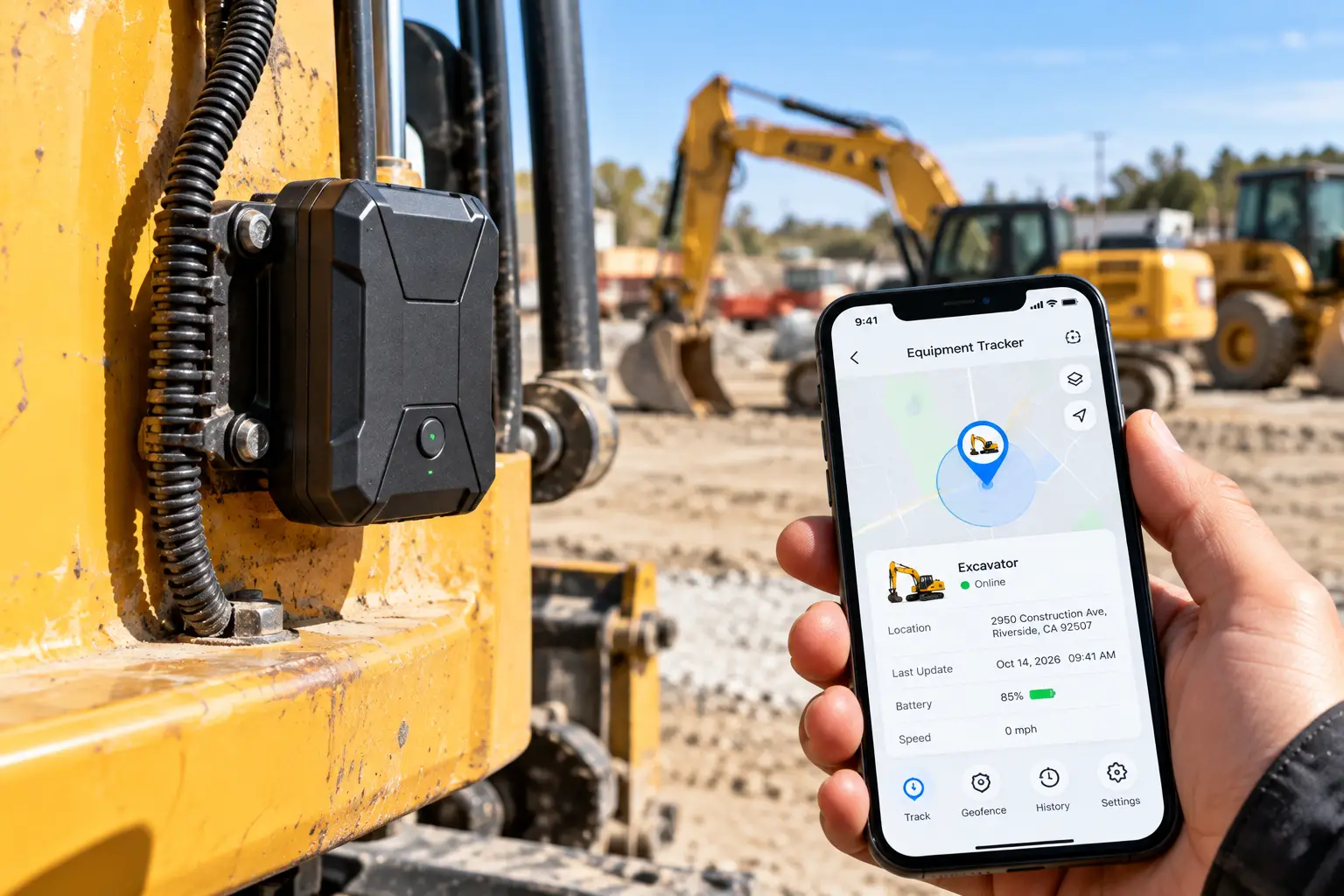
An equipment GPS tracker is a small device attached to a machine, trailer, or tool that calculates its position from satellites and reports it over a cellular network to an app. You can see where the asset is, review past movements, and get alerts when it leaves a set zone or moves after hours.
In practice, these trackers come in three flavors. Battery-powered units stick on with magnets or screws and run for weeks to years depending on how often they report. Hardwired units tap into a machine’s 12V or 24V system so they never need charging. Solar units top themselves up outdoors, which suits trailers and containers that sit idle.
One thing to keep realistic: GPS is excellent outdoors but not magic. The U.S. government’s official GPS accuracy page notes that real-world accuracy depends on factors like sky blockage and receiver quality. A tracker buried inside a steel toolbox or parked in a metal shed will struggle, which is why mounting location matters as much as the device itself.
Quick Comparison: Equipment GPS Trackers at a Glance
Before we dig into each model, here’s the 30-second version. Battery figures are the manufacturers’ claims, and they always depend on how often the tracker reports, so treat them as ranges rather than promises.
| Tracker | Power Source | Claimed Battery Life | Weatherproofing | Best For |
|---|---|---|---|---|
| LandAirSea Overdrive | Rechargeable 4,240 mAh (hardwire version available) | 4–6 weeks at fast updates; up to 2 years in low-power mode | IP67 | Best for mixed jobsite equipment |
| Trak-4 12v Hardwired GPS Tracker | 12V hardwire + internal backup battery | Backup battery: 12–18 months at daily reports | Waterproof housing | Best for machines and trailers with power |
| Trak-4 GPS Tracker | Rechargeable battery | 12–18 months at daily reports | Weatherproof | Best for parked, rarely used assets |
| Tracki Pro | Rechargeable 10,000 mAh | Up to ~7 months depending on mode | Weatherproof | Best for long gaps between checks |
| Spytec GL300 (Atlas bundle) | Rechargeable 2,600 mAh | ~2 weeks; months with Energy Saver | Waterproof magnetic case | Best for flexible, budget scheduling |
| Optimus 3.0 | Rechargeable | Over 1 month | Waterproof twin-magnet case | Best for low-cost theft alerts |
| LandAirSea 54 | Rechargeable 1,500 mAh | 1–3 weeks at fast updates; up to 6 months low-power | IP67 | Best for small tools and attachments |
Looking at the table, the split is clear: the Trak-4 12v Hardwired GPS Tracker and LandAirSea Overdrive are the “install it and stop thinking about it” options, while the Trak-4 GPS Tracker and Tracki Pro win when equipment sits idle for months. The LandAirSea 54, Spytec GL300 (Atlas bundle), and Optimus 3.0 trade runtime for low cost and small size, so they make the most sense on assets you check often or on smaller gear where a bulky tracker would stand out.
💬 One click helps other shoppers make an informed choice too! 😊
Top 7 Picks for the Best GPS Tracker for Equipment: Expert Analysis
Every tracker below is a real, currently listed product that requires a data subscription, which is normal for cellular GPS. We focus on what the specs mean once the device is mounted on a machine.
1. LandAirSea Overdrive — longest-running magnetic pick for jobsites
If you want one tracker that handles almost any piece of equipment, the LandAirSea Overdrive is the safest starting point.
Its 4,240 mAh battery is roughly three to four times larger than the company’s popular 54 model, and LandAirSea rates it at 4 to 6 weeks on fast 3-second to 3-minute updates, or up to 2 years in low-power mode. In practice, that means you can run live tracking during a busy season and still go a month between charges. The IP67 rating and strong internal magnet matter on equipment: it can survive pressure washing, mud, and rain, and it grips a steel frame without zip ties.
Based on comparing the specs, this is the pick for contractors who move machines between sites and want geofence, speed, and battery alerts in one app. If you’d rather never charge it, the Overdrive Permanent variant adds a waterproof hardwire cable and a mounting bracket.
Reviews consistently praise the battery life and magnet strength; the most common complaint is that fast-update subscription plans add up over time.
Pros:
- ✅ Large battery covers weeks of live tracking
- ✅ IP67 sealing shrugs off rain and washdowns
- ✅ Hardwired “Permanent” version available for the same platform
Cons:
- ❌ Fastest update plans get expensive over a year
- ❌ Bulkier than compact trackers, so harder to hide
💰 Hardware typically lands in the $100–$160 range at the time of writing (check the current price), and it’s excellent value if you track machines that move often.
2. Trak-4 12v Hardwired GPS Tracker — set-and-forget power for engines and trailers
The Trak-4 12v Hardwired GPS Tracker removes the biggest headache in equipment tracking: remembering to charge.
It installs with a simple two-wire harness to any 12V source, then trickle-charges its internal battery, which on its own can deliver 12 to 18 months of daily reporting. That backup matters more than it sounds: if a thief cuts power or disconnects the battery, the tracker keeps reporting. It also blends GPS with Wi-Fi-based location, which helps when a machine is pulled into a building where GPS goes blind.
What most buyers overlook is that “hardwired” usually means one trip with a multimeter, not a dealer appointment. That makes the Trak-4 12v Hardwired GPS Tracker ideal for skid steers, tractors, dump trailers with breakaway batteries, and service trucks. Plans start around $6.99 per month on annual billing, one of the lowest entry rates here.
Owner feedback highlights the low plan cost and reliable reporting; some buyers note the wiring step is a hurdle if you’ve never worked on 12V systems.
Pros:
- ✅ Never needs charging once wired in
- ✅ Backup battery keeps reporting if power is cut
- ✅ Wi-Fi location helps inside buildings
Cons:
- ❌ Requires basic wiring knowledge to install
- ❌ Not suited to unpowered tools or attachments
💰 Hardware generally sells under $100 at the time of writing, which is strong value given its low plan cost.
3. Trak-4 GPS Tracker — year-plus battery for parked assets
For equipment that sits more than it moves, the battery-powered Trak-4 GPS Tracker is the low-maintenance choice.
Trak-4 rates it at 12 to 18 months per charge, but that figure assumes one location report per day. Switch to frequent tracking and runtime drops sharply, because each GPS fix and cellular upload costs power. Translated: it behaves like a guard dog that sleeps a lot, checking in once a day until something looks wrong.
This makes the Trak-4 GPS Tracker a strong fit for seasonal equipment like a spare generator, a winter-only snowplow trailer, or an off-season mower deck. If your asset lives outdoors in full sun, the related Trak-4 Solar model claims more than 12 months on its backup battery even without sunlight.
Independent reviews agree the battery claims hold up only at daily reporting; Trak-4’s own pages also use inconsistent weatherproof wording rather than a single IP code, so mount it out of standing water.
Pros:
- ✅ Months between charges at daily reporting
- ✅ Low-cost subscription with annual billing
- ✅ Solar sibling available for outdoor storage
Cons:
- ❌ Battery drops fast with frequent live tracking
- ❌ No clearly published IP rating
💰 Expect a price under $100 at the time of writing; strong value for idle assets.
4. Tracki Pro — 10,000 mAh muscle for long gaps between checks
The Tracki Pro packs a huge 10,000 mAh battery into a magnetic, weatherproof housing.
That capacity translates into roughly 2 to 7 months per charge depending on update frequency, with a 4G LTE modem and support for GPS, GLONASS, BeiDou, and QZSS satellites. More satellite systems means faster, steadier fixes in rough terrain, like a forestry landing or a canyon road. Tracki also advertises coverage in 180+ countries, useful if equipment crosses into Canada or Mexico.
On paper, the Tracki Pro suits rental companies and farms that can’t afford a weekly charging routine. It’s also a good middle ground between short-life compact units and year-long daily-check trackers, because you can still set reasonably frequent updates.
Reviews consistently praise its stamina, but long-term owners of Tracki devices have reported inconsistent battery life, and some find plan details hard to locate because they live inside the app.
Pros:
- ✅ Very large battery for multi-month runtime
- ✅ Multi-constellation GPS for steadier fixes
- ✅ Cancel-anytime subscription structure
Cons:
- ❌ Heavier and bulkier than most competitors
- ❌ Plan pricing is buried in the app
💰 Usually priced under $100 at the time of writing; good value if charging trips are your pain point.
5. Spytec GL300 (Atlas bundle) — flexible scheduling for budget fleets
The Spytec GL300 (Atlas bundle) is one of the best-known trackers in the US, now sold with a waterproof magnetic case.
Inside is a 2,600 mAh battery that averages about two weeks on regular tracking. The real trick is Energy Saver mode: you can schedule updates from every 30 minutes (around 10 to 15 days) up to once a day (roughly 4 to 6 months). That flexibility lets one device switch between a busy-season profile and a storage profile without new hardware.
Here’s what to weigh: the bare GL300 isn’t waterproof, so the Atlas bundle’s case is essentially mandatory for equipment. Tom’s Guide measured about 12 days of battery in an older review and praised its accuracy, though it criticized data costs at the time.
Aggregated owner sentiment is positive on accuracy and support, while recurring complaints focus on charging frequency and plan cost.
Pros:
- ✅ Highly adjustable update schedule
- ✅ Waterproof magnetic case included in bundle
- ✅ Lifetime device support with an active plan
Cons:
- ❌ Two-week runtime at regular update rates
- ❌ Bare unit needs the case outdoors
💰 Hardware generally sits under $50 at the time of writing; good value for small fleets on a budget.
6. Optimus 3.0 — low-cost tracker with a twin-magnet case
The Optimus 3.0 is a lean, affordable option built around a heavy-duty case.
The tracker claims over a month of battery, and it ships in a waterproof case with two neodymium magnets, the strongest common type of permanent magnet. On equipment, magnet strength is not a minor detail: vibration from a plate compactor or a bumpy gravel road can shake weaker mounts loose. The brand also markets a low-cost subscription plan.
Based on comparing the specs, the Optimus 3.0 is best for owners who want theft alerts on a trailer or utility vehicle without paying for premium features. It’s not the most rugged pick, but the case adds meaningful protection.
Verified independent reviews are thinner than for LandAirSea or Spytec, so we can’t summarize broad owner sentiment with confidence; buy it for the case and price, and test it on your asset during the return window.
Pros:
- ✅ Twin neodymium magnets resist vibration
- ✅ Over one month of claimed battery
- ✅ Low entry cost for hardware and plan
Cons:
- ❌ Fewer independent reviews to confirm claims
- ❌ Case adds bulk, so less discreet
💰 Typically under $50 at the time of writing; solid value for basic protection.
7. LandAirSea 54 — compact, discreet pick for small tools and attachments
The LandAirSea 54 is the small, hide-anywhere tracker in this lineup.
At about 2.3 by 0.9 inches with an IP67 rating and built-in magnet, it tucks into spots bigger trackers can’t, like inside a bucket attachment frame or behind a trailer tongue. Its 1,500 mAh battery delivers 1 to 3 weeks at fast updates or up to 6 months in low-power mode, and motion sensing puts it to sleep when the asset is still. You also get a year of location history.
This makes the LandAirSea 54 ideal for high-theft small items: zero-turn mowers, attachments, and generators. Pair it with a longer-life tracker on your main machines.
Reviews across major US retailers are generally positive, averaging around 4.3 stars on one large retailer’s listing at the time of writing; complaints center on subscription cost and fast battery drain at quick refresh rates.
Pros:
- ✅ Tiny size makes it easy to conceal
- ✅ IP67 rating with strong built-in magnet
- ✅ One year of movement history
Cons:
- ❌ Short battery life at fast updates
- ❌ Ongoing plan required for every unit
💰 Usually under $40 at the time of writing; excellent value for small, frequently stolen gear.
Head-to-Head: Price, Plans, and Mounting
| Tracker | Hardware Price Range | Plan Starts Around | Mounting | Best For |
|---|---|---|---|---|
| LandAirSea Overdrive | $100–$160 | $10–$20/mo | Magnet or hardwire kit | Mixed fleets |
| Trak-4 12v Hardwired GPS Tracker | Under $100 | $6.99/mo (annual) | 2-wire + magnets | Powered machines |
| Trak-4 GPS Tracker | Under $100 | $6.99/mo (annual) | Screw or magnet | Idle assets |
| Tracki Pro | Under $100 | Varies (in-app) | Magnet | Long runtimes |
| Spytec GL300 (Atlas bundle) | Under $50 | $15–$25/mo | Magnetic case | Budget fleets |
| Optimus 3.0 | Under $50 | Low-cost tiers | Twin-magnet case | Trailers |
| LandAirSea 54 | Under $40 | $10–$20/mo | Built-in magnet | Small tools |
The pattern is worth noticing: the cheapest hardware doesn’t mean the cheapest ownership. The Trak-4 12v Hardwired GPS Tracker and Trak-4 GPS Tracker cost more upfront than the LandAirSea 54, but their lower annual plan rates can make them cheaper within the first year. Prices may vary, so check the current price and plan page before committing.
✨ Don’t miss these top-rated equipment trackers!
🔍 Take your equipment security to the next level with this carefully curated lineup. Click a highlighted tracker to check current pricing and availability. These picks will help you find stolen gear faster and sleep better at night!
How to Install and Set Up a GPS Tracker for Heavy Equipment
A great tracker mounted in the wrong spot is a mediocre tracker. Here’s a practical setup routine that works for most battery and hardwired units.
Before you mount anything
- Fully charge and activate first. Charge the battery to 100%, activate the plan, and confirm the tracker shows a live location while it’s sitting on your bench. Troubleshooting is far easier before it’s bolted under a loader.
- Pick the update rate on purpose. For theft protection on idle equipment, a slow “heartbeat” (every few hours or daily) plus instant motion alerts beats constant tracking and saves battery.
- Set geofences and after-hours alerts. Draw a fence around your yard and each active jobsite, then add a movement alert for nights and weekends. This is where most of the theft-recovery value lives.
Choosing the mounting spot
- ✅ Mount where the tracker has the clearest possible “view” up through plastic, fiberglass, or rubber; steel blocks signals.
- ✅ Use a clean, flat steel surface for magnets, and add a strap or bracket on high-vibration machines like compactors.
- ✅ Hide it from casual view, ideally in two different spots across your fleet so thieves can’t learn one hiding place.
- ❌ Avoid spots near the exhaust, hydraulic lines, or anywhere that sits in standing water.
Your first 30 days
Check the app daily for the first week to confirm reports arrive on schedule. Note the real battery drain, then adjust. If a LandAirSea Overdrive or Spytec GL300 (Atlas bundle) drains faster than expected, slow the update interval before blaming the hardware. Finally, put a recurring calendar reminder to charge battery units a week before your observed runtime runs out.
Real-World Scenarios: Matching Trackers to Your Operation
Specs only make sense in context, so here are three common US buyer profiles.
🚧 The small contractor with three machines
Profile: a mini excavator, a skid steer, and a dump trailer, moving between two or three jobsites a week; budget is tight but theft is a real worry.
Best match: a Trak-4 12v Hardwired GPS Tracker on each powered machine, and a Trak-4 GPS Tracker on the trailer. Hardwiring removes charging chores on the machines that earn money daily, while the trailer unit only needs a daily check-in plus movement alerts. Low annual plan rates keep the monthly bill predictable.
🌾 The farm or ranch with seasonal equipment
Profile: tractors used daily in season, plus implements, a hay trailer, and a generator that sit idle for months in remote fields.
Best match: a Tracki Pro or Trak-4 GPS Tracker on idle implements, where months-long battery life matters most, and a LandAirSea Overdrive on the tractor that moves around the property. Remote locations make multi-constellation satellite support and long battery life more valuable than lightning-fast updates.
🏗️ The landscaping company with mowers and small gear
Profile: six zero-turn mowers, two enclosed trailers, and several generators and blowers, used every weekday in suburbs.
Best match: a LandAirSea 54 hidden on each mower (small and discreet), with an Optimus 3.0 or Spytec GL300 (Atlas bundle) on each trailer. Crews return to the shop daily, so charging fits naturally into the end-of-day routine.
Problem → Solution: Fixing the Most Common Equipment Tracker Headaches
Even the best gps tracker for equipment can frustrate you if it’s set up poorly. Here are the five problems owners run into most, and how to fix them.
- “The battery dies way faster than advertised.” Advertised runtime assumes slow reporting. Drop the update interval, enable motion-only or low-power mode, and let the tracker sleep when the asset is parked. The Spytec GL300 (Atlas bundle) schedule options and the LandAirSea Overdrive low-power mode exist exactly for this.
- “The location jumps around or shows the wrong spot.” Usually it’s signal blockage. Move the tracker away from heavy steel and closer to a plastic panel or the top of the frame. If the machine lives indoors, a unit with Wi-Fi assist like the Trak-4 12v Hardwired GPS Tracker helps.
- “It stopped reporting entirely.” Check three things in order: battery level, plan status, and cellular coverage at the site. Remote land may simply lack signal; the tracker will usually upload once it reaches coverage again.
- “The magnet fell off on a rough road.” Clean the surface, choose a flatter spot, and add a bracket, screws, or a heavy-duty strap. The twin-magnet case on the Optimus 3.0 is designed to resist this.
- “Alerts are so frequent we ignore them.” Tighten geofences around real work zones and limit movement alerts to nights and weekends. Alerts only work if your team still trusts them.
How to Choose the Best GPS Tracker for Equipment
Use these seven criteria in order. Each one eliminates options quickly, so you end up comparing only trackers that truly fit.
- Match the power source to the asset. If it has an engine or a 12V battery, a hardwired unit avoids charging forever. If it’s unpowered (trailers, attachments, generators in storage), choose a long-life battery or solar tracker.
- Calculate battery life at your update rate, not the headline. “Up to 2 years” usually means one report per day. Decide how often you actually need updates, then check the runtime at that setting.
- Demand a real weatherproof rating. Look for IP67 or better on anything that lives outdoors. The IP code explained on Wikipedia shows why: the first digit covers dust, the second covers water, and “7” means temporary immersion.
- Check cellular coverage where your equipment works. A tracker is only as good as the network it reports through. Rural jobsites deserve a coverage check before you buy ten units.
- Compare the subscription, not just the hardware. Over three years, plan fees usually dwarf the device price. Annual billing often cuts the monthly rate sharply.
- Confirm the alerts you’ll actually use. Geofencing, after-hours movement alerts, and low-battery warnings are the essentials. Speed alerts matter more for towed trailers and service trucks.
- Plan the mount before you order. Magnets, screws, brackets, or a two-wire harness: know where it goes and how it stays there on a vibrating machine.
Common Mistakes to Avoid When Buying an Equipment GPS Tracker
Most disappointing tracker experiences trace back to a handful of avoidable decisions.
Buying a car tracker for a loader
Many popular trackers are designed for cars and kids. They work, but small batteries and weak magnets struggle on equipment that sits outdoors, gets pressure-washed, and shakes all day. The LandAirSea 54 is the exception that proves the rule: it’s small, but it’s IP67-rated, which is why it earns a spot here.
Ignoring network sunsets
Older bargain trackers sometimes ran on 3G networks that US carriers have already shut down. The FCC’s guide to the 3G network phase-out explains how devices relying on those networks stopped working. Always buy a current 4G LTE (or LTE-M) model, and be wary of very old listings or used units.
Choosing the fastest update plan “just in case”
Three-second updates sound impressive, but on equipment that sits still most of the day they mostly burn battery and money. A slow heartbeat plus movement alerts gives you the same theft protection.
Forgetting the people side
A tracker that nobody checks is a sticker. Assign one person to review alerts, charge battery units, and update geofences when jobsites change.
Hiding every tracker in the same spot
Organized thieves learn patterns. Vary mounting locations across machines so finding one tracker doesn’t reveal all of them.
GPS Trackers vs Bluetooth Tags vs Fleet Telematics
Shoppers often ask whether a cheap Bluetooth tag or an enterprise telematics system could replace a cellular equipment GPS tracker. Each has a place, but they solve different problems.
| Method | Live Location Anywhere | Works Indoors | Ongoing Cost | Best For |
|---|---|---|---|---|
| Cellular GPS tracker (e.g., LandAirSea Overdrive) | Yes, wherever there’s cell signal | Limited | Monthly or annual plan | Theft recovery and jobsite visibility |
| Bluetooth tag (e.g., Apple AirTag) | Only near compatible phones | Often yes, via nearby phones | Usually none | Small tools and attachments as a backup |
| Fleet telematics (e.g., Samsara, Geotab) | Yes | Limited | Higher, often contract-based | Large fleets needing engine data and compliance |
| Physical security (locks, fuse pulls) | No | N/A | One-time | Slowing thieves down |
The takeaway: cellular GPS hits the sweet spot for small and mid-size operations that want real-time recovery without enterprise contracts. Bluetooth tags are a clever, cheap second layer on attachments, but they depend on passersby with phones, which rural sites lack. Full telematics earns its cost when you need engine hours, diagnostics, and compliance reporting across dozens of machines. Many owners combine a cellular tracker with old-school deterrents like removing fuses, which multiplies protection at almost no cost.
Long-Term Cost and Maintenance
The sticker price is the smallest number in equipment tracking. What matters is total cost of ownership over the life of the device.
| Tracker | Entry Plan Rate Used | Plan Cost Over 36 Months | Charging Burden |
|---|---|---|---|
| Trak-4 12v Hardwired GPS Tracker | $6.99/mo (annual billing) | About $252 | None once wired |
| Trak-4 GPS Tracker | $6.99/mo (annual billing) | About $252 | Low at daily reports |
| LandAirSea Overdrive | $19.95/mo | About $718 | Every 4–6 weeks at fast updates |
| Spytec GL300 (Atlas bundle) | $24.95/mo | About $898 | Every ~2 weeks at regular updates |
These figures simply multiply each plan’s published entry rate by 36 months, excluding hardware and taxes, and rates may change. Still, the gap is eye-opening: across ten machines, choosing a low-rate plan could save thousands of dollars over three years. On the other hand, labor counts too; if a crew member spends 20 minutes a month charging each battery unit, a hardwired Trak-4 12v Hardwired GPS Tracker or the Overdrive Permanent version pays back quickly.
Maintenance checklist 🔋
- Charge battery units before observed runtime runs out, not after the low-battery alert.
- Inspect magnets, brackets, and wiring every quarter, especially on high-vibration machines.
- Review plan tiers yearly; dropping idle assets to a slower plan can cut costs.
- Replace aging rechargeable units when runtime falls noticeably, since lithium cells lose capacity over time.
GPS Tracker for Construction Equipment and Trailers: Tailored Advice
Construction equipment and trailers have different needs, even inside the same company.
For construction equipment
Powered machines like excavators, loaders, and skid steers benefit most from hardwired tracking. Power is free, the tracker never sleeps for lack of charge, and a backup battery covers tampering. The Trak-4 12v Hardwired GPS Tracker and the hardwire version of the LandAirSea Overdrive fit here. Mount the unit inside a plastic panel or cab roof area for a cleaner sky view.
For trailers
Utility, dump, and enclosed trailers usually sit unpowered between jobs. Long battery life matters more than fast updates, so the Trak-4 GPS Tracker, Tracki Pro, or a solar unit are smart choices. If your trailer has a 12V breakaway battery or a constant-power circuit, a hardwired tracker becomes an option too.
For small equipment and attachments
Mowers, compaction plates, and attachments are stolen precisely because they’re easy to load. A compact LandAirSea 54 hides well, and a cheap Bluetooth tag can add a backup layer for items that rarely leave town.
Legal, Safety, and Standards Considerations
Tracking equipment you own is generally legal across the US. The legal risk appears when a tracker effectively follows a person. Some states restrict placing tracking devices on vehicles without the owner’s consent; California, for example, addresses this in Penal Code section 637.7. If employees drive or operate tracked equipment, a written policy telling them that company assets are tracked is a smart, transparent practice. For anything beyond your own property, consult a local attorney.
On the hardware side, look for an FCC ID on the device or packaging, which indicates it went through US equipment authorization for radio devices. Battery units contain lithium cells, so charge them with the supplied or a reputable charger, don’t charge visibly swollen or damaged units, and remove trackers before hot work like welding near the mount.
Finally, tell your insurer. Some carriers recognize anti-theft devices, and documented tracking can help during a claim.
FAQ: Best GPS Tracker for Equipment
❓ Is there a GPS tracker for equipment with no monthly fee?
❓ How long does an equipment GPS tracker battery really last?
❓ Can thieves detect or disable a GPS tracker on my equipment?
❓ Will a GPS tracker work inside a metal shipping container or shop?
❓ Does a GPS tracker lower my equipment insurance premium?
Conclusion: Protect Your Equipment Before It Disappears
The best gps tracker for equipment isn’t the one with the flashiest spec sheet; it’s the one matched to how your machines actually live. If you want one versatile, rugged choice, the LandAirSea Overdrive covers most jobsite needs with its big battery and IP67 build. If you’d rather never charge anything, the Trak-4 12v Hardwired GPS Tracker is the set-and-forget champion for powered machines, with some of the lowest plan rates around.
For equipment that sits idle for months, the Trak-4 GPS Tracker and Tracki Pro stretch time between charges dramatically. On a tighter budget, the Spytec GL300 (Atlas bundle) and Optimus 3.0 deliver solid theft alerts for trailers and small fleets. And for mowers, attachments, and small gear, the tiny LandAirSea 54 hides where bigger trackers can’t.
Whatever you choose, remember the three habits that matter most: pick the update rate on purpose, mount the tracker where it can “see” the sky, and compare three-year plan costs rather than hardware prices. Do that, and a stolen machine becomes a recovery story instead of an insurance claim. 🚜
✨ Ready to lock down your fleet today?
🔍 Choose the tracker that fits your equipment, click a highlighted name to check current pricing and availability, and get the peace of mind that comes from knowing where every machine is, every night!
Recommended for You
- Dog Fence Designs: 7 Best Picks That Actually Work (2026)
- Halo Harness: 7 Best Picks for Blind Dogs (Honest 2026 Guide)
- Heavy Duty Dog Fence: 7 Best Escape-Proof Picks (2026 Guide)
Disclaimer: This post contains affiliate links. As an Amazon Associate, I earn from qualifying purchases made through these links, at no additional cost to you.
✨ Found this article helpful? Share it with someone who needs it! 💬🤗