
In This Article
Finding the Most Powerful Shock Collar for Large Dogs Without Overdoing It
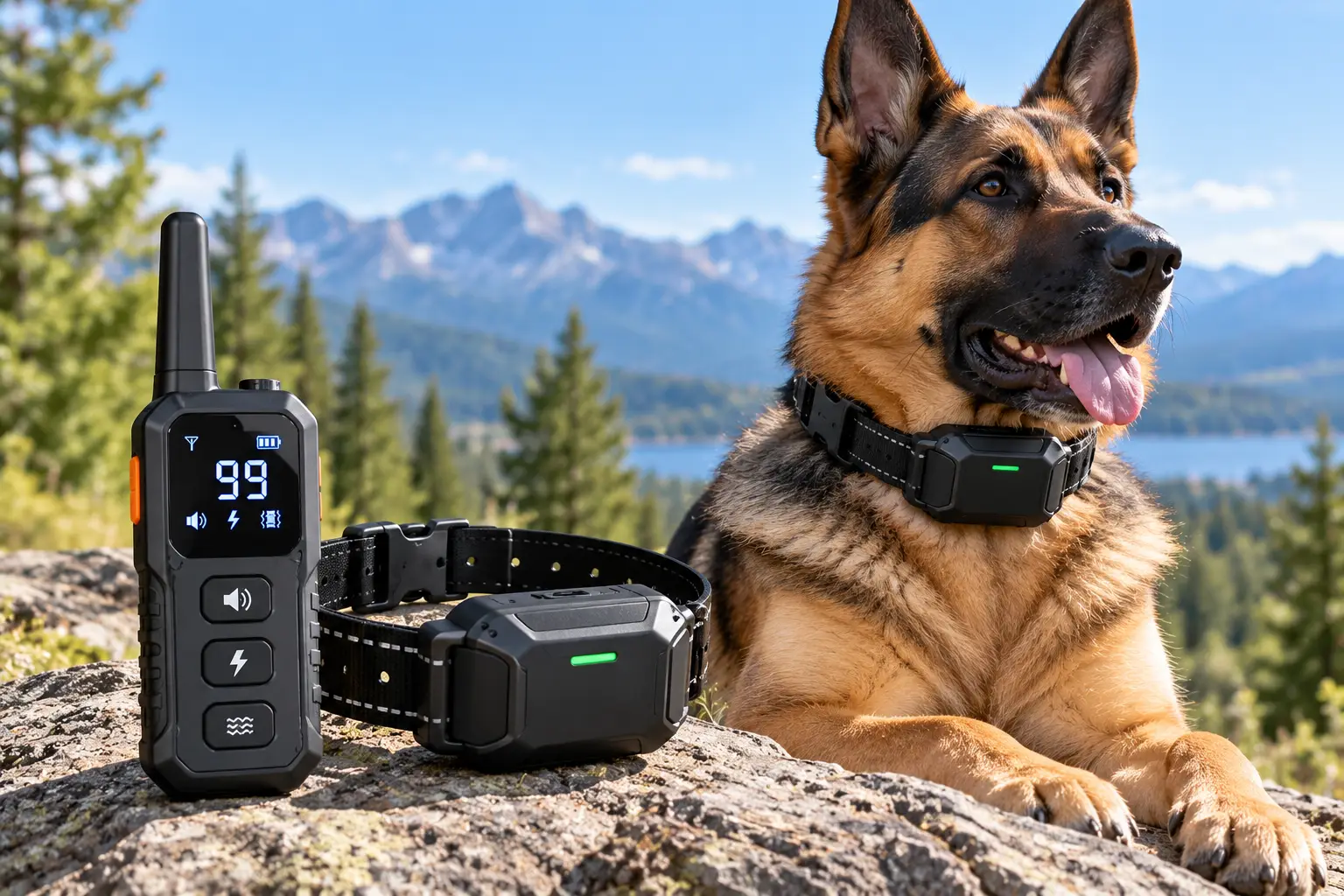
If you’ve ever watched a 95-pound Shepherd lock onto a deer at 200 yards, you already know that “calling harder” isn’t a training plan. That’s usually the moment owners start searching for the most powerful shock collar for large dogs—and it’s also the moment when the wrong purchase can do real damage to both your dog and your relationship with it.
Here’s the twist most buyers miss: in this category, “powerful” doesn’t mean “painful.” It means headroom. A high-output collar gives you a wide, finely graded range of stimulation, so you can work at a whisper-quiet level 90% of the time and still get through to your dog when adrenaline, a thick double coat, or prey drive drowns out everything else. A weak collar, by contrast, forces you to run near its maximum constantly—which is exactly how dogs get over-corrected.
So this guide doesn’t rank collars by who can deliver the biggest jolt. Instead, it compares seven real, amazon.com-available e-collars from Educator, Dogtra, Garmin, and SportDOG on the things that actually determine results with big dogs: output range, level precision, boost and lock features, range in real terrain, contact-point fit on thick necks, waterproofing, and long-term cost.
Everything below is built from published spec sheets, manufacturer documentation, and aggregated owner sentiment—not invented test stories. Where the data is thin, you’ll see that stated plainly. You’ll also find a 30-day getting-started plan, real-world buyer scenarios, a troubleshooting guide, and the welfare and legal context you should weigh before buying a high-power dog training collar at all.
Ready? Let’s find the right tool—and the right way to use it. 🐕🦺
What Is the Most Powerful Shock Collar for Large Dogs?
The most powerful shock collar for large dogs is a remote training collar (e-collar) whose receiver offers a high maximum output plus many finely spaced static levels, typically paired with boost, tone, and vibration. It’s designed for 35–100+ lb dogs with thick coats or high drive, where low-output collars fail to register.
For background on how these devices work and why they’re debated, the shock collar overview on Wikipedia is a useful neutral starting point. Modern manufacturers prefer terms like “static stimulation” or “e-collar,” and most high-end units now lean heavily on tone and vibration as first-line cues.
One honest caveat before you compare anything: no manufacturer publishes output in standardized, comparable units. Dogtra even notes that its own Dogtra 1900X levels aren’t equivalent to the older Dogtra 1900S (a level 14 on the 1900S roughly matches a level 10 on the 1900X). In other words, “Level 60” on one brand tells you nothing about “Level 60” on another. That’s why this guide focuses on each collar’s output design—low-to-high receivers, stubborn-dog variants, boost headroom—rather than pretending there’s a single power leaderboard.
Quick Comparison: Best E-Collar for Large Stubborn Dogs at a Glance
| Collar | Stated Range | Static Levels | Recommended Dog Size | Price Range* | Best For |
|---|---|---|---|---|---|
| Educator ET-800 The Boss | 1 mile | 100 + Boost (1–60) | 25 lb+ (maker) | ~$200–$270 | Educator ET-800 The Boss: fine control with huge headroom |
| Dogtra 1900X Black Edition | 1 mile | 0–100 high output + Boost | 45 lb+ | ~$300–$340 | Dogtra 1900X Black Edition: toughest build, biggest dogs |
| Dogtra 1900S | 3/4 mile | 0–127 | 35 lb+ | ~$250–$300 | Dogtra 1900S: proven pro workhorse |
| SportDOG SportHunter 1825X | 1 mile | 21 (Low/Med/High) | Most sizes | ~$320–$360 | SportDOG SportHunter 1825X: multi-dog hunters |
| Garmin PRO 550 | 1 mile | 21 | Medium–large | ~$350–$420 | Garmin PRO 550: no-look, one-handed handling |
| SportDOG SportTrainer 1275 | 3/4 mile | 10 × 3 ranges | 8 lb+ | ~$230–$300 | SportDOG SportTrainer 1275: screen lovers, packs |
| SportDOG FieldTrainer 425XS | 500 yards | 21 (Med/High) | 8 lb+ (stubborn) | ~$160–$190 | SportDOG FieldTrainer 425XS: budget stubborn-dog pick |
*Prices change constantly—check the current price on Amazon. Ranges are at the time of writing.
Looking at the table, the Educator ET-800 The Boss and Dogtra 1900X Black Edition are the two genuine “headroom” collars: both pair 1-mile range with 100 fine levels and a boost function. The Dogtra 1900S trades a little range for 127 levels and a long track record, while the SportDOG models win on multi-dog expandability and price. If you have one bulldozer of a dog and a modest budget, the SportDOG FieldTrainer 425XS is the most efficient way to get higher output without paying for a mile of range you’ll never use.
💬 One click helps other shoppers make an informed choice too! 😊
Top 7 Most Powerful Shock Collars for Large Dogs: Expert Analysis
1. Educator ET-800 The Boss — biggest headroom, gentlest low end
The Educator ET-800 The Boss is built around a simple idea: give you a very soft bottom end and a very strong top end on the same dial. Its large RX-120 receiver runs low-to-medium power across levels 1–50, then, per E-Collar Technologies, output jumps about 40% above level 50. In practice, that means a thick-coated Malinois can feel level 12 on a quiet walk, while you still have serious reserve for a chase situation.
The “Lock and Set” feature stops the dial from drifting upward in your pocket—a genuinely important safety detail with a high-output receiver. The user-set boost (1–60, default 20) lets you pre-program exactly how much extra you’ll add, rather than improvising in a panic. You also get tone, a vibration-style “tapping sensation,” a night light, and a floating waterproof remote.
Based on comparing the specs, this is the collar for owners of high-drive large breeds who want surgical precision without sacrificing ceiling. It’s assembled in Garrett, Indiana, which matters to buyers who value US-based support.
Reviews consistently praise the fine low-level control and the stopwatch-style remote. A recurring caution in owner feedback—including a long-form retailer review—concerns occasional range or reliability issues over time, so register your warranty.
Pros:
- ✅ 100 levels plus programmable boost for precise escalation
- ✅ Lock and Set prevents accidental level jumps
- ✅ Floating remote survives dock and duck-blind drops
Cons:
- ❌ Receiver is bulky on leaner, thin-necked dogs
- ❌ Some owners report range inconsistencies over time
Typically around $200–$270—excellent value given the ceiling-to-precision ratio.
2. Dogtra 1900X Black Edition — toughest build for 45 lb+ dogs
The Dogtra 1900X Black Edition is Dogtra’s top-spec X-Series collar, and it’s unapologetically built for big, hard-working dogs. It offers 0–100 high-output levels, a 1-mile rated range (versus 3/4 mile on the standard Dogtra 1900X), BOOST, a safety level lock, and Extreme Performance Pager (XPP) vibration that Dogtra says hits harder than older pager designs.
What that means in practice: the stronger vibration gives many dogs a meaningful non-static cue, so you may use static far less often than you expect. The metal e-collar case acts like armor in brush and on rocky ground, while IPX9K waterproofing handles high-pressure water, not just a dunk. A 1,000-lux blue LED helps you spot your dog at dusk, and a programmable central command button keeps your most-used function under your thumb.
Here’s what to weigh: Dogtra specifies this model for dogs 45 lb and up, so it’s a poor match for a 40-lb Lab mix. It’s ideal for Cane Corsos, big Shepherds, and hunting dogs working heavy timber.
Customer feedback on Dogtra’s site emphasizes build quality and reliable response; one owner of a multi-dog unit noted the receiver is noticeably heavier on the dog.
Pros:
- ✅ Rugged metal case and IPX9K waterproof rating
- ✅ XPP vibration reduces reliance on static
- ✅ Handsfree Square included for on-the-move cues
Cons:
- ❌ Heavier receiver than slim-profile competitors
- ❌ Not compatible with older 1900S contact points
Usually around $300–$340—premium, but justified if durability is your top priority.
3. Dogtra 1900S — the proven 127-level workhorse
The Dogtra 1900S has been a staple among K-9 handlers, hunters, and serious obedience trainers for years—and Dogtra says it held the same price for over 15 years. Its patented rheostat dial runs from 0 to 127 levels, which is the finest graduation on this list.
That rheostat matters more than it sounds. Rather than clicking in chunky steps, you roll smoothly, so you can find a dog’s true “recognition level”—the lowest setting that makes an ear twitch—without overshooting. Nick (momentary) and constant stimulation cover both quick cues and sustained pressure work, and the High Performance Pager offers a vibration-only option. The receiver’s wraparound design sits flush against the neck, and both units carry an IPX9K waterproof rating with a 2-hour rapid charge.
On paper, the Dogtra 1900S suits owners who prize consistency and field-proven reliability over new-model extras. It lacks a tone feature and a floating transmitter, which matters if you train near water.
Aggregated owner sentiment is broadly positive about durability and signal reliability; long-time users often mention running Dogtra units for years without issues. Retailer listings vary between 20 lb+ and 35 lb+ recommendations, so check your dog’s size against Dogtra’s current guidance.
Pros:
- ✅ 127 levels for exceptionally fine adjustment
- ✅ Long, proven track record with professionals
- ✅ Low-profile receiver sits comfortably under the chin
Cons:
- ❌ No audible tone and no floating remote
- ❌ Older design lacks boost-and-lock convenience
Generally around $250–$300—steady value for a collar that simply keeps working.
4. SportDOG SportHunter 1825X — one mile, up to six dogs
The SportDOG SportHunter 1825X is the long-range flagship of SportDOG’s dial-operated family. It delivers a 1-mile range, 21 static levels, tone, and vibration, and it expands to control up to six dogs with Add-A-Dog collars.
Here’s the clever part for stubborn large breeds: each of those 21 levels can be set to low, medium, or high ranges right on the collar. So if level 1 is too strong or level 21 isn’t enough, you shift the whole scale rather than buying a different unit. The no-look X-Series dial clicks through each level, which lets you keep your eyes on a dog working cover instead of on your remote. DryTek waterproofing rates both pieces as submersible to 25 feet, and the lithium-ion batteries are user-replaceable—a real long-term plus.
What most buyers overlook is the 14 preset transmitter modes. They let you assign momentary, continuous, or rising stimulation to the buttons you’ll actually use, which reduces fumbling under pressure.
Owners and retailers commonly highlight SportDOG’s responsive US-based customer service and the collar’s all-around versatility, from waterfowl to basic obedience.
Pros:
- ✅ Expands to six dogs on one transmitter
- ✅ Adjustable low/medium/high ranges add headroom
- ✅ User-replaceable batteries extend service life
Cons:
- ❌ 21 steps are coarser than 100-level dials
- ❌ No display to confirm settings at a glance
Typically around $320–$360—strong value for multi-dog households and hunters.
5. Garmin PRO 550 — the no-look, one-handed specialist
The Garmin PRO 550 carries forward Tri-Tronics technology, which many veteran bird-dog handlers still swear by. Its tube-shaped transmitter puts a tactile dial on top, so you can change levels one-handed without breaking eye contact with your dog.
It offers a 1-mile range, 21 levels of momentary and continuous stimulation, vibration, and tone, and it can switch between up to three dogs. Remote-controlled beacon lights help in low light, and a built-in BarkLimiter adds bark-correction functionality on the collar itself. It can also operate Garmin’s accessory Upland Beeper.
Based on comparing the specs, this collar favors handlers who value muscle-memory ergonomics over fine-grained levels. With 21 steps, you won’t get the micro-adjustments of a 100-level dial, but the physical interface is arguably the fastest on this list when a situation unfolds in seconds.
A note for GPS fans: the related Garmin PRO 550 Plus adds GPS tracking and extended range, but it uses 18 levels and needs satellite reception for tracking. If you mainly need training rather than tracking, the standard model keeps things simpler.
Owner feedback tends to praise the rugged feel and intuitive controls, though some buyers find the premium price hard to justify without a display.
Pros:
- ✅ Fast, tactile, no-look level changes
- ✅ Built-in BarkLimiter and beacon lights
- ✅ Tri-Tronics heritage trusted by field trainers
Cons:
- ❌ No screen to confirm the active level
- ❌ Premium cost for 21 stimulation steps
Usually around $350–$420—worth it mainly for experienced field handlers.
6. SportDOG SportTrainer 1275 — clear OLED screen for packs
The SportDOG SportTrainer 1275 is the pick for owners who want to see what they’re doing. Its bright OLED screen shows the selected dog, stimulation level, mode, and battery status, and large plus/minus buttons make adjustments simple.
It covers 3/4 mile, offers 10 static levels plus tone and vibration, and—like the SportDOG SportHunter 1825X—lets you set the collar to low, medium, or high ranges. That effectively gives you 30 steps across the full span, which is plenty of headroom for a stubborn large dog. It expands to six dogs and offers seven operating modes, and DryTek waterproofing rates it as submersible to 25 feet.
Here’s what to weigh: the screen is a big confidence booster for first-time e-collar owners, because it removes the “wait, what level am I on?” anxiety that leads to accidental overcorrection. On the other hand, 10 on-remote levels mean each step is larger, so finding a precise working level takes a bit more experimentation.
SportDOG’s own product reviews include owners using it across multi-acre properties with livestock and describing how easily it can be set gentle or firm.
Pros:
- ✅ OLED display shows level, mode, and battery
- ✅ Three collar ranges multiply usable settings
- ✅ Expandable to six dogs
Cons:
- ❌ Only 10 levels selectable from the remote
- ❌ Requires looking at the screen, not fully no-look
Generally around $230–$300—good value for visual learners and packs.
7. SportDOG FieldTrainer 425XS — budget power for stubborn dogs
The SportDOG FieldTrainer 425XS proves you don’t need to spend $300+ to get more output. The “S” stands for stubborn: this model runs the medium and high stimulation ranges, while the standard 425X covers low and medium.
You get 21 static levels, tone, and vibration, a 500-yard range, and a no-look dial. It’s SportDOG’s smallest and lightest e-collar, yet it’s designed for strong-willed, high-drive dogs that ignore the lower end of a typical collar. It expands to three dogs, and the strap fits necks up to about 23 inches.
Based on comparing the specs, the 425XS is the most sensible choice for suburban owners of big, pushy dogs who don’t need long range. That said, because it starts in the medium band, it isn’t a great match for a sensitive or thin-coated large dog; the standard 425X would fit better there.
Owner comments on SportDOG’s site often mention that it finally got a stubborn dog’s attention even at a low setting—which is exactly the point of headroom. Its warranty is a shorter one-year limited term, according to retailer listings.
Pros:
- ✅ Higher output range at a budget-friendly price
- ✅ Small, light receiver for all-day wear
- ✅ Simple no-look dial operation
Cons:
- ❌ 500-yard range limits open-country use
- ❌ Too strong a starting range for sensitive dogs
Usually around $160–$190—the best value on this list for stubborn dogs.
Side-by-Side Spec Comparison of the Top 7
| Collar | Tone | Vibration | Boost / Lock | Max Dogs | Waterproofing | Best For |
|---|---|---|---|---|---|---|
| Educator ET-800 The Boss | ✅ | ✅ (tapping) | Boost 1–60 + Lock | 2 | Waterproof, floating remote | Educator ET-800 The Boss: precision work |
| Dogtra 1900X Black Edition | ✅ | ✅ XPP | Boost + Lock | 3 | IPX9K | Dogtra 1900X Black Edition: rough terrain |
| Dogtra 1900S | ❌ | ✅ HPP | ❌ | 2 | IPX9K | Dogtra 1900S: fine rheostat control |
| SportDOG SportHunter 1825X | ✅ | ✅ | Range select | 6 | Submersible 25 ft | SportDOG SportHunter 1825X: big packs |
| Garmin PRO 550 | ✅ | ✅ | ❌ | 3 | Waterproof | Garmin PRO 550: one-handed handling |
| SportDOG SportTrainer 1275 | ✅ | ✅ | Range select | 6 | Submersible 25 ft | SportDOG SportTrainer 1275: on-screen clarity |
| SportDOG FieldTrainer 425XS | ✅ | ✅ | Range select | 3 | Submersible 25 ft | SportDOG FieldTrainer 425XS: value |
This second table shows why “most powerful” is only half the story. The Educator ET-800 The Boss and Dogtra 1900X Black Edition are the only picks that combine lock-protected settings with a pre-programmed boost, which is the safest way to manage a high ceiling. Meanwhile, the SportDOG models trade those safety locks for collar-side range selection and bigger multi-dog capacity, so they suit experienced handlers running several dogs.
🐾 Ready to Take Back Control of Your Big Dog?
🔍 Take your large-dog training to the next level with this carefully curated lineup. Click a highlighted collar to check current pricing and availability—these picks will help you build a calmer, more reliable recall the whole family will enjoy!
Getting Started: Your First 30 Days With a High-Power Dog Training Collar
Buying the most powerful shock collar for large dogs is the easy part. The first month decides whether it becomes a precise communication tool or an expensive source of confusion. Here’s a practical roadmap. 📅
Days 1–5: Wear it, don’t use it
Put the collar on (powered off, or with contact points removed on models that allow it, like the Dogtra 1900X Black Edition) during walks, meals, and play. The goal is simple: your dog should associate the collar with good things, not with corrections. Skip this step, and you risk a “collar-wise” dog that behaves only when it’s wearing the device.
Days 6–10: Find the recognition level
In a quiet yard, start at the lowest setting and tap up one level at a time. Watch for a tiny sign—an ear flick, a head turn, a pause in sniffing. That’s your working level. On a 100- or 127-level dial like the Educator ET-800 The Boss or Dogtra 1900S, many large dogs register far lower than owners expect.
Days 11–20: Layer it onto known commands
Pair the stimulation (or vibration) with a command your dog already knows, like “come.” Tap as you give the cue, release the instant your dog turns toward you, then reward generously. Keep sessions to 10–15 minutes.
Days 21–30: Add distance and distraction
Gradually increase distractions—a long line in a park, then a bigger field. Only now should boost enter the picture, and only as a pre-set step.
⚠️ Common first-month mistake: raising the level every time the dog ignores you. Usually, the fix is fewer distractions, not more power.
Real-World Scenarios: Matching the Right Collar to Your Big Dog
Specs only matter when they meet a real life. Here are three common buyer profiles and the reasoning behind each match.
🏡 The suburban Cane Corso owner
Profile: 110-lb dog, half-acre yard, neighborhood walks, budget around $200, daily use. Match: SportDOG FieldTrainer 425XS or Educator ET-800 The Boss. Why: You don’t need a mile of range in a subdivision—500 yards is overkill already. The 425XS delivers stubborn-dog output at the lowest price, while the ET-800 adds Lock and Set for households where more than one person handles the remote. If a teenager walks the dog, that lock is worth the extra cost.
🌲 The weekend upland hunter with two pointers
Profile: Two 60-lb dogs, open fields and timber, budget $350–$450, seasonal heavy use. Match: SportDOG SportHunter 1825X or Garmin PRO 550. Why: Range and multi-dog switching matter most here. The 1825X adds dogs cheaply via Add-A-Dog collars and lets you swap batteries yourself mid-career. The PRO 550 suits hunters who want to change levels by feel while carrying a shotgun.
🐺 The working-line German Shepherd handler
Profile: 85-lb high-drive dog, protection-sport or ranch work, budget $300+, daily intensive use. Match: Dogtra 1900X Black Edition or Dogtra 1900S. Why: High-drive dogs in arousal need a clean, strong cue with fine control underneath. The 1900X Black’s armored case survives rough work, while the 1900S’s 127-level rheostat offers the finest graduation for dogs that swing from calm to “red zone” quickly.
Problem → Solution: Fixing the Most Common E-Collar Headaches
Even the best e-collar for large stubborn dogs will seem to “stop working” at some point. Usually, the device is fine—the setup isn’t. Here are five frequent problems and precise fixes. 🔧
1. “My dog doesn’t feel anything, even at high levels.” Nine times out of ten, it’s contact. Thick double coats (Malamutes, Newfoundlands, Shepherds) need longer contact points, which most kits include. Also, fit the receiver snugly enough that you can slide just one or two fingers under the strap, and position it slightly to the side of the windpipe.
2. “My dog only listens when wearing the collar.” This is the classic collar-wise problem. Go back to having your dog wear the collar during fun, neutral activities, and fade rewards gradually rather than abruptly.
3. “Range is far shorter than advertised.” Stated ranges assume line of sight. Trees, hills, and buildings cut effective range sharply—even premium units like the Educator ET-800 The Boss are affected. Hold the transmitter upright and away from your body.
4. “The battery dies mid-hike.” Charge fully after every outing and don’t store lithium batteries completely empty for months. The SportDOG SportHunter 1825X‘s user-replaceable batteries make an aging pack an easy fix.
5. “My dog panics or yelps.” Stop immediately. The level is far too high, or the timing was confusing. Drop to vibration or tone only, rebuild positive associations, and consider a qualified trainer before continuing.
How to Choose the Most Powerful Shock Collar for Large Dogs
Choosing well comes down to matching output design to your specific dog and environment. Follow these seven steps. ✅
- Weigh your dog honestly. Manufacturers specify minimum weights (for example, 45 lb+ for the Dogtra 1900X Black Edition). Going below the recommended size risks overcorrection and a poor fit.
- Assess coat and temperament. Thick coats and high drive justify low-to-high output receivers; sensitive dogs don’t, whatever their size.
- Prioritize level count and graduation. More, finer levels (100–127) let you work lower. Coarser dials (10–21 steps) demand more care.
- Insist on safety features. Lock functions and programmable boost prevent accidental jumps in intensity.
- Buy the range you’ll really use. A long range e-collar for big dogs matters in open country; in suburbs, it’s wasted money.
- Check non-static options. Strong vibration and tone let many dogs learn with little or no static.
- Plan for the long term. Replaceable batteries, add-a-dog support, and warranty length all affect total cost.
Before you commit, it’s worth reading independent welfare research, such as the humane training resources collected by Purdue University’s Canine Welfare Science program, which summarizes veterinary behaviorist guidance on training methods.
Features That Actually Matter (and Ones That Don’t)
Marketing copy for any high-power dog training collar can sound like a spec sheet for a fighter jet. Let’s cut through it.
✅ Features that genuinely matter
- Low-to-high output design. This is what “powerful” really buys you: range at both ends. The Educator ET-800 The Boss‘s power step above level 50 is a good example.
- Lock and boost. Lock prevents dial creep; boost gives you a pre-decided emergency step instead of an adrenaline-fueled guess.
- Contact-point options. Long points for thick coats are more important than any raw output number.
- Strong vibration. The Dogtra 1900X Black Edition‘s XPP vibration can replace static for many everyday cues.
- No-look operation. The Garmin PRO 550 and SportDOG X-Series dials let you watch your dog, which improves timing—the single biggest predictor of success.
❌ Features that matter less than advertised
- Maximum range claims. A one-mile rating is a line-of-sight best case. Most owners never use more than a few hundred yards.
- Huge level numbers alone. 127 levels are helpful only if you actually use fine increments. On their own, big numbers are marketing.
- “Up to X dogs” when you own one. Multi-dog expandability is irrelevant for single-dog homes—don’t pay extra for it.
- Flashy colors and bundles. Nice, but they won’t improve a recall.
Put simply, invest in control and fit before chasing bigger numbers.
Long Range E-Collar for Big Dogs: How Much Range Do You Really Need?
Range is the most over-bought feature in this category. A long range e-collar for big dogs is essential for some owners and pointless for others, so let’s match range to real use. 📡
Suburban yards and neighborhood walks (under 300 yards): Any collar here is more than enough. The SportDOG FieldTrainer 425XS‘s 500 yards already exceeds what most homeowners use.
Parks, trails, and small farms (300–800 yards): A 3/4-mile unit like the Dogtra 1900S or SportDOG SportTrainer 1275 gives comfortable reserve, particularly with trees or rolling ground in the way.
Open hunting country, ranches, and big water (800+ yards): This is where 1-mile units—the Educator ET-800 The Boss, Dogtra 1900X Black Edition, SportDOG SportHunter 1825X, and Garmin PRO 550—earn their price. Signal headroom keeps cues reliable when terrain eats into range.
Here’s the nuance: extra range rarely costs you in performance, but it does cost money and sometimes weight, since longer-range receivers often carry bigger batteries. If your dog is never more than a football field away, spend the difference on a quality training session with a professional instead.
One more tip—range and visibility go together. Collars with LED beacons, like the Dogtra 1900X Black Edition and Garmin PRO 550, help you see the dog you’re trying to cue at dusk.
E-Collars vs Traditional Training Tools for Large Dogs
How does a remote training collar compare with the tools most owners try first? This table focuses on practical trade-offs.
| Tool | Works Off-Leash? | Precision of Timing | Learning Curve | Risk If Misused | Best For |
|---|---|---|---|---|---|
| E-collar (e.g., Educator ET-800 The Boss) | ✅ Yes | Very high | Moderate–high | High (overcorrection) | Off-leash recall at distance |
| Long line + rewards | ❌ Limited to line length | Moderate | Low | Low | Building recall foundations |
| Front-clip harness | ❌ No | Low | Low | Low | Everyday leash pulling |
| Prong or choke collar | ❌ No | Moderate | Moderate | High (neck injury) | Generally not recommended |
The table highlights the e-collar’s one decisive advantage: communicating with a dog at distance, off-leash, with split-second timing. However, it also carries the highest skill requirement, which is why long-line and reward-based work should come first, not last. For many families, the smartest approach is layered: build recall on a long line, then use a collar like the Dogtra 1900S mainly as a vibration or low-level “remote tap” to extend that recall into open spaces.
Best E-Collar for Large Stubborn Dogs: Advice by Breed Type
“Large” covers a lot of ground, and the best e-collar for large stubborn dogs varies with coat, drive, and body type. Here’s tailored guidance.
🐻 Giant, thick-coated breeds (Newfoundland, Malamute, Great Pyrenees)
Coat is the enemy of contact. Prioritize long contact points and a receiver that sits securely. Often these dogs are not “stubborn” so much as insulated. The Dogtra 1900X Black Edition‘s robust receiver and strong vibration make it a sensible option.
⚡ High-drive working breeds (Malinois, German Shepherd, Dutch Shepherd)
In arousal, these dogs can ignore stimuli they’d feel instantly when calm. You need fine low-end control and a real ceiling—the core strength of the Educator ET-800 The Boss and Dogtra 1900S. Work with an experienced trainer; timing errors are costly with these dogs.
🐾 Independent guardian and mastiff types (Cane Corso, Rottweiler, Anatolian)
These breeds were bred to make their own decisions. Here’s what to weigh: they often respond better to calm, consistent, low-level cues than to escalation. Also, never use an e-collar to address aggression; seek a veterinary behaviorist.
🎯 Hunting and sporting breeds (Labs, pointers, hounds)
Range and multi-dog capability usually matter most. The SportDOG SportHunter 1825X and Garmin PRO 550 are designed with exactly this owner in mind.
Common Mistakes to Avoid When Buying a High-Power Dog Training Collar
Most regrets in this category come from a handful of predictable errors. Avoid these and you’ll save money—and stress. ❌
Buying for the dog you fear, not the dog you have. Many owners buy maximum output “just in case,” then never go above level 20. That’s fine if the collar has fine low levels; it’s a problem if the low end is already too strong, as with stubborn-dog variants like the SportDOG FieldTrainer 425XS on a sensitive dog.
Ignoring minimum weight ratings. A 45 lb+ collar on a 38-lb dog is a fit and intensity problem, not a bargain.
Trusting unverifiable reviews. Big-ticket pet electronics attract incentivized and fake reviews. Look for detailed, balanced feedback that mentions specific use, and remember that US rules require disclosure of paid endorsements—the FTC’s Endorsement Guides FAQ explains what reviewers and sellers must disclose.
Buying from unauthorized sellers. Warranties from Dogtra, E-Collar Technologies, and SportDOG may depend on buying through authorized channels. On Amazon, check who sells and ships the item.
Skipping the manual. Collar-side range settings on the SportDOG SportHunter 1825X and SportDOG SportTrainer 1275 are powerful—but only if you know how to set them.
Expecting the collar to train the dog. It’s a communication tool. Without a plan, it’s just an expensive necklace.
Safety, Welfare, and the Rules You Should Know
This section matters more than any spec. Using the most powerful shock collar for large dogs responsibly means understanding the risks and the debate.
🩺 What the veterinary behavior community says
Be aware that major veterinary behavior organizations oppose aversive tools. The American Veterinary Society of Animal Behavior’s position statement on humane dog training recommends reward-based methods for all dog training and advises against aversive methods, citing risks to welfare and the human-animal bond. Many professional trainers who use e-collars disagree, arguing that low-level, well-timed use is humane. You should weigh both views honestly—and if you proceed, keep stimulation as low and infrequent as possible.
⚖️ Legal landscape
There’s no nationwide US ban on remote training collars, but rules can vary locally, and some countries—including England and Wales in the UK—have banned them. Check your local regulations, especially if you travel with your dog.
🛡️ Practical safety rules
- Follow manufacturer age guidance; PetSafe’s manuals, for instance, say dogs should be at least six months old.
- Never use static to address aggression or fear.
- Rotate or remove the collar regularly to prevent pressure sores on the neck.
- Keep the remote away from children and anyone untrained.
- Use lock features, like those on the Educator ET-800 The Boss and Dogtra 1900X Black Edition, every session.
Long-Term Cost and Maintenance
The sticker price is only the beginning. Here’s how ownership costs stack up over roughly five years of regular use.
| Collar | Upfront Price Range* | Battery Serviceability | Extra-Dog Cost | 5-Year Value Outlook | Best For |
|---|---|---|---|---|---|
| SportDOG FieldTrainer 425XS | ~$160–$190 | Rechargeable | Add-A-Dog collar | Excellent for single dogs | SportDOG FieldTrainer 425XS: lowest entry cost |
| Educator ET-800 The Boss | ~$200–$270 | Rechargeable | 2-dog version | Strong | Educator ET-800 The Boss: precision per dollar |
| Dogtra 1900S | ~$250–$300 | Rechargeable | 2-dog model | Strong (long track record) | Dogtra 1900S: durability |
| SportDOG SportHunter 1825X | ~$320–$360 | User-replaceable | Add-A-Dog collars | Excellent for packs | SportDOG SportHunter 1825X: multi-dog scaling |
*Check current prices on Amazon; prices vary.
The key insight here is that serviceability often beats sticker price. A collar with user-replaceable batteries, like the SportDOG SportHunter 1825X, avoids a costly factory repair when capacity fades after a few years. Meanwhile, the Dogtra 1900S‘s long production run means parts and accessories are widely available, which quietly protects your investment.
🔧 Simple maintenance routine
- Weekly: Clean contact points and the neck area with a damp cloth.
- Monthly: Check that contact points are tight and the strap isn’t cracking.
- Seasonally: Top up batteries during off-season storage rather than leaving them empty.
- Yearly: Test range in a familiar field so you notice any decline early.
Frequently Asked Questions
❓ Are shock collars legal to use on large dogs in the US?
❓ Can I use a high-power dog training collar on a large-breed puppy?
❓ How many hours a day can my dog wear an e-collar?
❓ Will the most powerful shock collar for large dogs stop aggression?
❓ Where should I buy the best e-collar for large stubborn dogs to keep the warranty valid?
Conclusion: The Most Powerful Choice Is the Most Controlled One
Choosing the most powerful shock collar for large dogs isn’t about finding the biggest jolt—it’s about buying enough headroom that you rarely need it. As we’ve seen, that means prioritizing fine levels, lock-and-boost safety, strong vibration, proper contact points, and range that matches your real life.
If you want the best balance of precision and ceiling, the Educator ET-800 The Boss is hard to beat for the money. For the toughest dogs in the toughest terrain, the Dogtra 1900X Black Edition offers the most rugged build, while the Dogtra 1900S remains a proven, finely graded workhorse. Hunters running several dogs will get more from the SportDOG SportHunter 1825X or the one-handed Garmin PRO 550, and visual learners will appreciate the SportDOG SportTrainer 1275‘s screen. On a tighter budget, the SportDOG FieldTrainer 425XS delivers stubborn-dog output without a premium price.
Whichever you choose, start with the first-30-days plan, find the lowest level your dog recognizes, and pair every cue with rewards. Consider a session with a qualified trainer, too—the best collar in the world can’t fix poor timing. And keep the welfare debate in mind: the goal is a dog that responds willingly, not one that’s afraid. 🐶
✨ Don’t Miss These Top Picks for Your Big Dog!
🔍 Take your large-dog training to the next level with this carefully curated lineup. Click a highlighted collar to check current pricing and availability—these picks will help you enjoy safer, more confident off-leash adventures the whole family will love!
Recommended for You
- Sticker GPS System: 7 Best Trackers That Actually Work (2026)
- Electric Fence Control: 7 Best Energizers That Actually Work (2026)
- Best Dog Training Collar for Small Dogs: 7 Gentle Picks (2026)
Disclaimer: This post contains affiliate links. As an Amazon Associate, I earn from qualifying purchases made through these links, at no additional cost to you.
✨ Found this article helpful? Share it with someone who needs it! 💬🤗