
In This Article
Tabby Alert in 2026: The Free Lost-Cat Network Worth Knowing
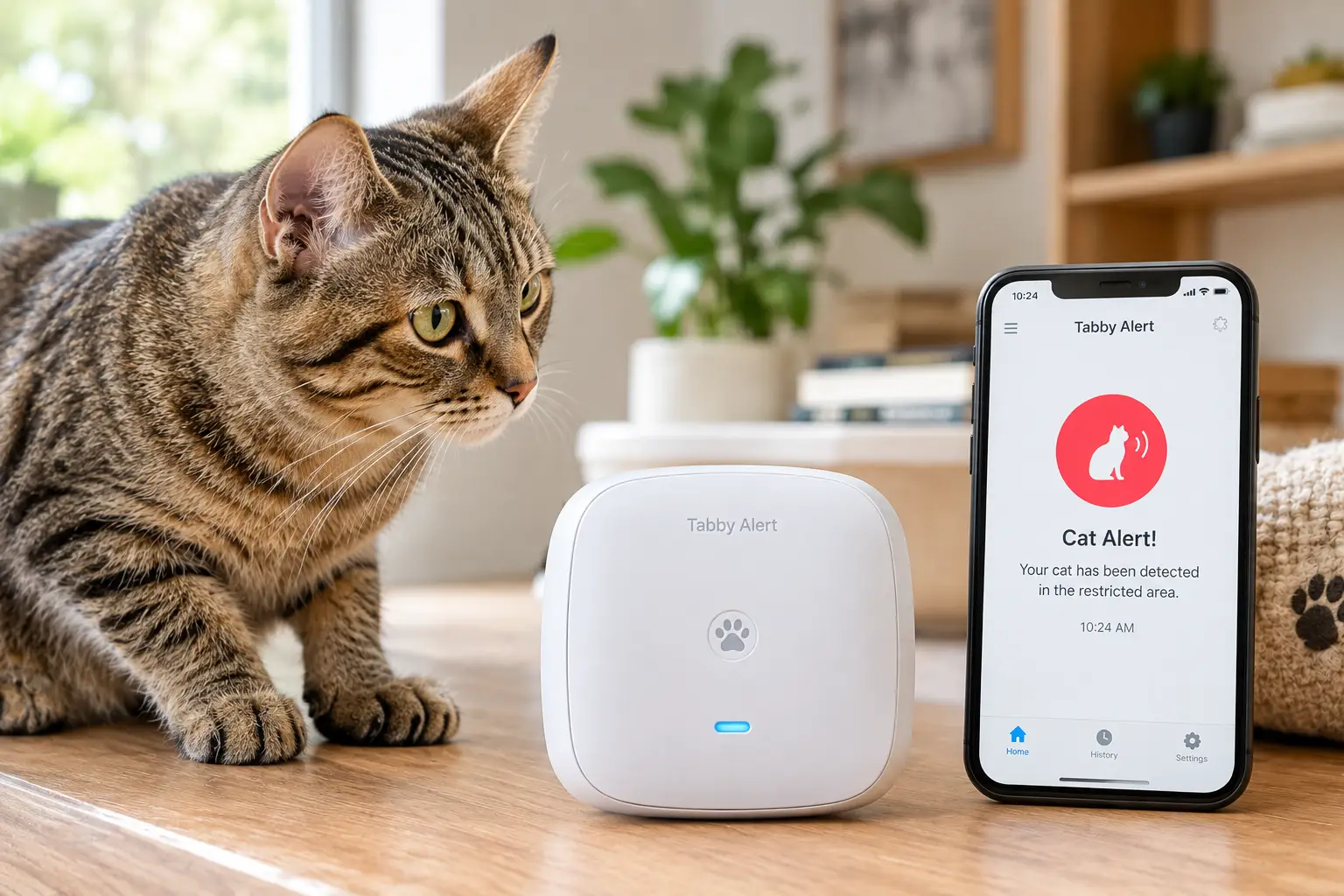
Tabby Alert is a free, US-wide lost-cat alert network: you register your cat, receive a free QR-code ID tag, and if your cat goes missing, the service texts a digital flier with your cat’s photo to members within a few miles of where it was last seen. When a finder scans the tag, you get a text.
That’s the short answer. Here’s why it matters. Cats are sneakier escape artists than dogs, and they’re harder to get back. According to a national ASPCA survey on lost pets, about 74% of lost cats were recovered, compared with 93% of lost dogs — and most cats that made it home did so on their own, not because someone read a tag. In other words, cats slip through the cracks of the usual ID system.
Tabby Alert tries to fix that with speed. Instead of waiting for someone to call a number engraved on a tag, it uses text messages to put your cat’s face in front of neighbors within minutes. One important 2026 update: the Tabby Alert website now notes that TabbyAlert has merged into FidoAlert, the dog-focused sister network, so you’ll register through the same FidoAlert platform. It’s run by PetScreening, which funds the service so pet owners never pay.
But here’s what the free tag can’t do: it can’t tell you where your cat is. It only helps once someone finds your cat and scans it. That’s why this guide pairs the Tabby Alert tag with seven real products from Amazon — GPS trackers, Bluetooth tags, backup ID, a breakaway collar, and even a microchip cat flap — so you can build a layered safety net that fits your cat, your phone, and your budget.
Quick Comparison: 7 Picks That Pair Well With Tabby Alert
| Product | Type | Subscription? | Approx. Price Range | Best for |
|---|---|---|---|---|
| Tractive GPS CAT Mini | LTE GPS tracker | Yes | $40–$60 + plan | Tractive GPS CAT Mini: outdoor roamers |
| Apple AirTag (2nd Generation) | Bluetooth/UWB tag | No | Around $30 | Apple AirTag (2nd Generation): iPhone homes |
| Samsung Galaxy SmartTag2 | Bluetooth/UWB tag | No | Around $30 | Samsung Galaxy SmartTag2: Galaxy phone owners |
| Ring Pet Tag | QR-code tag | No | Around $10 per tag | Ring Pet Tag: Ring app users |
| GoTags Personalized Small Indoor Cat Tag | Engraved steel tag | No | Under $15 | GoTags Personalized Small Indoor Cat Tag: no-tech backup |
| GoTags Personalized Breakaway Cat Collar | Breakaway collar | No | $15–$25 | GoTags Personalized Breakaway Cat Collar: safe tag carrier |
| SureFlap Microchip Cat Flap | Microchip pet door | No (hub optional) | $150–$270 | SureFlap Microchip Cat Flap: stopping escapes |
Looking at the table, the cheapest meaningful upgrade over a free Tabby Alert tag is a Bluetooth tracker — the Apple AirTag (2nd Generation) or Samsung Galaxy SmartTag2, depending on your phone. If your cat roams farther than a few backyards, only the Tractive GPS CAT Mini gives true live location, but you’re signing up for a recurring plan. And if your problem is a door-dasher, the SureFlap Microchip Cat Flap tackles prevention instead of recovery.
💬 Tap any highlighted product name to check the current price on Amazon — one click helps other cat owners make an informed choice too! 😊
How Tabby Alert Works, Step by Step
Before buying anything, it helps to understand exactly what the free Tabby Alert service covers — and where its edges are.
Step 1: Register and get a Tabby ID
You sign up online with your phone number, build a profile for your cat (name, breed, description, photos, identifying marks), and receive a unique Tabby ID. The service then mails you a free custom tag engraved with your cat’s name, that ID, and a personal QR code. Freebie sites that list the offer mention allowing roughly 4–6 weeks for delivery, so don’t wait until your cat is already outside to sign up.
Step 2: Trigger an alert if your cat goes missing
If your cat disappears, you trigger a Tabby Alert with the last known location. The network texts a digital flier — photo plus key details — to members within a few miles. That flier can also be shared on social media or by email.
Step 3: Get notified when someone finds your cat
A finder scans the QR code (no app needed) or enters the Tabby ID, and you plus your emergency contacts get a text with the finder’s first name and phone number.
What makes it different
The privacy design is smart: your phone number isn’t printed on the tag, so strangers can’t harvest it, and if your number changes, you update it online without ordering a new tag. The catch? The alert only reaches people in the network. The company has said over a million pets are registered, but coverage in your specific neighborhood depends on how many locals have signed up. That’s the gap the products below help close.
Top 7 Tabby Alert Companions: Expert Analysis
1. Tractive GPS CAT Mini — true live tracking for roamers
The Tractive GPS CAT Mini is the only pick here that tells you where your cat is right now, anywhere with cell coverage. It uses GPS plus LTE, so range isn’t limited by Bluetooth or by strangers’ phones. In Live mode, location refreshes every 2–3 seconds — the difference between “somewhere in the neighborhood” and “under the Hendersons’ deck.” Virtual fences send an alert the moment your cat leaves a zone you draw.
Weight is where cat trackers usually fail, and this one clears the bar: it comes in at roughly 1 oz (about 25–28 g), and Tractive designs it for cats over about 6.5 lb. On paper, that keeps it near the common “no more than ~5% of body weight on the collar” guideline for an average adult cat.
Who is it for? Indoor-outdoor cats, rural cats, and escape artists with a history of multi-day disappearances. It’s overkill for an indoor-only apartment cat.
Reviews consistently praise location accuracy compared with Bluetooth tags, while the most common complaints involve the mandatory subscription, inconsistent battery life, and the tracker feeling bulky on smaller cats.
Pros:
- ✅ Real-time GPS with no Bluetooth range limit
- ✅ Virtual fence alerts when your cat leaves home
- ✅ Light enough for most average-size adult cats
Cons:
- ❌ Requires a paid plan to work at all
- ❌ Needs frequent charging compared with coin-cell tags
Hardware typically lands in the $40–$60 range, with plans starting around $5 a month on longer commitments — strong value if your cat genuinely roams.
2. Apple AirTag (2nd Generation) — best no-fee finder for iPhone homes
For iPhone owners, the Apple AirTag (2nd Generation) is the easiest step up from a passive tag. Released in January 2026, it keeps the familiar coin shape but adds a second-generation Ultra Wideband chip; per Apple’s announcement, Precision Finding now works from up to 50% farther away, the Bluetooth range is improved, and the speaker is 50% louder.
What does that mean in practice? When your cat is hiding within the house or a neighbor’s yard, the directional arrow on your iPhone can walk you closer before you lose the signal, and the louder chime helps when your cat is wedged behind a water heater. Beyond Bluetooth range, it reports its position through Apple’s huge Find My network of nearby Apple devices — useful in dense suburbs, far weaker in rural areas.
It weighs about 0.42 oz (11.8 g), is IP67-rated, and runs more than a year on a replaceable CR2032 battery. The honest caveat: Apple sells it as an item tracker, not a pet tracker. It doesn’t provide live GPS, and updates depend on Apple devices passing by.
Tech reviewers broadly agree the upgrade is meaningful where it counts — range and volume — while noting the design is unchanged and the improved Precision Finding needs an iPhone 15 or newer (excluding the 16e).
Pros:
- ✅ No subscription and over a year per battery
- ✅ Longer Precision Finding range than the original
- ✅ Louder chime for hide-and-seek situations
Cons:
- ❌ Useless without an iPhone in the household
- ❌ Needs a separate holder or breakaway collar mount
Expect around $30 for one, or just under $100 for a four-pack — excellent value for a no-fee locator.
3. Samsung Galaxy SmartTag2 — longest battery life for Galaxy owners
The Samsung Galaxy SmartTag2 is the Android-side answer, with battery life that makes AirTags look thirsty. Samsung rates it at up to 500 days in Normal Mode and up to 700 days in Power Saving Mode on a replaceable CR2032 — so you’re unlikely to be caught with a dead tag.
It pairs Bluetooth LE (Samsung cites up to 120 meters in open air) with UWB “Compass View” on compatible Galaxy phones, giving you a direction-and-distance readout similar to Apple’s Precision Finding. The feature that matters most for cats is Lost Mode: anyone with an NFC-capable phone, iPhone or Android, can tap the tag to see your contact info and message. That turns it into a digital ID tag as well as a locator.
Based on comparing the specs, the ring-shaped design is a bit bulkier than an AirTag, so it’s better suited to medium and large cats. It’s also IP67-rated, and Samsung even added a pet walking mode — more useful for dogs, but a nice signal that Samsung expects pet use.
Reviews repeatedly praise the battery life and durability; the dominant complaint is that it only works with Samsung Galaxy phones, and one reviewer flagged that the battery-door gasket may wear after repeated swaps.
Pros:
- ✅ Up to 700 days of battery life
- ✅ NFC Lost Mode works on any finder’s phone
- ✅ No subscription or monthly fees
Cons:
- ❌ Galaxy-only — no iPhone or generic Android support
- ❌ Slightly bulkier ring design for petite cats
Usually around $30 — the best-value locator if your household runs on Samsung.
4. Ring Pet Tag — battery-free QR backup with scan alerts
The Ring Pet Tag works on the same principle as the free Tabby Alert tag, which is exactly why it’s worth considering as a second layer rather than a replacement. It’s a QR-code tag linked to a Pet Profile inside the Ring app, with no subscription, no batteries, and no fees.
When someone scans it, you get a real-time alert, and the finder sees your cat’s profile — photos, medical notes, whatever you add — even without the Ring app installed. You can also talk to the rescuer without exposing personal contact details. Ring also lets you upload your pet’s photo to Petco Love Lost, a national lost-and-found database that matches photos against pets found at nearby shelters.
Here’s what to weigh: if your household already uses Ring cameras, this tag slides into an app you open daily, and your neighborhood’s Ring users become an extra informal search network. If you don’t use Ring, it’s one more app to manage. Ring is explicit that it isn’t a GPS tracker and can’t show your cat’s location.
Retail reviews highlight easy setup, though many visible reviews were written with promotional incentives, and at least one reviewer wished the protective seal over the QR code were better. Independent reviewers note the core limitation of every QR tag: it only helps once someone finds your cat and scans it.
Pros:
- ✅ No batteries, charging, or subscription ever
- ✅ Finder can contact you without seeing your number
- ✅ Links to Petco Love Lost photo matching
Cons:
- ❌ Requires the Ring app on your phone
- ❌ Can’t locate your cat by itself
Typically around $10 per tag, or about $30 for a three-pack — cheap insurance.
5. GoTags Personalized Small Indoor Cat Tag — no-tech backup that never dies
The GoTags Personalized Small Indoor Cat Tag is the old-school safety net every smart setup still needs. It’s a small stainless-steel tag engraved with up to four lines of text — typically your cat’s name, your phone number, and a note like “Indoor cat — if outside, I’m lost.”
Why bother when you have QR codes? Because not every finder will scan a code. Some are elderly neighbors, some have phones with cracked cameras, some just don’t think to. Cats.com makes the same point in its cat ID tag guide: QR tags work best alongside a traditional tag so anyone can help. That “indoor cat” line matters too — it tells a well-meaning neighbor that your cat isn’t just out for a stroll and shouldn’t be shooed home.
The small size is the key spec. Oversized dog tags clank and drag on a cat’s collar; this one is scaled for cats and kittens. Stainless steel resists rust and keeps engraving readable for years, unlike cheap printed plastic.
GoTags products rank among Amazon’s best-selling cat ID tags, and customer reviews commonly praise engraving clarity and build quality, with occasional complaints about shipping delays on customized orders.
Pros:
- ✅ Works for any finder, no phone required
- ✅ Sized for cats rather than dogs
- ✅ Stainless steel keeps engraving legible long-term
Cons:
- ❌ Must reorder if your phone number changes
- ❌ Can jingle against a Tabby Alert tag
Usually under $15 — the cheapest layer here and absolutely worth it.
6. GoTags Personalized Breakaway Cat Collar — the safe foundation for every tag
None of the tags above help if your cat isn’t wearing a collar, and a standard buckle collar on a cat is a real hazard. The GoTags Personalized Breakaway Cat Collar is a breakaway (quick-release) collar, meaning the buckle pops open under pressure if your cat gets snagged on a branch or fence.
Cats.com lists it among its top cat ID picks, noting it comes in five colors with a matching small bell. The personalization is the clever bit: because the ID is built into the collar, you have one less dangling tag — handy when you’re already hanging a Tabby Alert tag and a tracker.
What most buyers overlook: breakaway collars will come off sometimes, which is the point. So treat the collar as the carrier for your IDs, not the whole plan — that’s why microchipping (and keeping the chip registration current) still matters.
The bell is a double-edged feature. It warns birds and helps you hear a hiding cat, but some cats find it irritating, and you can remove it.
We couldn’t verify a large volume of cat-specific customer reviews for this exact model, so weigh it on its design: breakaway safety plus built-in ID is the right combination for any cat wearing trackers or tags.
Pros:
- ✅ Breakaway buckle reduces strangulation risk
- ✅ Built-in personalization cuts dangling tag clutter
- ✅ Multiple colors plus a removable bell
Cons:
- ❌ May pop off, taking attached tags with it
- ❌ Limited verified cat-specific review data
Typically in the $15–$25 range — fair value for a collar you’ll trust daily.
7. SureFlap Microchip Cat Flap — prevention instead of recovery
The SureFlap Microchip Cat Flap flips the problem around: instead of helping you find a lost cat, it controls when your cat can leave. The door reads your cat’s existing implanted microchip (or a SureFlap RFID collar tag), and Sure Petcare says it stores up to 32 pet identities, works with common ID microchips, and stays locked for unwelcome cats and wildlife.
For a “lost cat” strategy, the headline feature is the curfew. On the Connect version paired with the SureFlap Hub, you can set curfews, lock and unlock remotely, and get notifications when your cat comes and goes from your phone. That notification history is quietly valuable — if your cat goes missing, you’ll know exactly when it last left the house, which is the first thing to enter into a Tabby Alert.
Who is it for? Homeowners with indoor-outdoor cats who want night-time lockdowns (when most wildlife and traffic dangers peak) and who are willing to cut a hole in a door, wall, or window.
Review sentiment is mixed but useful. PetsRadar’s testers call the Connect version their top pick for peace of mind. Owner complaints on retail sites include a loud unlocking click that spooks some cats, the flap not reading chips that have migrated, and one curfew schedule applying to all pets.
Pros:
- ✅ Keeps strays and wildlife out of your home
- ✅ Curfews stop night-time wandering
- ✅ App logs show exactly when your cat left
Cons:
- ❌ Installation requires cutting a door or wall
- ❌ Hub and app features cost extra
Roughly $150 for the base flap to about $270 with the Connect hub — pricey, but it prevents problems rather than chasing them.
🐾 Build your cat’s safety net today!
🔍 Pair your free Tabby Alert tag with one smart finder and one no-tech backup from this lineup. Click any highlighted product to check current pricing and availability — and give your cat the best odds of always finding the way home! 🏡
Setting Up Tabby Alert and Your Tags the Right Way
Buying gear is the easy part. Setting it up so it actually works when you’re panicking at 11 p.m. is where most owners slip. Here’s a practical first-week checklist.
Day 1: Register before you need it
Sign up for Tabby Alert today, not after your cat escapes. Upload at least three photos: a clear face shot, a full-body side view, and one showing any unique markings. “Gray tabby” describes millions of cats; “gray tabby with a white left front paw and a notch in her right ear” describes yours. Add at least two emergency contacts, since found-pet texts go to them too.
Days 2–7: Collar training
Put the GoTags Personalized Breakaway Cat Collar on without any tags first. Most cats scratch at a new collar for a day or two. Once your cat ignores it, add the lightest tag, then the tracker. Adding everything at once is the fastest way to create a collar-hating cat.
When the tags arrive: Stack smart
Mount your tracker directly on the collar band (using a holder) rather than letting it dangle from a ring. Dangling trackers swing, clank, and snag. Keep the GoTags Personalized Small Indoor Cat Tag and the Tabby Alert tag on one small split ring.
Monthly maintenance
- ✅ Check the collar fit: two fingers should slide under it.
- ✅ Test-scan the QR code with your own phone to confirm it still reads.
- ✅ Check tracker battery levels in the app.
- ✅ Confirm your contact details in the Tabby Alert profile and your microchip registry.
Common first-30-day mistakes
Leaving the collar too loose (cats back out of it), forgetting to charge the Tractive GPS CAT Mini before a known outdoor day, and never testing the Tabby Alert flow. Do a practice scan so you know what the finder sees.
Real-World Scenarios: Matching Gear to Your Cat
Every cat’s risk profile is different. Here are three realistic owner profiles and the setups that make sense for each.
Profile 1: The indoor-only apartment cat
Budget: under $40. Risk: the door-dash when groceries come in.
For Maya in a third-floor apartment, the biggest danger is a quick bolt into the hallway or stairwell. Her cat will almost certainly be hiding within a short distance, terrified and silent. A free Tabby Alert tag plus the GoTags Personalized Small Indoor Cat Tag (“Indoor cat — I’m lost”) covers the finder side. If she has an iPhone, adding the Apple AirTag (2nd Generation) helps her sweep hallways with Precision Finding. No GPS subscription needed.
Profile 2: The suburban indoor-outdoor cat
Budget: $100–$150 up front. Risk: wandering several yards over, occasional overnight absences.
For the Garcias, whose cat patrols a suburban block, a Bluetooth tag works decently thanks to dense phone networks, but GPS is the real upgrade. The Tractive GPS CAT Mini with a fence around their yard tells them when their cat crosses the street. The Tabby Alert tag stays on as the “someone found her” layer.
Profile 3: The rural or farm cat
Budget: flexible. Risk: long distances, few passing phones, wildlife at night.
Bluetooth tags struggle in rural areas because few phones pass by. Here, the Tractive GPS CAT Mini is close to essential, and the SureFlap Microchip Cat Flap with a dusk curfew keeps the cat in during predator hours. The Tabby Alert network may be thin locally, so encouraging neighbors to register helps everyone.
Your Cat Is Missing: A First-24-Hours Action Plan
Panic wastes time. Use this problem-to-solution plan, in order.
Problem 1: “I don’t know when she got out.”
Solution: Check your SureFlap Microchip Cat Flap app log or doorbell camera footage for the last exit time. That time and place become your “last known location” for the Tabby Alert.
Problem 2: “She’s probably nearby, but I can’t see her.”
Solution: Cats usually hide close to home. Research on lost cats found that many returned on their own or were found by searching the neighborhood. Search slowly at dusk and early morning with a flashlight, checking under decks, in garages, and in dense bushes. Use Precision Finding on the Apple AirTag (2nd Generation) or Compass View on the Samsung Galaxy SmartTag2 once you’re in range, and ring the tag’s sound.
Problem 3: “She’s gone further than my yard.”
Solution: Trigger a Tabby Alert immediately so the flier goes out, and switch the Tractive GPS CAT Mini to Live mode if you have one.
Problem 4: “Someone may have taken her in.”
Solution: Share the Tabby Alert flier link on neighborhood groups, upload photos to Petco Love Lost via the Ring Pet Tag profile, and call local shelters on day one — then visit in person, since descriptions over the phone are unreliable.
Problem 5: “Her collar came off.”
Solution: That’s what breakaway collars do. Tabby Alert still works without the tag because the alert goes out based on location, and a registered microchip remains your permanent backup.
How to Choose Gear to Pair With Tabby Alert
Picking the right companions comes down to seven questions, in this order.
- What phone does your household use? This decides your Bluetooth option instantly: iPhone means the Apple AirTag (2nd Generation); Samsung Galaxy means the Samsung Galaxy SmartTag2. Mixed households may prefer GPS, which doesn’t care.
- How far does your cat roam? Indoor-only or backyard cats rarely need GPS. Cats that disappear for hours or overnight benefit from live tracking.
- How big is your cat? Weigh your cat. A tracker should be a small fraction of body weight; petite cats and kittens may do better with just the lightweight tags.
- Are you okay with a subscription? GPS trackers need cellular data. If recurring fees are a deal-breaker, stick with no-fee tags.
- How dense is your neighborhood? Bluetooth tags and the Tabby Alert network both rely on people nearby. Cities and suburbs are strong; rural areas are weak.
- Is prevention possible? If your cat uses a pet door, a microchip flap with curfews may prevent more losses than any tracker finds.
- Do you have a no-tech backup? Always include an engraved tag and a registered microchip. Tech fails; stainless steel and chips don’t need batteries.
Tabby Alert vs Engraved Tags, Microchips, and GPS
Tabby Alert isn’t competing with these other options; it fills a specific gap between them. Here’s how the main approaches compare.
| Method | Finds a hidden cat? | Needs a finder? | Ongoing cost | Best for |
|---|---|---|---|---|
| Tabby Alert tag + network | No | Yes | Free | Fast neighborhood awareness |
| Engraved ID tag (GoTags Personalized Small Indoor Cat Tag) | No | Yes | None | Finders without smartphones |
| Microchip | No | Yes (with scanner) | Registry upkeep | Permanent ID if collar is lost |
| Bluetooth tag (Apple AirTag (2nd Generation)) | Nearby only | No, but needs passing phones | Battery | Dense neighborhoods |
| GPS tracker (Tractive GPS CAT Mini) | Yes | No | Monthly plan | Roaming outdoor cats |
The pattern is clear: every method except GPS depends on someone else — a finder, a vet with a scanner, or passing phones. What makes Tabby Alert distinctive is that it activates people instead of waiting for them, texting a flier to locals within minutes. That’s especially relevant for cats; the peer-reviewed lost pet study published in Animals found cats were less likely than dogs to carry any identification, and fewer were found through tags or shelters.
Why not just rely on a microchip?
A microchip is permanent, but it’s passive: it only helps once your cat reaches a vet or shelter with a scanner, and only if your registry details are current. Tabby Alert and a visible tag help the neighbor who finds your cat in their garage and never thinks of a vet visit.
Why not just buy a GPS tracker?
GPS is the only real-time option, but it depends on battery charge and a collar staying on. If the collar breaks away or the battery dies, you’re back to relying on finders — which is exactly where Tabby Alert and an engraved tag take over.
Long-Term Cost of a Layered Setup
Tabby Alert itself is free, so your total cost depends entirely on what you layer on top. Here’s a rough three-year view, using price ranges at the time of writing (check current prices, as they change).
| Setup | Up-front (approx.) | Ongoing (approx.) | 3-year estimate | Best for |
|---|---|---|---|---|
| Basic: Tabby Alert + GoTags Personalized Small Indoor Cat Tag + GoTags Personalized Breakaway Cat Collar | $25–$40 | Collar replacement | Under $80 | Indoor-only cats |
| Bluetooth: Basic + Apple AirTag (2nd Generation) or Samsung Galaxy SmartTag2 | $55–$70 | Coin-cell batteries | Under $120 | Suburban homes |
| GPS: Basic + Tractive GPS CAT Mini | $65–$100 | Roughly $5–$13/month | Roughly $250–$550 | Roaming cats |
| Prevention: Basic + SureFlap Microchip Cat Flap | $175–$310 | Batteries | Roughly $200–$350 | Pet-door homes |
The Bluetooth setup is the value sweet spot: under about $120 over three years for real locating help, as long as your area has plenty of passing phones. GPS costs several times more, and plan length drives most of that range — longer prepaid plans are cheaper per month, so only commit once your cat tolerates the tracker. The flap is a one-time investment that also blocks stray cats, so homeowners get value beyond escape prevention.
Hidden costs to budget for
Collars wear out and break away, so plan on replacing one or two a year for an outdoor cat. Tags get lost with collars. And trackers occasionally fall off entirely — some owners note that a lost tracker is replaced at full hardware cost.
Common Mistakes to Avoid With Tabby Alert and Cat ID Gear
Even great tools fail when set up carelessly. These are the pitfalls that show up again and again.
Mistake 1: Registering too late
The free Tabby Alert tag can take weeks to arrive by mail. Register when your cat is safe at home, not after an escape.
Mistake 2: Using outdated photos
A kitten photo won’t help anyone recognize a 12-pound adult. Update profile photos every year.
Mistake 3: Choosing a non-breakaway collar
Dog-style buckle collars can trap a climbing cat. Use a breakaway design like the GoTags Personalized Breakaway Cat Collar.
Mistake 4: Overloading the collar
Three dangling tags plus a tracker is heavy and noisy. Consolidate: built-in collar ID, one QR tag, one tracker in a flush holder.
Mistake 5: Treating a Bluetooth tag like GPS
The Apple AirTag (2nd Generation) and Samsung Galaxy SmartTag2 only update when a compatible device passes nearby. In a quiet area, the “last seen” location may be hours old.
Mistake 6: Forgetting the microchip registry
A chip with an old phone number is almost useless. Check the registration once a year.
Mistake 7: Buying GPS before checking weight
Weigh your cat first. A tracker that makes your cat miserable will end up in a drawer.
Safety, Regulations, and Standards to Know
A few safety rules and standards should shape every purchase.
Breakaway collars aren’t optional
Cats climb, squeeze, and jump in ways dogs don’t. A breakaway buckle is the single most important safety feature on any cat collar. Test it by pulling firmly; it should release under a moderate tug.
Microchips and ISO standards
The American Veterinary Medical Association explains in its guide to pet microchips that a chip holds only an ID number, so it works only if you register it and keep your contact information current. The AVMA supports ISO-compliant chips, which use a 15-digit number at 134.2 kHz — worth confirming with your vet, especially if you travel internationally. It also recommends that microchipped pets still wear a collar with current ID, which is exactly the role of a Tabby Alert tag.
Tracker privacy features
Bluetooth trackers include anti-stalking protections. Apple, for example, has AirTags play a sound after they’ve been separated from their owner for a while, and nearby phones can detect unknown trackers. On a cat, that can occasionally mean an AirTag chirping, or a neighbor getting an “unknown tracker” notification. It’s normal behavior, not a defect.
Battery safety
Coin-cell batteries like the CR2032 are dangerous if swallowed. Replace them away from pets and children, and dispose of old cells promptly.
Tabby Alert for Indoor Cats, Outdoor Cats, and Seniors
The same free Tabby Alert service fits very different cats, but the gear around it should change.
Indoor-only cats
Indoor cats that escape are usually terrified and silent, hiding within a short distance rather than exploring. They rarely come when called. For them, the priority is being recognized as lost: a Tabby Alert tag, an “indoor cat” engraved tag, and quick Tabby Alert activation. A Bluetooth tag helps you search tight spaces nearby.
Outdoor and indoor-outdoor cats
These cats roam predictably but farther. GPS earns its keep here, along with virtual fences. A curfew flap reduces night-time risks.
Senior cats
Older cats may wander because of confusion or cognitive decline, and they’re more vulnerable to weather and injury. Choose the lightest gear possible — a Tabby Alert tag and a small Bluetooth tag rather than a heavier GPS unit if your cat is frail. Note any medications and conditions in the pet profile so a finder knows your cat needs care quickly.
Kittens
Kittens grow fast, so skip heavy trackers. Register with Tabby Alert, use a kitten-size breakaway collar, and check the fit weekly.
Features That Actually Matter (and Ones That Don’t)
Pet-tech marketing loves long feature lists. Here’s what genuinely affects whether you get your cat back.
Features that matter
- ✅ Breakaway safety. Non-negotiable for any collar.
- ✅ Weight. Light gear stays on because cats tolerate it.
- ✅ Privacy-protected contact. Tabby Alert and the Ring Pet Tag both let finders reach you without exposing your phone number.
- ✅ Battery life or charging routine. A dead tracker is just jewelry. The Samsung Galaxy SmartTag2‘s long coin-cell life is a real advantage.
- ✅ Network density. Whether it’s the Tabby Alert text network, Apple Find My, or Samsung’s Galaxy Find network, more people nearby means better results.
Features that matter less
- ❌ Activity and health metrics. Interesting data, but they don’t bring a lost cat home.
- ❌ Fancy tag designs. Cute shapes are fine, but legibility beats style.
- ❌ Global coverage claims. Most lost cats are found close to home; local density matters far more than working in 175 countries.
The takeaway: pick gear based on how your cat gets lost and who’s around to help, not on the longest spec sheet.
FAQs
❓ Is Tabby Alert really free to use?
❓ Can I buy a Tabby Alert tag on Amazon?
❓ Does a Tabby Alert tag track my cat's location?
❓ Is an AirTag or a GPS tracker better for an outdoor cat?
❓ Do I still need a microchip if my cat has a Tabby Alert tag?
Conclusion
Tabby Alert is one of the rare free pet services that genuinely earns its place on your cat’s collar. Its text-based network turns neighbors into searchers within minutes, its privacy-first tag keeps your phone number off public display, and the 2026 merger with FidoAlert puts cat and dog owners in one bigger network. For cats — which, as survey data shows, are recovered less often than dogs — that speed matters.
But it’s one layer, not the whole plan. The free tag only works once someone finds your cat. The smartest setup combines Tabby Alert with a breakaway collar like the GoTags Personalized Breakaway Cat Collar, a no-tech backup such as the GoTags Personalized Small Indoor Cat Tag, and a locator that matches your phone: the Apple AirTag (2nd Generation) for iPhone homes or the Samsung Galaxy SmartTag2 for Galaxy users. If your cat roams far, the Tractive GPS CAT Mini is the only option here with true live tracking. If you’d rather stop escapes before they happen, the SureFlap Microchip Cat Flap is the prevention play, while the Ring Pet Tag adds a second QR layer for Ring households.
Start today: register for Tabby Alert, check your microchip registration, and choose one finder plus one backup. Your future self — the one standing in the yard at midnight with a flashlight — will thank you.
✨ Give your cat the best odds of coming home!
🔍 Click any highlighted product above to check current pricing and availability on Amazon, then pair it with your free Tabby Alert tag for a safety net that works day and night. 🐱💛
Recommended for You
- Sticker GPS System: 7 Best Trackers That Actually Work (2026)
- Electric Fence Control: 7 Best Energizers That Actually Work (2026)
- Best Dog Training Collar for Small Dogs: 7 Gentle Picks (2026)
Disclaimer: This post contains affiliate links. As an Amazon Associate, I earn from qualifying purchases made through these links, at no additional cost to you.
✨ Found this article helpful? Share it with someone who needs it! 💬🤗