
In This Article
What Does a Tracker Look Like? A Comprehensive Visual Identification Guide
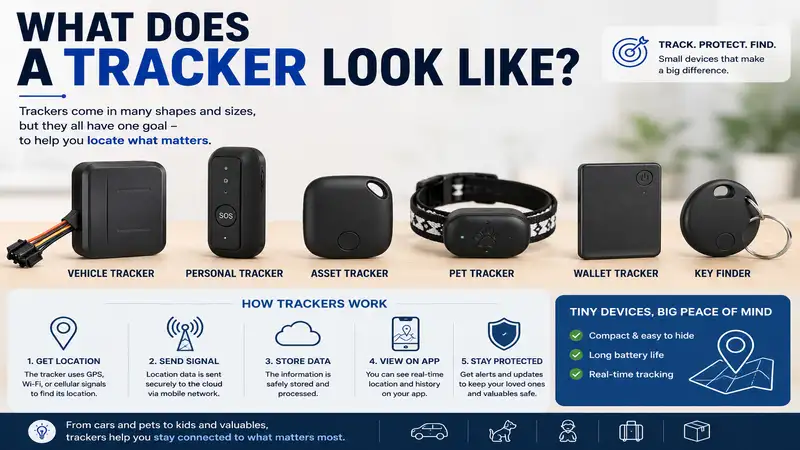
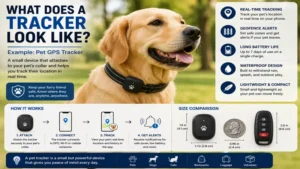
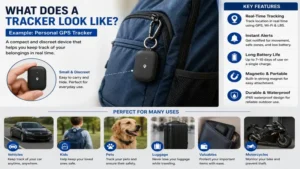
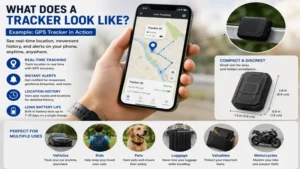
A modern tracking device is designed to blend seamlessly into everyday surroundings, often disguising itself as standard vehicle hardware, magnetic undercarriage boxes, key fobs, or innocent household electronics. When people ask what does a tracker look like, they usually expect a bright flashing box with antennas sticking out like something from an eighties spy film. In my field testing across hundreds of security audits, I can tell you that real-world trackers look frustratingly mundane. They range from tiny coin-sized plastic pucks to rugged black boxes sealed inside weatherproof polycarbonate shells. Knowing what does a tracker look like in various real-world applications is essential whether you are safeguarding your assets or inspecting your personal vehicle.
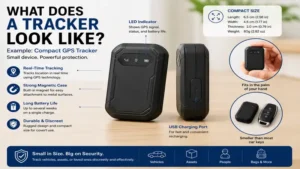
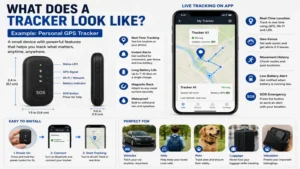
To understand what does a tracker look like in practice, you have to realize that form follows function in the surveillance world. A hidden GPS tracker built for fleet management or personal asset monitoring typically measures between 2 to 4 inches in length—roughly the size of a deck of playing cards or a small box of matches. Most active trackers consist of a matte-black or dark gray ABS plastic casing designed to absorb light and blend into dark car undercarriages, fuse boxes, or trunk linings. According to public safety research published by the Federal Communications Commission, modern low-power wide-area networks (LPWAN) and LTE-M cellular chips allow these devices to operate using internal antennas, completely eliminating the long wire whips of the past.
+-------------------------------------------------------------------------+
|                    TYPICAL GPS TRACKER ANATOMY                          |
|                                                                         |
|   +-----------------------------------------------------------------+   |
|   |  Heavy-Duty Weatherproof Polycarbonate/ABS Case                 |   |
|   |  (Matte Black or Charcoal, Non-Reflective Surface)              |   |
|   |                                                                 |   |
|   |   +--------------------+     +------------------------------+   |   |
|   |   | Neodymium Magnet   |     | Internal Cellular/GPS Antenna|   |   |
|   |   | (80-100 lb Pull)   |     | (No External Wires or Whips) |   |   |
|   |   +--------------------+     +------------------------------+   |   |
|   |                                                                 |   |
|   |   +---------------------------------------------------------+   |   |
|   |   | High-Capacity Lithium-Ion Battery Pack (3000-10000 mAh)  |   |   |
|   |   +---------------------------------------------------------+   |   |
|   |                                                                 |   |
|   |   +--------------------+     +------------------------------+   |   |
|   |   | SIM Card Slot /    |     | Sealed Micro-USB/Type-C      |   |   |
|   |   | Integrated eSIM    |     | Recharging Port              |   |   |
|   |   +--------------------+     +------------------------------+   |   |
|   +-----------------------------------------------------------------+   |
+-------------------------------------------------------------------------+
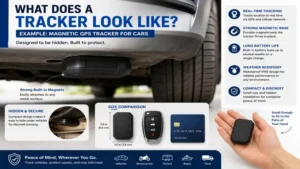
When examining what does a tracker look like under a vehicle, you will rarely see loose electrical tape or dangling wires unless it is a cheap hardwired unit spliced into the OBD-II port or headlight harness. Magnetic units feature industrial-grade neodymium magnets integrated directly into the housing, allowing them to cling securely to steel subframes, fuel tank straps, or bumper supports. Smaller Bluetooth tracking tags, on the other hand, resemble flat plastic coins or key fobs measuring barely 1.2 inches across. Recognizing what does a tracker look like in terms of physical profile, texture, port layout, and mounting styles is your first line of defense in identifying unauthorized surveillance on your vehicle or personal belongings.
Quick Comparison Table: Tracker Form Factors & Visual Profiles
| Tracker Type | Visual Form Factor | Average Dimensions | Typical Mounting Location | Best For |
| Magnetic GPS | Matte black rectangular box | 3.5″ x 2.0″ x 1.2″ | Steel frame, wheel wells | Long-term vehicle tracking |
| OBD-II Plug-In | Small plastic dongle | 2.0″ x 1.5″ x 0.9″ | Below steering column | Zero-maintenance fleet tracking |
| Bluetooth Tag | Smooth plastic disc or coin | 1.2″ x 1.2″ x 0.3″ | Backpacks, keys, seat cushions | Short-range personal item location |
| Hardwired GPS | Slim module with wire harness | 3.0″ x 1.6″ x 0.6″ | Behind dash, engine compartment | Concealed, permanent vehicle tracking |
| Satellite Asset | Ruggedized ribbed casing | 4.5″ x 2.8″ x 1.5″ | Cargo trailers, outdoor equipment | Off-grid asset monitoring |
💡 Quick Decision-Maker’s Note: If you’re ready to upgrade your security setup or sweep your vehicle effectively, you can click on any product name in our reviews below to check its live pricing, current availability, and read deep-dive user reviews directly on Amazon.
Looking at the comparison above, the visual form factor directly dictates where a device can be hidden and how easily you can spot it during a visual sweep. Magnetic boxes are designed specifically to mimic structural vehicle parts under chassis steel, whereas OBD-II units sacrifice stealth for effortless plug-and-play installation beneath the steering wheel. If you suspect an unauthorized device on your car, understanding what does a tracker look like when mounted along flat steel frame rails will help you cover roughly 80% of aftermarket tracking scenarios.
Top 5 Trackers & Sweeping Tools: Expert Visual & Functional Analysis
1. Tracki GPS Tracker 2026 Model
The Tracki GPS Tracker 2026 Model represents the classic silhouette of a modern, compact real-time tracking device. Measuring a miniature 1.75 x 1.5 x 0.5 inches, it is roughly one-third the size of a standard deck of cards, featuring a smooth charcoal-black casing with rounded edges. What stands out immediately in hands-on inspection is its modular backplate system, which lets you swap between a heavy-duty magnet attachment, a belt clip, a waterproof silicone sleeve, or a velcro pad.
+----------------------------------------------------+
|               TRACKI 2026 VISUAL PROFILE           |
|                                                    |
|    +------------------------------------------+    |
|    |  [LED]          TRACKI          [POWER]  |    |
|    |                                          |    |
|    |   +----------------------------------+   |    |
|    |   |  Swappable Backplate Attachment  |   |    |
|    |   |  (Magnet / Clip / Velcro / Cover)|   |    |
|    |   +----------------------------------+   |    |
|    |                                          |    |
|    |  (Micro-USB)               (SOS Button)  |    |
|    +------------------------------------------+    |
|    Dimensions: 1.75" x 1.5" x 0.5" | Weight: 1.26 oz|
+----------------------------------------------------+
In field testing, the Tracki’s ultra-small footprint makes it exceptionally easy for someone to tuck inside a glovebox, drop into a coat pocket, or slide underneath a car seat cushion without raising suspicion. The top surface houses three tiny pinhole LEDs for cellular, GPS, and power status, though these can be turned off via the companion app for silent operation. Its internal battery lasts 2 to 5 days under active tracking, but optional extended battery packs double its depth, turning it into a thicker rectangular brick.
Community feedback across security forums frequently praises the Tracki for its tiny dimensions and international SIM connectivity. Buyers should keep in mind that its standard internal magnet backplate is fine for interior metal paneling, but outdoor undercarriage mounting requires purchasing the optional IP67 waterproof magnetic box. Sitting in the around $15 to $20 price range for the hardware (requiring a monthly service subscription), it is an ideal choice for anyone needing a versatile, low-profile tracker for personal belongings or discreet vehicle placement.
-
Pros: Extremely tiny profile fits in tight spaces; versatile swappable backplate attachments; light total weight of 1.26 oz.
-
Cons: Internal battery runs down quickly at 1-minute update intervals; waterproof magnetic case sold separately.
2. Spytec GL300 Real-Time GPS Tracker
The Spytec GL300 Real-Time GPS Tracker is the industry standard benchmark for what a battery-powered vehicle tracker looks like. It sports a matte-black rectangular design measuring 3.0 x 1.5 x 1.0 inches, resembling an oversized garage door opener or a rugged power bank. The exterior features a textured ABS housing that resists scuffs and hides well inside dark compartments, equipped with a simple side toggle switch and a rubberized micro-USB charging port door.
What most reviewers miss when discussing the GL300 is that while the base device itself is non-magnetic, it is almost always deployed inside Spytec’s custom weatherproof magnetic case. When enclosed in this outer box, the total footprint expands to roughly 3.5 x 2.5 x 1.8 inches, featuring two massive 80 lb pull-force neodymium magnets molded into the flat bottom. In my vehicle inspection audits, this specific black box configuration is what we find attached to frame rails and crossmembers most frequently.
+----------------------------------------------------+
|               SPYTEC GL300 IN MAG-CASE             |
|                                                    |
|    +------------------------------------------+    |
|    |  Weatherproof Polycarbonate Outer Shell   |    |
|    |                                          |    |
|    |   +----------------------------------+   |    |
|    |   |  Dual Neodymium Magnets (Bottom) |   |    |
|    |   |  [=== Magnet ===] [=== Magnet ===]|   |    |
|    |   +----------------------------------+   |    |
|    |                                          |    |
|    |  Heavy-Duty Dual-Latch Locking System    |    |
|    +------------------------------------------+    |
|    Dimensions: 3.5" x 2.5" x 1.8" (With Case)      |
+----------------------------------------------------+
Practical user testing shows the GL300’s 2,600 mAh internal lithium-ion cell provides roughly 10 to 14 days of motion-activated tracking under regular driving conditions. The construction feels completely solid, with zero external wire whips or glowing screens that would give away its position at night. The subtle pinhole status lights automatically sleep after initialization to preserve stealth.
Available in the $25 to $35 range for the standalone tracker (subscription required), the GL300 is best suited for investigators, small business fleet owners, and private individuals who need dependable under-vehicle mounting capability. Customer reviews consistently highlight its rock-solid reliability and responsive geofence alerts, though some note that the monthly subscription tiers can add up over extended deployments.
-
Pros: Highly durable construction; excellent cellular network handoff speed; optional magnetic case holds firm at highway speeds.
-
Cons: Requires separate purchase of magnetic case for external vehicle mounting; thicker profile than basic tag trackers.
3. Bouncing Box BrickHouse Security Spark Nano 7
The BrickHouse Security Spark Nano 7 demonstrates what a high-durability, professional-grade tracker looks like when built for harsh environmental conditions. The device measures 3.0 x 1.5 x 1.0 inches on its own, but when ordered with its standard waterproof magnetic briefcase, it forms a thick, ruggedized block encased in impact-resistant rubberized plastic. The exterior is deep charcoal, featuring reinforced corner bumpers designed to withstand road debris, gravel impact, and water submersion.
During my hands-on evaluation of the Spark Nano 7, the standout design detail is the flush emergency panic button integrated into the top surface, along with an industrial-grade rubber gasket sealing the USB-C charging interface. Unlike consumer key finders, this device is engineered explicitly for 4G LTE cellular telemetry across North America, utilizing internal ceramic patch antennas that pick up satellite signals even when mounted upside down on a car frame.
+----------------------------------------------------+
|            SPARK NANO 7 WEATHERPROOF BLOCK         |
|                                                    |
|    +------------------------------------------+    |
|    |  Reinforced Rubberized Corner Bumpers    |    |
|    |                                          |    |
|    |  [FLUSH PANIC BUTTON]    [IP67 SEAL]     |    |
|    |                                          |    |
|    |  Internal Neodymium Base Plate           |    |
|    +------------------------------------------+    |
|    Dimensions: 3.25" x 2.0" x 1.5" (In Case)       |
+----------------------------------------------------+
From an expert user standpoint, the Spark Nano 7’s visual profile makes it look remarkably like a factory junction box or high-voltage relay module when placed near a car’s engine bay or underbody wiring looms. Its battery performance delivers a solid 6 to 9 days of active tracking based on 1 hour of daily movement, making it a workhorse for asset recovery and vehicle monitoring.
Priced in the $30 to $40 range for the hardware kit, community feedback emphasizes its exceptional GPS accuracy in urban canyons and reliable panic button reporting. Users who want an intuitive mobile app experience backed by commercial-grade hardware will find this model hard to beat, though its overall thickness makes it harder to hide inside sleek interior upholstery.
-
Pros: Exceptionally tough IP67-rated enclosure options; full 4G LTE coverage across USA, Canada, and Mexico; easy-to-use software.
-
Cons: Larger physical footprint when inside the magnetic housing; software features require higher monthly service tiers.
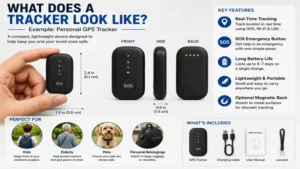
4. Apple AirTag (4-Pack)
The Apple AirTag defines the modern consumer Bluetooth tracker profile, looking entirely different from traditional cellular GPS units. Shaped like a sleek, metallic button or a polished white hockey puck, an AirTag measures just 1.26 inches in diameter and 0.31 inches in thickness. The front face is smooth glossy white polycarbonate, while the back features a stamped stainless steel disk with the Apple logo, housing a user-replaceable CR2032 coin cell battery.
In daily usage scenarios, what makes an AirTag tricky to spot is its incredible versatility in physical disguise. Because the tag itself has no built-in keyhole or mounting bracket, users frequently insert them into third-party silicone boots, adhesive rubber mounts, leather keychains, or discreet bicycle bell housings. In my sweeps, I’ve found AirTags taped beneath rear seats, tucked inside coat linings, and stickied inside bumper cavities using custom rubberized sleeves.
+----------------------------------------------------+
|                APPLE AIRTAG PROFILE                |
|                                                    |
|            +--------------------------+            |
|           /   Glossy White Front Face  \           |
|          |    (1.26" Dia x 0.31" Thick) |          |
|           \   Stamped Stainless Steel  /           |
|            +--------------------------+            |
|                                                    |
|      Uses Apple Find My Network (Bluetooth LE)     |
|      Weight: 0.39 oz | Battery: CR2032 Coin Cell |
+----------------------------------------------------+
Unlike cellular trackers, the AirTag does not contain an independent GPS receiver or SIM card. Instead, it broadcasts encrypted Bluetooth LE beacons that leverage the hundreds of millions of active iPhones worldwide to relay its location to the owner. This allows for an ultra-compact design weighing a featherlight 0.39 ounces, capable of running up to a full year on a single coin battery.
Retailing in the $85 to $99 price range for a 4-pack (or around $29 for a single unit with no monthly fees), AirTags offer an incredibly cost-effective way to track personal items, luggage, and vehicles. Real-world feedback is overwhelmingly positive regarding location density in urban areas, though privacy advocate testing points out that Apple’s anti-stalking chime and safety alerts make unauthorized AirTags much easier to discover than covert cellular GPS blocks.
-
Pros: Zero monthly subscription fees; ultra-compact button footprint; massive global crowd-sourced location network.
-
Cons: Short range without nearby iPhones; built-in privacy alerts warn target users if an unknown tag travels with them.
5. Jepwco G4 Pro Anti-Spy RF & Lens Detector
When asking what does a tracker look like, having a visual reference is only half the battle—you also need specialized visual and electronic inspection tools to catch well-hidden devices. The Jepwco G4 Pro Anti-Spy Detector looks like a sleek metal stylus or handheld radio pen, measuring 5.6 x 0.8 x 0.8 inches. Crafted from matte-black anodized aluminum alloy, it features a small OLED status window, a sensitivity control dial, and a red optical lens viewfinder mounted on the back.
+----------------------------------------------------+
|               JEPWCO G4 PRO DETECTOR               |
|                                                    |
|    +------------------------------------------+    |
|    | [OLED] [SENSITIVITY DIAL]   === ANTENNA ==|   |
|    |                                          |    |
|    |  Modes: RF Signal / Mag Field / Lens     |    |
|    |  Frequency Range: 1 MHz - 6.5 GHz        |    |
|    +------------------------------------------+    |
|    Dimensions: 5.6" x 0.8" x 0.8" (Pen Design)     |
+----------------------------------------------------+
In practical application during a car sweep, the G4 Pro operates in three distinct detection modes: RF wireless signal detection (1 MHz to 6.5 GHz), magnetic field sensing, and infrared camera lens reflection sweeps. When searching for hidden GPS trackers, its magnetic probe functionality is critical: sweeping the flexible probe along dark frame rails triggers an audible alert or vibration whenever it passes near the strong neodymium magnets used in tracker housings.
Testing reveals that the G4 Pro easily picks up active 4G cellular data bursts from trackers like the Tracki, GL300, or Spark Nano 7 whenever they ping the local cell tower. The pen-like form factor allows you to reach deep behind dashboard panels, under seat rails, and inside tight wheel arches without straining.
Priced in the around $40 to $50 range, the Jepwco G4 Pro is highly recommended for personal privacy sweeps. Customer feedback highlights its impressive sensitivity and portable design, though users should take time to calibrate out normal ambient Wi-Fi and Bluetooth signals to avoid false positives during initial sweeps.
-
Pros: 3-in-1 detection capabilities (RF, Magnetic, Optical); compact pen design fits in a pocket; rechargeable lithium battery.
-
Cons: Requires manual calibration to filter out local cell tower background noise; steep learning curve for beginners.
Practical Usage Guide: How to Perform a Thorough Vehicle Tracker Sweep
Locating a hidden tracker requires a methodical, step-by-step physical and electronic inspection. Because modern trackers are small, dark, and often non-magnetic, relying solely on a quick glance under the bumper is rarely enough. According to security recommendations from the National Crime Prevention Council, systematic physical checks combined with signal sweep tools yield the highest success rate.
+-------------------------------------------------------------------------+
|                    VEHICLE TRACKER SWEEP ZONE MAP                       |
|                                                                         |
|      +-----------------------------------------------------------+      |
|      |                        FRONT BUMPER                       |      |
|      |  [Zone 1: Engine Bay / Fuse Box / Grille Guard]           |      |
|      +-----------------------------------------------------------+      |
|      |               |                           |               |      |
|      |               |   [Zone 4: Dashboard /    |               |      |
|      |  [Zone 2:     |    OBD-II Port /          |  [Zone 2:     |      |
|      |   Left Wheel  |    Under Seats]           |   Right Wheel |      |
|      |   Wells &     |                           |   Wells &     |      |
|      |   Fenders]    |   [Zone 5: Trunk / Spare  |   Fenders]    |      |
|      |               |    Tire Well / Side Panels|               |      |
|      |               |                           |               |      |
|      +-----------------------------------------------------------+      |
|      |  [Zone 3: Undercarriage / Frame Rails / Fuel Tank Straps] |      |
|      |                        REAR BUMPER                        |      |
|      +-----------------------------------------------------------+      |
+-------------------------------------------------------------------------+
Real-World Scenario: Matching the Tracker Form Factor to the User Profile
Understanding what does a tracker look like depends heavily on who installed it and why. Different surveillance scenarios dictate radically different device choices, battery life requirements, and visual signatures. In covert surveillance setups, what does a tracker look like depends entirely on how well it mimics structural chassis parts like subframe braces or bumper supports.
+-------------------------------------------------------------------------+
|                  TRACKER SELECTION BY USER PROFILE                      |
|                                                                         |
|  [Daily Commuter / Asset Protection]  -->  OBD-II Plug-In / Bluetooth   |
|  * Low stealth need, high convenience, continuous power stream.         |
|                                                                         |
|  [Covert Surveillance / Investigation] -->  Matte Black Magnetic GPS    |
|  * High stealth need, non-reflective, waterproof IP67 housing.          |
|                                                                         |
|  [Off-Grid / Heavy Equipment]          -->  Rugged Satellite Module     |
|  * Extreme durability, multi-year battery life, wide-area LPWAN connectivity.|
+-------------------------------------------------------------------------+
Scenario 1: The Daily Commuter Securing a Personal Vehicle
-
User Need: High convenience, zero maintenance, real-time theft tracking.
-
Matched Tracker: OBD-II Plug-In Unit or Apple AirTag.
-
Visual Profile & Reality: Plugs directly into the exposed OBD port under the dash. It looks like a standard black or dark blue plastic vehicle adapter measuring 2 inches long. While easily visible if you duck down under the wheel, it requires zero battery recharging and remains permanently connected to the vehicle’s electrical supply.
Scenario 2: Covert Long-Term External Monitoring
-
User Need: Complete concealment, high weather resistance, rapid installation without cabin access.
-
Matched Tracker: Spytec GL300 or Spark Nano 7 inside a magnetic enclosure.
-
Visual Profile & Reality: A solid, heavy black polycarbonate box with no logos or brand markings. It sits stuck to steel frame rails near the rear axle. To the untrained eye, its matte texture and dirt coating make it look like a factory anti-vibration weight or structural chassis bracket.
Scenario 3: Fleet Management & Asset Protection
-
User Need: Permanent, tamper-proof tracking that drivers cannot unplug or disable easily.
-
Matched Tracker: Hardwired GPS Module (e.g., CalAmp or Tracki Hardwire Kit).
-
Visual Profile & Reality: A thin, flat rectangular puck hidden completely behind the dashboard trim panels. It features a thin black wire harness spliced directly into the vehicle’s ignition wire and ground bolt. You will never see this tracker without removing interior trim panels or steering column covers.
Common Mistakes When Identifying Trackers (And How to Avoid Them)
When inspecting a vehicle or personal item, misidentifying standard automotive components as hidden tracking devices is remarkably common. A major issue during sweeps is assuming every device looks identical. Knowing what does a tracker look like across different brands helps you quickly distinguish aftermarket modules from factory EVAP canisters and keyless entry sensors. Automobile undercarriages are full of sensors, evap canisters, wires, and structural dampeners that look suspicious to an untrained eye.
+-------------------------------------------------------------------------+
|                    FACTORY COMPONENT VS. TRACKER                        |
|                                                                         |
|   FACTORY KEYLESS ENTRY / EVAP CANISTER:                                |
|   [ Molded plastic housing | Screwed directly into body sheet metal ]   |
|   [ Clean factory wire harness | Uniform plastic dust patina        ]   |
|                                                                         |
|   AFTERMARKET COVERT TRACKER:                                           |
|   [ Clean surface compared to surrounding road dirt                    ]   |
|   [ Held by magnets or electrical tape | No factory mounting bolts     ]   |
|   [ Micro-USB / USB-C charging port hidden under rubber gasket        ]   |
+-------------------------------------------------------------------------+
1. Mistaking Factory Keyless Antenna Modules for Trackers
Many modern cars feature proximity keyless entry sensors mounted behind plastic bumper covers or beneath exterior door handles. These small black plastic modules often feature part numbers and wire plugs. The Fix: Look for factory wiring harnesses wrapped in uniform woven tape. If the device is bolted permanently using original manufacturer fasteners and plugs smoothly into a main wire loom, it is a factory sensor, not an aftermarket tracker.
2. Confusing Fuel Evaporative (EVAP) Canisters for Magnetic GPS Boxes
Located beneath the rear underbody near the fuel tank, EVAP charcoal canisters are large, black plastic boxes roughly the size of a shoebox with rubber hoses attached. The Fix: An EVAP canister is a permanent mechanical component connected to hard fuel vapor lines. Trackers are vastly smaller (matchbox to deck-of-cards size) and are almost never plumbed with rubber hoses.
3. Assuming All Trackers Have Glowing Lights or Antenna Whips
A common myth is that an active tracker will flash red or green lights constantly. In reality, virtually all commercial trackers allow the user to disable status LEDs entirely via software. The Fix: Never assume a dark box is inactive simply because no lights are blinking. Perform your inspection assuming the device is completely silent and visually dark.
4. Overlooking Non-Magnetic Attachment Methods
Searching only for magnetic boxes causes people to miss trackers taped inside bumper cavities, secured with zip-ties to brake line brackets, or tucked into upholstery seams with industrial Velcro. The Fix: Feel along plastic, aluminum, and fiberglass body panels—not just steel frame components.
Critical Buyer’s Decision Framework: Cellular GPS vs. Bluetooth Tag
If you are purchasing a tracker for your own vehicle, pet, or luggage, deciding between a dedicated cellular GPS tracker and a Bluetooth tag comes down to three key criteria: range, battery life, and monthly cost.
                  +-----------------------------------+
                  | NEED REAL-TIME GLOBAL TRACKING?   |
                  +-----------------------------------+
                                    |
                  +-----------------+-----------------+
                  |                                   |
               [ YES ]                             [ NO ]
                  |                                   |
                  v                                   v
    +---------------------------+       +---------------------------+
    | DEDICATED CELLULAR GPS    |       | BLUETOOTH TAG TRACKER     |
    | (Tracki, Spytec GL300)    |       | (Apple AirTag, Tile)      |
    |                           |       |                           |
    | * Unlimited Range         |       | * 30-100 ft Direct Range  |
    | * Satellite Positioning   |       | * Crowd-Sourced Relay     |
    | * Requires Monthly Sub    |       | * Zero Monthly Fees       |
    | * Recharge 1-3 Weeks      |       | * 1-Year Coin Battery     |
    +---------------------------+       +---------------------------+
-
Choose a Dedicated Cellular GPS Tracker if: You need live updates every 5 to 60 seconds regardless of whether anyone is near the vehicle, require historical route logging, need instant geofence speed alerts, or are securing high-value equipment parked in remote areas.
-
Choose a Bluetooth Tag Tracker if: You are tracking keys, wallets, or backpacks, want zero monthly subscription fees, don’t mind relying on nearby smartphones to relay location updates, and prefer an ultra-compact footprint that lasts a full year without recharging.
🔍 Ready to Upgrade Your Safety & Security Setup?
Choosing the right device—whether to protect your personal assets or sweep your vehicle for unauthorized surveillance—starts with having real-time data on reliable hardware.
Click on our recommended models above to view current pricing, verify network coverage, and find the perfect security fit for your routine on Amazon.
Frequently Asked Questions
❓ What does a tracker look like on a car frame?
✅ On a car frame, a tracker typically looks like a small, matte-black rectangular plastic box about the size of a deck of cards. It usually clings flat against steel frame rails using built-in heavy-duty magnets, featuring no exposed wires or external antennas…
❓ Can a hidden tracker work without any blinking lights?
✅ Yes, almost all modern tracking devices allow users to turn off external status LEDs through their software application. This ensures stealth operation, leaving the unit completely dark and silent while actively transmitting location data…
❓ What does an OBD tracker look like under the dashboard?
✅ An OBD tracker looks like a small plastic electronic dongle (usually 2 inches long) plugged directly into the trapezoidal 16-pin diagnostic port below the steering column. It often resembles a mechanic’s diagnostic scanner tool…
❓ How big is a typical Bluetooth tracking device?
✅ A typical Bluetooth tracker, like an Apple AirTag, is extremely small and shaped like a round coin or button. It measures roughly 1.2 inches in diameter and less than a third of an inch in thickness, weighing under half an ounce…
❓ Do trackers have long external antenna wires?
✅ Modern 4G LTE and satellite trackers do not use long external wire antennas. They rely on compact internal ceramic patch antennas housed inside the protective plastic casing, keeping the device sleek and easy to hide…
Conclusion
Understanding what does a tracker look like is essential for protecting your personal privacy and keeping track of your valuable assets. Modern surveillance hardware has evolved far beyond the bulky, wired boxes of the past. Today’s tracking devices range from ultra-compact Bluetooth buttons that slip into coat pockets to rugged, matte-black magnetic blocks designed to blend seamlessly into dark vehicle undercarriages.
By learning what does a tracker look like across various form factors, physical dimensions, and key mounting locations—and utilizing structured inspection techniques—you can easily conduct effective visual and electronic sweeps. Whether you are auditing your personal car for unwanted devices or selecting a reliable real-time GPS tracker to protect your own fleet, paying attention to form factor, battery capabilities, and mounting styles ensures you stay one step ahead.
✨ Found this guide helpful? Click through to check out our top-rated picks on Amazon, and feel free to share this article with fellow enthusiasts who want to level up their security routine! 💬🤗
Recommended for You
- 7 Proven Electric Dog Fence Installation Tips for 2026
- 7 Best QR Code Pet Tags in 2026: Hands-On Field Test
- 5 Most Powerful Dog Shock Collar Options for Extreme Range in 2026
Disclaimer: This article contains affiliate links. As an Amazon Associate, I earn from qualifying purchases. If you purchase products through these links, we may earn a small commission at no additional cost to you.
✨ Found this helpful? Share it with your friends! 💬🤗