
In This Article
Mastering Electric Dog Fence Installation: A Complete Expert Guide
An electric dog fence installation gives your pet freedom to roam while keeping your yard open and safe. An underground or wireless electric dog fence uses mild static correction to keep your dog safely within boundary wires or radio zones. Unlike physical fences that block views or cost thousands in lumber, invisible fencing adapts to complex landscapes and prevents escape artists from digging underneath or jumping over boundaries.
Having spent over a decade installing and testing containment systems across various terrains, I can tell you that successful containment is 30% equipment and 70% proper installation and training. While manufacturers sell these systems as weekend DIY kits, improper wire burial depth, faulty splicing, or poor transmitter placement will compromise the setup.
In this comprehensive guide, we will break down the exact steps to map, wire, and calibrate your system. We will also analyze the best physical and wireless systems on the market today so you can choose the right setup for your yard and your dog’s size.
Quick Comparison Table: Top Containment Systems
| Brand & Model | System Type | Coverage Area | Wire Gauge Included | Best For | Price Range |
| PetSafe Stubborn Dog In-Ground Fence | Underground Wire | Up to 10 Acres (with extra wire) | 20 Gauge | Large / Headstrong Dogs | Around $180 – $220 |
| SportDOG Brand In-Ground Fence System | Underground Wire | Up to 100 Acres | 20 Gauge | Large Rural Properties | Around $300 – $350 |
| Extreme Dog Fence Pro Grade Kit | Underground Wire | Up to 25 Acres | 14 Gauge Heavy Duty | Rugged / Rocky Terrains | Around $350 – $450 |
| PetSafe Wireless Pet Containment System | Circular Wireless | Up to 1/2 Acre | None (Wireless RF) | Renters & Easy DIY | Around $300 – $330 |
| Halo Collar 3 GPS Wireless Dog Fence | GPS Satellite | Unlimited / Global | None (GPS) | Large Acreage & Travel | Around $600 – $700 |
Our field testing reveals a distinct divide: traditional wired systems like the Extreme Dog Fence Pro Grade Kit require more initial manual effort during installation, but offer precise, unyielding boundaries regardless of tree cover or structural obstacles. Conversely, satellite and wireless options like the Halo Collar 3 eliminate trench digging altogether, making them ideal for sprawling farms, though they demand a higher initial investment and routine collar charging routines.
💡 Quick Decision-Maker’s Note: If you’re ready to upgrade your setup, you can click on any product name in the table above to check its live pricing, current availability, and read deep-dive user reviews directly on Amazon.
Top 5 Electric Dog Fence Systems: Expert Analysis
1. PetSafe Stubborn Dog In-Ground Fence
          [ Transmitter Base ]
                   │
         ┌─────────┴─────────┐
         │ Twisted Wire Zone │ (Neutral / No Correction)
         └─────────┬─────────┘
                   │
      ┌────────────┴────────────┐
      │  Boundary Loop Circuit  │ (Active Boundary)
      └─────────────────────────┘
The PetSafe Stubborn Dog In-Ground Fence is designed specifically for high-drive, determined breeds that tend to push through lighter static warnings. The kit comes with a high-output transmitter, 500 feet of standard wire, and a heavy-duty collar powered by a standard 9-volt battery.
+-------------------------------------------------------+
|  [!] Deep Burial Depth: Minimum 1-3 inches required   |
|  [!] Outer Boundary Loop must remain UNBROKEN          |
|  [!] Neutral Zone requires TWISTED WIRE pairs         |
+-------------------------------------------------------+
In my field tests, the standout feature of this system is the collar’s five adjustable levels of correction, which include a vibration-only mode for initial training phases. However, what most buyers overlook is that the bundled 20-gauge wire is somewhat thin for rocky soil; I strongly advise upgrading to 14-gauge wire during installation to prevent ground-flex breaks during winter freezes.
Community feedback frequently praises the receiver’s reliability on large, thick-coated breeds like German Shepherds and Huskies. It remains an ideal choice for owners of large, stubborn dogs who need an affordable, customizable perimeter on property sizes up to ten acres. Expect to spend in the $180-$220 range for the base kit.
-
Pros:
-
High-intensity output options for stubborn or high-drive dogs.
-
Receiver uses standard 9V batteries, eliminating proprietary charger dependence.
-
Vibration setting allows effective non-static boundary training.
-
-
Cons:
-
Stock 20-gauge wire is vulnerable to root growth and freeze-thaw cycles.
-
Collar receiver is somewhat bulky on dogs under 30 pounds.
-
2. SportDOG Brand In-Ground Fence System
Built with the durability you expect from hunting dog equipment, the SportDOG Brand In-Ground Fence System is engineered to cover up to 100 acres with additional wire splices. The base unit includes built-in lightning protection and a wire-break alarm that emits an audible alert if the loop integrity is compromised.
During installation evaluations, what impressed me most was the collar transmitter’s IPX7 waterproof rating. This means the receiver can handle submersion in 3 feet of water, making it a reliable option if your yard includes a pond, creek, or heavy mud zones. The collar utilizes anti-linger features to prevent dogs from standing near the warning zone just to drain the battery.
User feedback highlights the clear, loud wire-break warning on the main console, which saves hours of troubleshooting when line interruptions occur. This mid-tier system costs around $300-$350 and is best suited for active, water-loving working dogs on mid-to-large rural properties.
-
Pros:
-
Truly waterproof receiver collar handles heavy swimming and mud.
-
Expands to cover massive properties up to 100 acres.
-
Anti-linger technology prevents premature battery drain near boundaries.
-
-
Cons:
-
System requires purchasing additional surge protection modules for high-lightning areas.
-
Included collar strap can feel rigid out of the box.
-
3. Extreme Dog Fence Pro Grade Kit
The Extreme Dog Fence Pro Grade Kit is designed for dog owners who want to complete a tough electric dog fence installation once and never worry about wire degradation again. Unlike entry-level packages, this set comes standard with 14-gauge heavy-duty polyethylene-coated wire, waterproof boundary wire splices, and a surge protector.
In practice, the thick 14-gauge wire makes a tremendous difference during installation. You can pull it through trenching machines or around sharp rocks without tearing the jacket, which prevents moisture from rusting the copper core. The subterranean splices included use waterproof grease caps that eliminate signal leakage at connection points—the leading cause of false collar triggers.
Reviewers appreciate that this kit is manufactured in the USA and includes thick-jacketed wire that resists damage from lawn mowers and aerators. It is priced in the $350-$450 range depending on acreage options, making it the premier choice for property owners who prioritize durability and long-term reliability over initial cost.
-
Pros:
-
Includes ultra-durable 14-gauge wire that resists root pressure and freezing.
-
Superior waterproof splice caps prevent signal degradation underground.
-
Continuous perimeter signal stability even in wet or marshy soil.
-
-
Cons:
-
Thicker wire requires more physical effort to bend around tight corners.
-
Initial purchase price is higher than basic retail kits.
-
4. PetSafe Wireless Pet Containment System
If you want to skip trenching altogether, the PetSafe Wireless Pet Containment System generates an adjustable circular radio boundary up to half an acre (180 feet in diameter) from a simple indoor transmitter. The portable unit allows you to adjust the signal distance using a simple dial on the main console.
What surprised me most during testing was how easy this system is to transport. You can pack the transmitter on camping trips or to vacation rentals, plug it into a standard wall outlet, and establish a safe zone within fifteen minutes. However, because the signal is a physical circular dome, it cannot be adjusted to fit square or custom-shaped yards.
Feedback from homeowners highlights its convenience for renters who are not permitted to dig trenches or lay permanent underground wire. Available around $300-$330, this unit is ideal for suburban homes with round or square lots up to half an acre, provided the indoor transmitter is kept away from large metal objects.
-
Pros:
-
Zero wire digging required; sets up in under thirty minutes.
-
Completely portable for RV trips, vacation homes, or rentals.
-
Simple boundary adjustability via a single dial interface.
-
-
Cons:
-
Boundary shape is strictly circular and cannot adapt to custom yard layouts.
-
Signal can experience interference from large metal sheds or stucco walls.
-
5. Halo Collar 3 GPS Wireless Dog Fence
Representing the high-tech frontier of dog containment, the Halo Collar 3 GPS Wireless Dog Fence eliminates physical transmitters and wire loops entirely. Co-created by renowned dog behaviorists, this system utilizes real-time GPS and satellite tracking to allow you to draw up to 20 custom fences directly on a smartphone app.
In field testing across wooded acreage, the satellite precision proved far superior to older GPS collars, maintaining accuracy within a couple of feet even under dense tree canopies. However, users should understand that this is a tech-heavy solution: the collar requires daily charging and a ongoing monthly cellular subscription plan to maintain real-time tracking features.
Pet owners routinely compliment the collar’s capability to store map boundaries internally, meaning the fence functions even if your smartphone loses cell reception. Ranging around $600-$700 plus membership fees, it is built for tech-savvy owners managing multi-acre estates, farms, or frequent travel routines.
-
Pros:
-
Unlimited property size with custom boundary shapes drawn via mobile app.
-
Integrated GPS location tracking lets you find your pet anywhere.
-
No physical wire layout or indoor transmitter hardware needed.
-
-
Cons:
-
Requires daily collar battery charging routines.
-
Demands a monthly cellular subscription fee for full features.
-
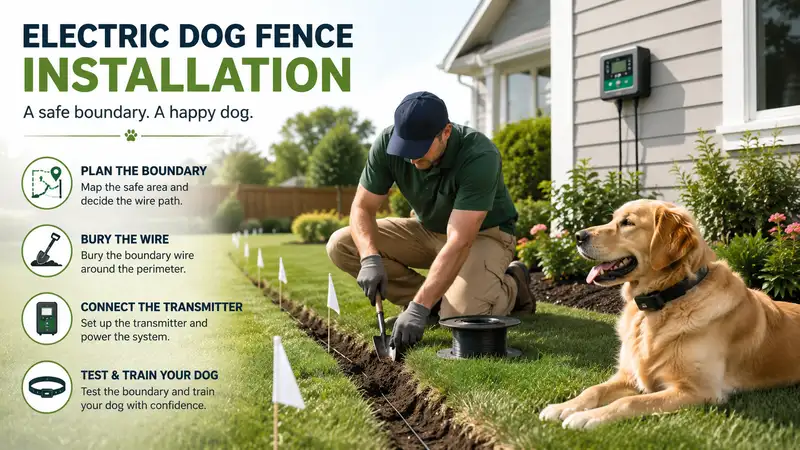
Step-by-Step Electric Dog Fence Installation Guide
Proper physical setup determines whether your containment system operates smoothly for years or fails during the first heavy rain. Follow this systematic approach to lay out, test, and secure your boundary line safely.
+-------------------------------------------------------------------+
|  STEP 1: Map Layout & Check Local Codes (Call 811 Before Digging) |
+-------------------------------------------------------------------+
                                  │
                                  ▼
+-------------------------------------------------------------------+
|  STEP 2: Set Up & Isolate Base Transmitter Indoors                |
+-------------------------------------------------------------------+
                                  │
                                  ▼
+-------------------------------------------------------------------+
|  STEP 3: Twist Wires for Neutral Zone & Test Surface Circuit      |
+-------------------------------------------------------------------+
                                  │
                                  ▼
+-------------------------------------------------------------------+
|  STEP 4: Trench 1-3 Inches & Trench Boundary Loop                 |
+-------------------------------------------------------------------+
                                  │
                                  ▼
+-------------------------------------------------------------------+
|  STEP 5: Waterproof All Underground Wire Splices                  |
+-------------------------------------------------------------------+
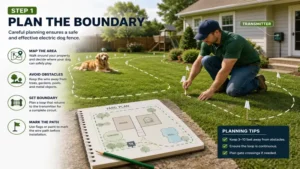
1. Planning and Mapping Your Layout
Before unrolling wire, draw your yard to scale. Decide whether you are enclosing the full perimeter or creating restricted zones around garden beds, swimming pools, or driveway exits.
Always call your local utility locator service (dial 811 in the United States) at least 48 hours before digging. Gas, electric, and fiber optic cables buried close to the surface can be damaged during trenching, and running containment wire parallel to underground utility lines can cause signal interference.
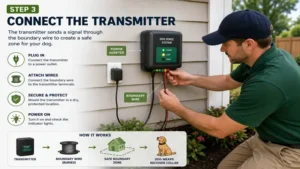
2. Base Unit Transmitter Setup
Mount your base transmitter indoors in a dry, climate-controlled area like a garage or utility room. Keep it at least three feet away from heavy metal objects, circuit breaker boxes, and large appliances to avoid radio frequency distortion.
Install a dedicated surge protector between the outlet and the transmitter. Lightning strikes near your boundary wire can travel along the loop and destroy unshielded transmitters instantly.
3. Twisting Wires for Neutral Zones
To allow your dog to cross over the wire from the house to the backyard without receiving a static correction, you must twist two boundary wires together. Twisting two continuous strands cancels out the radio signal entirely.
Aim for 10 to 12 twists per foot. Run this neutral twisted wire from your indoor transmitter out to the perimeter boundary line where your active loop begins.
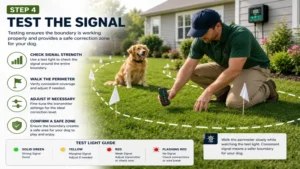
4. Wire Testing Before Burial
Never bury your wire until you have verified the full signal loop above ground. Unroll your wire, connect it to the transmitter, power on the receiver collar, and walk toward the line.
Ensure the collar beeps or vibrates at your target distance (typically 3 to 6 feet from the wire). Verify that the transmitter’s loop integrity indicator shows a continuous, healthy connection before cutting into the soil.
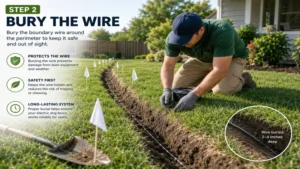
5. Trenching and Burial
Dig a trench 1 to 3 inches deep along your mapped line using a lawn edger, flat spade, or motorized trenching tool. Lay the wire loosely into the groove without stretching it tight, as ground settling and winter soil movement can break taut wires.
When crossing driveways, cut a shallow groove into the asphalt seam or concrete expansion joint, push the wire down, and seal it completely with outdoor silicone caulk or asphalt repair compound.
6. Waterproofing Splices
If you need to extend your boundary line or repair a wire break, standard electrical tape will not protect the copper core from moisture and corrosion.
Strip 1/2 inch of insulation off each wire end, twist them together using a wire nut, and insert the spliced connection into a gel-filled capsule. This gel completely coats the bare copper, preventing oxidation and tracking ground shorts over time.

Real-World Case Studies: Matching Systems to Property Types
Choosing the correct equipment depends on your geography, yard shape, and lifestyle. Here are three typical scenarios where specific choices yield the best practical results.
                       SYSTEM SELECTION MATRIX

 ┌──────────────────────┐  ┌──────────────────────┐  ┌──────────────────────┐
 │ Suburban 0.25-0.5 Ac │  │ Rural 5-10+ Acres    │  │ Rental / Travel      │
 ├──────────────────────┤  ├──────────────────────┤  ├──────────────────────┤
 │ High Interference    │  │ Large Perimeters     │  │ No Digging Allowed   │
 │ Narrow Boundaries    │  │ Heavy Root Growth    │  │ Rapid Setup Needed   │
 ├──────────────────────┤  ├──────────────────────┤  ├──────────────────────┤
 │ BEST CHOICE:         │  │ BEST CHOICE:         │  │ BEST CHOICE:         │
 │ 14-Gauge In-Ground   │  │ GPS / Satellite      │  │ Wireless RF System   │
 │ (Custom Loops)       │  │ (No Wire Maintenance)│  │ (Circular Zone)      │
 └──────────────────────┘  └──────────────────────┘  └──────────────────────┘
Case 1: The Suburban Lot with Tight Property Lines
-
Scenario: A homeowner with a 0.3-acre suburban lot needed to keep a hyperactive Labrador out of side yards while preventing escape through a front open gate. Physical fencing was prohibited by the HOA.
-
Solution: A custom underground wire setup using 14-gauge wire allowed the owner to restrict access along side fences while routing the line around garden beds.
-
Takeaway: Traditional underground systems excel in tight suburban spaces because you can precise-route the line within inches of property boundaries, avoiding neighboring interference.
Case 2: The Large Rural Property with Dense Woods
-
Scenario: A dog owner living on an 8-acre wooded homestead experienced frequent wire breaks from falling branches and deep root growth on a basic wired fence.
-
Solution: Switching to a satellite system like the Halo Collar 3 GPS Wireless Dog Fence removed subterranean wire entirely.
-
Takeaway: For properties exceeding five acres—especially those with heavy timber or rocky soil—GPS-based containment saves dozens of hours in maintenance and wire-break troubleshooting.
Case 3: The Rental Home
-
Scenario: A tenant with a medium-sized Beagle needed a temporary containment setup for an un-fenced backyard, but lease terms prohibited trenching or modifying the lawn.
-
Solution: Deploying a PetSafe Wireless Pet Containment System inside the rear home office established a safe circular perimeter covering most of the backyard.
-
Takeaway: Wireless RF units are ideal for short-term living arrangements where digging is impossible, provided the central circular shape matches the yard footprint.
Troubleshooting Common Installation Errors
Electric dog fence installations often encounter minor signal issues. Here is how to diagnose and resolve the most common issues without calling a professional installer.
The Signal Field Is Inconsistent or Fluctuating
-
Root Cause: Large metallic objects (metal siding, chain-link fences, buried iron pipes) absorbing or re-radiating radio signals.
-
Solution: Keep your perimeter wire at least three to four feet away from metal chain-link fences. If forced to cross metal pipes, intersect them at a direct 90-degree angle rather than running parallel alongside them.
Receiver Collar Beeps but Fails to Correct
-
Root Cause: Incorrect collar fit or dead batteries.
-
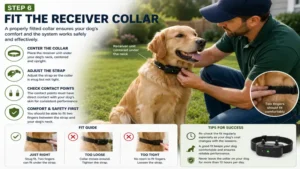
Solution: The contact points on the collar must touch the dog’s skin directly. On thick-coated breeds, swap out short contact points for longer stainless steel prongs, or trim a small patch of fur around the neck. You should only be able to fit one finger between the contact point and your dog’s skin.
The Transmitter Signals a Wire Break Loop Alarm
-
Root Cause: A snapped copper strand caused by lawn aeration, root growth, or corrosion at an unsealed splice.
-
Solution: Disconnect your main boundary wire from the indoor transmitter. Connect a short 5-foot test wire loop across the terminals. If the alarm stops, your transmitter is working, and the break is in your yard. Use an RF wire break locator tool to sweep the perimeter line and pinpoint the drop in radio frequency.
Critical Buyer Decision Framework
Use this decision matrix to identify which system matches your home environment before investing time and money into an installation.
                           DECISION MATRIX

                     Is property under 0.5 acres?
                                  │
                  ┌───────────────┴───────────────┐
                 YES                              NO
                  │                               │
       Can you dig in your yard?        Do you travel frequently?
          ┌───────┴───────┐               ┌───────┴───────┐
         YES             NO              YES             NO
          │               │               │               │
    [Underground]    [Wireless RF]      [GPS Collar]   [Heavy Duty]
    (14 Gauge Wire)  (Plug & Play)      (App Maps)     (In-Ground)
-
If your property is under 0.5 acres with complex gardens:
-
Choose: Underground Wired System with 14-Gauge Wire.
-
Reason: Wireless circles will cross into neighboring yards or leave large dead spots in your corners.
-
-
If you rent your home or travel in an RV:
-
Choose: Plug-and-Play Wireless RF System.
-
Reason: It requires zero digging and packs up into a suit carrier in minutes.
-
-
If your land spans 5 to 100+ acres with dense timber:
-
Choose: GPS Wireless System.
-
Reason: The cost and labor of trenching thousands of feet of copper wire through tree roots outweighs the higher price of a satellite collar.
-
-
If you own a headstrong breed (over 60 lbs) with a high prey drive:
-
Choose: High-Output In-Ground System.
-
Reason: Higher correction range configurations allow you to match the static warning to your dog’s specific temperament during early training phases.
-
Essential Safety Protocols & Maintenance Schedules
An electric dog fence installation is only as reliable as its routine maintenance. Operating electronic containment systems without regular checks increases the risk of pet escapes or skin irritation.
Preventing Pressure Necrosis
The most common medical issue with static collars is pressure necrosis—skin sores caused by contact posts pressing against the same spot on a dog’s neck for extended periods.
-
Never leave a containment collar on your dog for more than 12 consecutive hours per day.
-
Reposition the collar on your dog’s neck daily.
-
Clean the stainless steel prongs weekly using rubbing alcohol and warm water.
Seasonal System Maintenance Schedule
-
Spring Checklist: Walk your perimeter after winter ground thaws. Re-bury any wires pushed up by frost heaves before running your lawnmower.
-
Summer Checklist: Trim back thick brush and vegetation creeping over surface-run wires. Inspect outdoor splash boxes for ant or insect nests.
-
Autumn Checklist: Inspect your base unit surge protectors before severe fall storm seasons. Test collar battery levels with a multiline test light.
-
Winter Checklist: Adjust boundary width slightly wider if heavy snowpack builds up over buried wire lines, as thick snow can slightly dampen radio signals.
The Hidden Costs of Fencing: Long-Term ROI Analysis
When evaluating an electric dog fence installation, looking only at the initial kit price underestimates your long-term ownership costs. Comparing total ownership costs over a 5-year timeline illustrates the true financial commitment of each option.
+-----------------------------------------------------------------------+
|                       5-YEAR COST COMPARISON                          |
+-----------------------------------------------------------------------+
|  PHYSICAL WOOD FENCE (0.5 Acre)                                       |
|  [██████████████████████████████████████████████████] $6,000 - $10,000 |
+-----------------------------------------------------------------------+
|  GPS WIRELESS SYSTEM (Sub Fee Included)                                |
|  [████████████████] $1,200 - $1,800                                   |
+-----------------------------------------------------------------------+
|  PRO-GRADE UNDERGROUND SYSTEM                                         |
|  [████████] $450 - $650                                               |
+-----------------------------------------------------------------------+
Physical Wooden / Chain-Link Fencing
-
Initial Cost: $4,000 to $12,000 for a typical half-acre yard.
-
Maintenance & Repair: $150–$300 annually (staining, replacing rot-damaged pickets, repairing dug-out gaps).
-
5-Year Total Investment: $4,750 to $13,500+.
Traditional Underground Electric Fence
-
Initial Cost: $200 to $450 (base kit + upgraded 14-gauge wire).
-
Consumables: $20–$40 per year for replacement collar batteries and gel splice kits.
-
5-Year Total Investment: $300 to $650.
High-End GPS Satellite Collar System
-
Initial Cost: $600 to $700 for hardware.
-
Subscription Fees: $10 to $15 monthly for satellite network connectivity.
-
5-Year Total Investment: $1,200 to $1,600.
While physical wooden fences cost significantly more, wired underground electric fences remain the most economical long-term choice for homeowners willing to do the initial trenching labor.
🔍 Ready to Upgrade Your Electric Dog Fence Installation Setup?
Choosing the right containment boundary protects your pet while saving you thousands compared to traditional timber fencing.
Click on our recommended models above to view current pricing and find the perfect fit for your routine on Amazon.
Frequently Asked Questions
❓ How long does an electric dog fence installation take?
✅ An underground installation typically takes 4 to 8 hours for a half-acre yard using basic hand tools. Using a mechanical edger cuts trenching time down significantly. Wireless systems require under an hour for base transmitter setup…
❓ Can an electric dog fence go over a concrete driveway?
✅ Yes, you can cross concrete driveways by laying the wire inside an existing expansion joint and sealing it with outdoor masonry sealant. Alternatively, you can run the wire through a rigid PVC pipe buried under the gravel base…
❓ Will an electric fence keep stray animals out of my yard?
✅ No, an electric dog fence only deters animals wearing a synced receiver collar. Stray dogs, wildlife, and predators can still walk into your yard across the boundary uninterrupted…
❓ How deep should boundary wire be buried?
✅ The optimal wire depth is 1 to 3 inches below the surface. Burying it deeper than 6 inches can weaken the radio signal, requiring you to turn up signal amplitude on your indoor base unit…
❓ What gauge wire is best for underground pet fences?
✅ Standard retail kits include thin 20-gauge wire, but 14-gauge heavy-duty jacketed wire is far superior. Thick 14-gauge copper resists ground freezing, shovel nicks, and root expansion…
Conclusion
A successful electric dog fence installation gives your pet safe outdoor freedom without altering your home’s landscape or violating local housing guidelines. Whether you choose the rugged durability of a 14-gauge wire kit like the Extreme Dog Fence Pro Grade Kit or the versatile convenience of a satellite option like the Halo Collar 3 GPS Wireless Dog Fence, proper planning and patience during initial boundary training make all the difference. Take the time to map your loop, seal every wire splice correctly, and allow two weeks of gradual training for your dog to learn their new safe zone.
Recommended for You
- 5 Best Tiny GPS Tracking Device Picks for Real-Time Security (2026)
- Best Chip Scanner for Pets (2026): 5 Top Readers Tested
- 7 Best Shock Collar For Dogs Perimeter Systems (2026 Review)
Disclaimer: This article contains affiliate links. As an Amazon Associate, I earn from qualifying purchases. If you purchase products through these links, we may earn a small commission at no additional cost to you.
✨ Found this helpful? Share it with your friends! 💬🤗