
In This Article
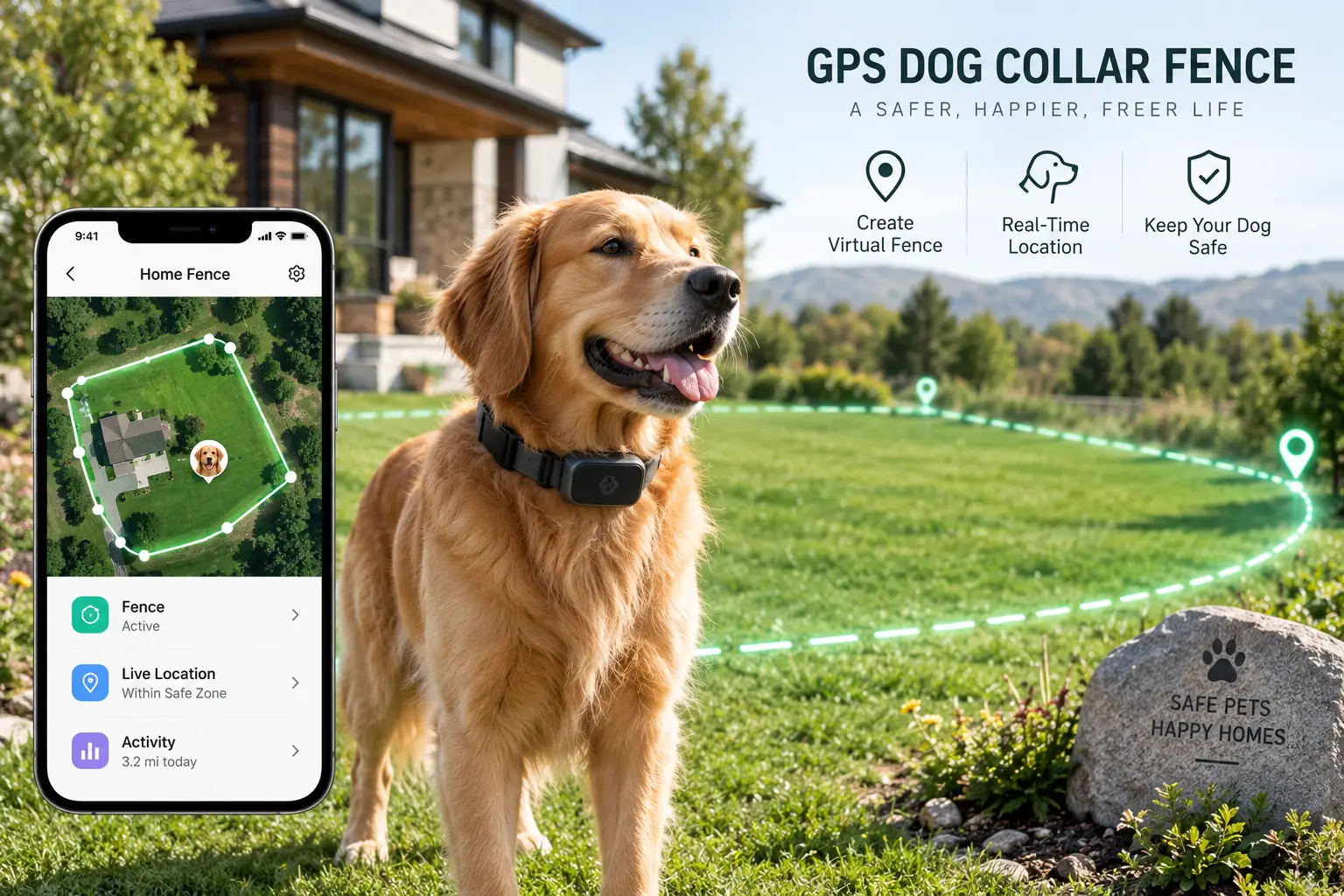
If your dog treats “stay” as more of a suggestion than a rule, you already know why so many owners are searching for the best gps dog collars fence systems instead of digging trenches for a traditional buried wire. A GPS dog fence collar is a wearable device that uses satellite positioning to create a virtual boundary around your yard, alerting your dog with sound, vibration, or a mild static correction before they cross it. No wires, no professional installation, no permanent scars on your lawn.
The reason this category has exploded isn’t just convenience. Traditional in-ground fences can cost thousands of dollars to install, some HOAs won’t allow visible fencing at all, and plenty of properties have terrain — ponds, wooded lots, oddly shaped yards — that a straight buried wire simply can’t handle. GPS containment solves all three problems by drawing the boundary in software instead of soil. According to gps.gov, the official U.S. government resource on satellite positioning, civilian GPS accuracy has improved dramatically over the past decade, which is a big part of why today’s containment collars can hold a line to within a few feet instead of a few yards.
That said, not every GPS dog fence collar behaves the same way in the real world. Some skip the monthly subscription entirely; others won’t function at all without one. Some are built for half-acre suburban lots; others need three-quarters of an acre or more just to leave enough buffer space for a false correction to be a non-issue. We dug into spec sheets, brand documentation, and hands-on reviews from outlets that actually strapped these collars onto real dogs, so you can pick a system that matches your yard, your dog’s temperament, and your budget — not just the one with the flashiest ad.
Quick Comparison: 7 Best GPS Dog Fence Collars at a Glance
Before diving into full reviews, here’s how the seven systems stack up on the factors that matter most: price, subscription requirements, and minimum property size.
| Product | Best For | Price Range | Subscription | Minimum Coverage |
|---|---|---|---|---|
| SpotOn GPS Fence (Nova Edition) | Large or wooded acreage | Around $999 | Optional (~$9.95/mo for live tracking) | 1/3 acre |
| Halo Collar 5 | Training + containment combo | Between $524 and $599 | Required ($9.99–$19.99/mo) | Varies by fence size |
| Dogtra GPS Fence | No-subscription mid-range containment | In the $300 range | None | 3/4 acre |
| PetSafe Guardian GPS 2.0 + Tracking | Real-time tracking with app control | Between $370 and $400 | Optional (recommended for alerts) | 1/2 acre |
| PetSafe Wireless Pet Containment System | Budget entry-level fencing | Under $200 | None | 1/2 acre (circular) |
| PetSafe Stay & Play for Stubborn Dogs | Persistent or high-drive dogs | In the $200 to $300 range | None | 3/4 acre (circular) |
| FOCUSER GPS Wireless Dog Fence System | Multi-dog households on a budget | Under $150 | None | Adjustable, roughly 33 ft+ |
Looking at the table, the split is really between two philosophies: GPS-based systems (SpotOn GPS Fence, Halo Collar 5, Dogtra GPS Fence, PetSafe Guardian GPS 2.0, and FOCUSER GPS Wireless Dog Fence System) that can draw custom-shaped boundaries anywhere, and radio-based wireless systems (PetSafe Wireless Pet Containment System and PetSafe Stay & Play) that broadcast a fixed circular boundary from a single transmitter. The GPS options cost more but flex to your property’s actual shape, while the radio-based options are cheaper and simpler but locked into a circle. Budget-conscious buyers with a small, obstacle-free yard often do just fine with the radio-based systems, while anyone with an irregular lot, a large property, or dense tree cover will get more reliable results from GPS.
💬 One click helps other shoppers make an informed choice too! 😊
Top 7 Best GPS Dog Collar Fence Systems for 2026 (Expert Analysis)
1. SpotOn GPS Fence (Nova Edition) — most accurate for large or wooded acreage
The Nova Edition is SpotOn’s flagship, and it earns that spot with hardware most competitors simply don’t have. It’s the fence to consider if boundary accuracy on a big, complicated property matters more to you than upfront price.
Its “Triple Threat” hardware — a dual-band, dual-feed active antenna paired with a dual-band GPS receiver pulling from a 151-satellite network — is what lets it claim boundary accuracy under five feet, independently tested by at least one reviewer. In practice, that means it holds a tight, reliable line even under tree cover or near metal structures, situations that cause GPS drift on cheaper single-band collars. The minimum property size has also dropped to just a third of an acre with this generation, opening the door to smaller suburban yards that the earlier Omni edition couldn’t serve.
This collar is best suited to owners with acreage, wooded terrain, or multiple dogs who want a boundary that behaves like an old-fashioned buried wire without the fee-per-month model. It’s less of a fit for owners of small or toy breeds, since the unit itself weighs roughly half a pound and several reviewers noted their dogs needed time to adjust to wearing it.
Reviews consistently report exceptional real-world accuracy and reliability, with multiple hands-on testers wearing the collar on active dogs for weeks at a time and praising its consistency across acreage, wooded lots, and properties near rivers or metal structures. The most common complaint across reviews is battery life — most testers ended up charging it nightly, since the 33-plus-hour runtime tends to run out mid-day if you skip a charge.
Pros:
- ✅ No mandatory subscription for core fence functionality
- ✅ Under-5-foot accuracy backed by independent testing
- ✅ Official GPS collar partner of the American Kennel Club
Cons:
- ❌ Around $999 is a serious upfront investment
- ❌ Battery typically needs a nightly recharge for reliable all-day use
At around $999, the SpotOn GPS Fence (Nova Edition) is priced like a premium purchase, but for large or difficult properties, the value case holds up well against the long-term cost of a wired fence installation or a competitor’s ongoing subscription fees.
2. Halo Collar 5 — best for training-focused containment
If containment alone feels like only half the job, the Halo Collar 5 tries to solve the other half: actually teaching your dog to respect boundaries and respond to cues, not just correcting them when they cross a line.
The standout feature is the built-in eight-lesson training program, developed with dog behaviorist Cesar Millan, which walks dogs through boundary awareness step by step before the fence goes fully “live.” Dual-frequency GPS plus separated Wi-Fi and Bluetooth chips are meant to reduce the connection hiccups that plagued earlier Halo generations, and optional Zone Beacons let you block off specific no-go areas indoors, like a garden bed or a trash can, functioning as e-collar-style remote training tools too.
This system is the strongest match for owners who specifically want structured, positive-reinforcement-style training baked into their containment setup, especially first-time wireless-fence users who’d benefit from a guided introduction. It’s a weaker fit for anyone who refuses to pay a recurring fee, since the subscription isn’t optional here — the collar simply won’t function without it.
Reviews are largely positive on ease of use and day-to-day GPS performance, with several testers calling the app intuitive and the tracking genuinely useful in daily life. That said, one detailed independent test found the collar’s real-world accuracy fell noticeably short of its advertised plus-or-minus 1.4-foot claim, and a mandatory subscription came up repeatedly as the sharpest point of friction in owner feedback.
Pros:
- ✅ Built-in Cesar Millan positive-reinforcement training program
- ✅ Zone Beacons add flexible keep-out areas and remote training cues
- ✅ Tiered subscription plans (Bronze, Silver, Gold) scale with your needs
Cons:
- ❌ Subscription is mandatory — no subscription means no functioning collar
- ❌ Independent testing found accuracy trailed the advertised specs
Priced between $524 and $599 upfront, plus $9.99 to $19.99 a month depending on tier, the Halo Collar 5 costs less at checkout than SpotOn but can overtake it in total cost of ownership within a couple of years — worth factoring in before you commit.
3. Dogtra GPS Fence — best no-subscription GPS containment
For owners who want GPS-level boundary customization without ever seeing a recurring charge, the Dogtra GPS Fence is one of the clearest options on the market. There’s genuinely no subscription tier to upsell you on here.
The app is used only during setup — you walk or draw your boundary, and after that the collar operates completely independently, with no phone connection required day to day. Layered protection is built in: a warning zone activates before any correction, and if your dog does cross the primary boundary, Dogtra’s “Come Home Sequence” delivers a progressive tone and return-reminder pattern to guide them back rather than just repeatedly correcting them. The collar is rated IPX9K waterproof and supports up to three dogs per base unit.
This system is best for owners with three-quarters of an acre or more who want reliable containment without live tracking or push notifications — it’s a pure fencing tool, not a monitoring platform. If real-time location alerts matter to you (say, you want to know the instant your dog leaves the yard while you’re not home), this isn’t the collar for that job.
Reviews consistently describe the boundary as accurate and dependable on open properties, with owners specifically calling out the ability to customize multiple safety zones as a major plus. A common theme in feedback is that accuracy dips slightly in partially wooded areas, though dual-band GPS reportedly handles most of that interference without major issues.
Pros:
- ✅ Zero subscription fees, ever, for the life of the collar
- ✅ IPX9K waterproof, rechargeable, supports up to 3 dogs
- ✅ Layered warning zones plus a guided return-home sequence
Cons:
- ❌ No live GPS tracking or push notifications
- ❌ Requires 3/4 acre minimum, ruling out smaller suburban lots
In the $300 range, the Dogtra GPS Fence lands as one of the strongest value plays in this guide for anyone whose property clears that acreage minimum and who’s comfortable trading live tracking for a one-time payment.
4. PetSafe Guardian GPS 2.0 Dog Fence + Tracking — best for real-time location tracking
PetSafe built its name on invisible fencing decades ago, and the Guardian GPS 2.0 is its answer to owners who want live tracking bundled directly into their containment system, not sold as a separate gadget.
Dual-frequency GPS pulls from two different satellite signal types for what PetSafe calls more accurate, reliable boundaries, and it’s paired with “AccuGuard” technology that adds AI-driven motion detection on top of raw GPS positioning. The My PetSafe app supports up to 50 stored custom fences, which is handy for anyone who splits time between a home yard and a second property, like a lake house or a relative’s place. The collar itself is also 50% smaller than the brand’s previous generation, which broadens the range of breeds it comfortably fits.
This collar is the right call for owners who specifically want the reassurance of live location tracking and push notifications the moment a boundary is crossed, especially for smaller or escape-prone dogs. It’s a tougher sell if you live somewhere with unreliable cellular coverage, since the tracking and alert features depend on a live connection even though the fence itself keeps working offline.
Reviews are mixed on boundary consistency: several owners report the system works exactly as advertised with clear notifications and easy setup, while others describe inconsistent triggering, including corrections that fire late or, occasionally, not at all. A recurring theme in customer feedback is that the app and notifications are genuinely useful when the connection holds steady, but connectivity hiccups are a real and repeated complaint.
Pros:
- ✅ Dual-frequency GPS plus AI-driven AccuGuard motion detection
- ✅ Stores up to 50 custom virtual fences for multiple locations
- ✅ 50% smaller, lighter collar than the previous PetSafe generation
Cons:
- ❌ Some owners report inconsistent or delayed boundary corrections
- ❌ Full tracking and alert features require steady cellular and Wi-Fi service
Priced between $370 and $400, the PetSafe Guardian GPS 2.0 Dog Fence + Tracking sits in the middle of this lineup — pricier than Dogtra, cheaper than SpotOn or Halo — and earns its spot for owners who prioritize tracking features over pure boundary precision.
5. PetSafe Wireless Pet Containment System — best budget entry point
Not every yard needs satellite-grade precision. For a straightforward suburban lot with no major obstacles, the original PetSafe Wireless Pet Containment System remains one of the most affordable ways into wireless fencing, period.
Rather than GPS, this system uses a radio-frequency transmitter placed inside your home, broadcasting a circular boundary you can adjust from roughly a 10-foot to a 180-foot diameter, covering up to half an acre. The waterproof receiver collar offers five levels of static correction plus a tone-only training mode, and setup is genuinely quick — most owners report having it running in one to two hours with no digging and no app required.
This is the right fit for renters, owners of vacation properties, or anyone with a small, regularly shaped yard who wants the lowest-friction, lowest-cost way to keep a dog contained without any ongoing subscription or GPS dependency. It’s a poor match for irregularly shaped lots, since the boundary is a fixed circle you can resize but not reshape, and for properties with a lot of metal siding or roofing, which can distort the signal field.
Reviews are largely positive on ease of use and reliability for straightforward yards, with many owners specifically praising the peace of mind of no longer having to search for an escaped dog. The most common complaint in customer feedback involves signal fluctuation on sloped or metal-heavy properties, which PetSafe’s own support material confirms is a known limitation of the transmitter-based design.
Pros:
- ✅ Most affordable entry point into wireless containment in this guide
- ✅ Setup in 1–2 hours with zero subscription or GPS dependency
- ✅ Unlimited additional dogs supported with extra receiver collars
Cons:
- ❌ Circular boundary only — can’t be shaped to an irregular yard
- ❌ Signal reliability drops on sloped lots or near metal structures
At under $200, the PetSafe Wireless Pet Containment System delivers straightforward value for a simple, regularly shaped yard, though anyone with a complex property will outgrow its circular boundary quickly.
6. PetSafe Stay & Play Wireless Fence for Stubborn Dogs — best for persistent escape artists
Some dogs shrug off a gentle tone or vibration and keep walking. PetSafe built the Stay & Play specifically for that dog — the one who’s already “graduated” from a standard wireless fence by testing every level it offers.
Like the base Wireless Pet Containment System, this is a radio-based, single-transmitter design, but it covers a larger area — up to three-quarters of an acre versus a half acre — and pairs a tone-only training mode with five adjustable static correction levels aimed at dogs with a higher pain or stimulation threshold. It’s portable enough to set up in a new location, like a campsite or a relative’s yard, in about one to two hours.
This system makes the most sense for owners of larger or more strong-willed dogs who’ve already tried standard wireless or physical fencing and had it fail, and who want a bit more coverage area and correction range than the entry-level PetSafe system offers. It’s not the right pick if your dog is sensitive to correction or if you specifically want a subscription-free GPS system with a custom-shaped boundary — this is still a circular, radio-frequency boundary at its core.
Reviews commonly describe it as the system owners turn to after other containment methods didn’t stick, with several noting real behavioral improvement once training was consistent. As with any correction-based system, some feedback flags the importance of proper introduction and training flags during the first few weeks, since skipping that step is the most common reason owners report disappointing results.
Pros:
- ✅ Five static levels plus tone-only mode for tailoring to a stubborn dog
- ✅ Covers up to 3/4 acre, more than PetSafe’s entry-level system
- ✅ Portable setup, ideal for travel, rentals, or vacation properties
Cons:
- ❌ Still a fixed circular boundary, not a custom GPS shape
- ❌ Static correction requires careful, consistent training to work humanely
In the $200 to $300 range, the PetSafe Stay & Play Wireless Fence for Stubborn Dogs is a targeted upgrade over the base wireless system for owners whose first attempt at containment didn’t hold — without jumping all the way to GPS pricing.
7. FOCUSER GPS Wireless Dog Fence System — best budget multi-dog option
Rounding out this list is a genuine budget alternative for owners with more than one dog and a tighter budget than the big four GPS brands allow for.
FOCUSER’s system uses a four-mode positioning blend — GPS, BeiDou, Galileo, and GLONASS — which the brand markets as more stable signal acquisition than single-constellation GPS alone, and the boundary radius adjusts across 99 levels from roughly 33 feet out to over 3,000 feet. The rechargeable collar receiver is rated IP67 waterproof, and a single base unit is marketed as supporting up to ten dogs, which is far beyond what most competitors in this guide offer without buying additional hardware.
This system is worth considering for multi-dog households on a tight budget, or as a low-commitment way to try GPS-style containment before investing in a premium brand. It’s a weaker choice for owners who want the testing history, brand reputation, and app polish of an established name — FOCUSER simply doesn’t have the years of independent long-term reviews that SpotOn, Halo, or PetSafe have accumulated.
Verifiable independent long-term testing on FOCUSER is limited compared to the bigger four brands in this guide, so what’s known is largely drawn from the manufacturer’s own specifications and marketplace listings rather than extensive third-party reviews — worth keeping in mind if brand track record matters to your purchase decision.
Pros:
- ✅ Typically priced under $150, the cheapest GPS-based option here
- ✅ Supports up to 10 dogs from a single base unit
- ✅ Adjustable radius across 99 levels, roughly 33 feet to over 3,000 feet
Cons:
- ❌ Limited independent long-term testing compared to established brands
- ❌ Buyers report app polish and build quality trail category leaders
Typically listed under $150, the FOCUSER GPS Wireless Dog Fence System is the value pick for larger multi-dog households, provided you’re comfortable with a newer, less-established brand.
Getting Started: Your First 30 Days With a GPS Dog Fence Collar
A GPS or wireless dog fence collar isn’t a plug-and-play miracle — the hardware only works as well as the training behind it. Most trainers and manufacturer guides agree that dogs need roughly two to three weeks of consistent, structured introduction before they can be trusted off-leash inside the boundary.
Week one should be entirely tone-only, or at the lowest correction level, with your dog on a long leash near the boundary flags most systems recommend placing during setup. The goal isn’t correction yet — it’s association. Let your dog hear the warning tone and feel gentle leash guidance back toward the safe zone at the same time, over and over, until the sound alone starts to mean something. Skipping this step is the single most common reason owners report their dog “not respecting” the fence later.
By week two, most guides recommend introducing supervised off-leash time in short bursts, still within eyesight, so you can intervene quickly if your dog tests a boundary in a new way. This is also the point where you should double-check your fence shape against real-world obstacles — trees, sheds, driveways — since a boundary that looked fine on the app map sometimes needs adjusting once your dog is actually moving through the space.
Week three is typically when consistency starts to click for most dogs, though high-drive or historically escape-prone breeds may need longer. Keep charging habits consistent from day one; a fence that dies mid-afternoon because the collar wasn’t charged overnight teaches your dog nothing except that boundaries are optional sometimes, which is a lesson you don’t want to reinforce.
Real-World Scenarios: Which GPS Dog Fence Collar Fits Your Life
Sometimes it’s easier to picture your own situation than to compare spec sheets in the abstract, so here are a few common profiles and the systems that tend to fit them best.
If you’re on five acres with a mix of open field and wooded treeline, and you’ve already tried a cheaper wireless fence that lost signal under the trees, the SpotOn GPS Fence (Nova Edition)‘s dual-band antenna and 151-satellite network are built exactly for that scenario — you’re paying a premium specifically for reliability in difficult terrain.
If you’re a first-time dog owner in a standard suburban half-acre lot who wants both containment and some genuine training support (maybe your dog also pulls on leash or struggles with recall), the Halo Collar 5‘s built-in Cesar Millan program bundles that guidance in, even though it means committing to a subscription indefinitely.
If you manage a three-dog household on a rural property and have already sworn off ever paying another monthly pet-tech bill, the Dogtra GPS Fence‘s no-subscription, multi-dog-capable design is the more sustainable long-term match, provided your property clears the three-quarter-acre minimum.
If you travel frequently with your dog and want to know their exact location the moment they leave a boundary, whether you’re home or not, the PetSafe Guardian GPS 2.0 Dog Fence + Tracking‘s live-tracking notifications and 50-fence storage are purpose-built for that lifestyle.
And if you’re renting, testing the waters before a bigger investment, or managing a modest, regularly shaped backyard, either the PetSafe Wireless Pet Containment System or, for a dog that’s already beaten a gentler system, the PetSafe Stay & Play Wireless Fence for Stubborn Dogs, will do the job without the GPS price tag.
Problem → Solution: Fixing the Most Common GPS Dog Fence Issues
Even a well-reviewed system runs into predictable hiccups. Here’s how to troubleshoot the ones that come up most often in owner feedback.
Problem: The boundary triggers inconsistently, correcting too early or too late. This is almost always a GPS drift issue, and it’s most common under tree cover, near large metal structures, or on properties smaller than the manufacturer’s stated minimum. The fix is usually to build in a wider buffer zone than you think you need — most manufacturer guides recommend keeping the boundary at least 10 to 15 feet inside any hard edge, like a road or driveway, specifically to absorb drift.
Problem: The collar drains faster than expected. GPS positioning is power-hungry by nature, which is why battery life varies so much across this guide, from a few days on non-GPS systems down to under 24 hours on some premium GPS collars under heavy use. Set a fixed nightly charging routine from day one rather than charging reactively when the battery gets low — it’s the difference between a fence that’s reliably active and one with unpredictable gaps.
Problem: The dog seems to “forget” the boundary after a few weeks. This usually traces back to an inconsistent training period rather than a hardware failure. Reintroducing a short refresher — a few days back on leash near the boundary with the training flags back out — resets the association far more effectively than simply relying on the corrections to re-teach it alone.
Problem: Signal is unreliable indoors or near the house. GPS fences fundamentally need a clear view of the sky, so walls and roofing will confuse the collar. Nearly every manufacturer, including Dogtra, explicitly recommends removing GPS containment collars when a dog is indoors, both to preserve battery and to avoid false corrections triggered by signal confusion.
Your Buyer Decision Framework: Choosing by Property Size and Dog Temperament
If you’d rather skip the full comparison and jump to a decision, this simple framework should get you most of the way there.
If your property is under half an acre and regularly shaped, choose a radio-based wireless system like the PetSafe Wireless Pet Containment System, because GPS accuracy and subscription costs aren’t worth paying for on a lot that small.
If your property is a half-acre to three-quarters of an acre with light obstacles, choose a mid-tier GPS system like the PetSafe Guardian GPS 2.0 or Dogtra GPS Fence, because you’ll get custom boundary shaping without paying premium pricing for acreage-scale accuracy you don’t need.
If your property exceeds an acre, includes wooded areas, or has an irregular shape with natural obstacles, choose the SpotOn GPS Fence (Nova Edition), because its hardware is specifically engineered to hold accuracy where cheaper GPS systems drift.
If your dog is high-energy, historically escape-prone, or you want structured training alongside containment, choose the Halo Collar 5, because the built-in training program addresses the behavior, not just the boundary.
If you have three or more dogs and a fixed budget, choose the FOCUSER GPS Wireless Dog Fence System or the Dogtra GPS Fence, both of which support multiple dogs without per-dog subscription fees stacking up.
How to Choose the Best GPS Dog Fence Collar for Your Yard
Beyond the seven picks above, here’s the underlying criteria worth applying to any GPS dog fence collar you’re considering.
- Measure your actual property, not your guess. Every system in this guide has a stated minimum coverage area, and going below it is the single biggest cause of false corrections, since there’s not enough buffer space for normal GPS drift to be a non-issue.
- Decide how you feel about subscriptions before you shop. Some systems, like Halo, simply won’t function without an active plan; others, like Dogtra, never require one. Knowing your tolerance up front narrows the field fast.
- Check your terrain for tree cover and metal structures. Both interfere with GPS signal quality, and systems with dual-band or multi-constellation positioning, like SpotOn or FOCUSER, are specifically engineered to compensate.
- Confirm your dog’s weight and neck size against the collar’s range. Several systems in this category have minimum weight requirements, generally in the 10 to 15 pound range, since correction levels are calibrated for larger dogs.
- Factor in battery life against your dog’s actual outdoor schedule. A dog who’s out for a few hours a day has very different needs than one who’s outside most of the daylight hours.
- Look for layered warning zones, not just a hard line. Systems with a warning tone before any static correction, like Dogtra’s and SpotOn’s, give dogs a chance to self-correct, which tends to produce calmer, faster learning.
- Read the return policy before you buy. GPS accuracy genuinely varies by property, so a fence that performs beautifully in one reviewer’s yard might behave differently in yours — a solid return or trial window protects you either way.
GPS Dog Fence Collars vs Traditional Underground Electric Fences
It’s worth stepping back and comparing the whole category against the older technology it’s largely replacing: buried-wire underground fences.
| Factor | GPS Dog Fence Collar | Underground Electric Fence |
|---|---|---|
| Installation | No digging, app or walk-based setup | Requires trenching and burying wire |
| Boundary flexibility | Custom shapes, easy to edit in-app | Fixed once wire is buried |
| Typical upfront cost | $150 to $1,000 | Often $1,000–$3,000+ professionally installed |
| Portability | Most systems travel with you | None — boundary is permanent to that property |
| Terrain sensitivity | GPS drift near trees/metal | Generally unaffected by tree cover |
Reading the table, the trade-off is really flexibility versus raw signal consistency. A properly installed underground fence doesn’t suffer from GPS drift because it isn’t using satellites at all, which is why some owners on heavily wooded, signal-challenged lots still prefer it. But that consistency comes at a steep upfront cost and zero portability — if you move, that investment stays with the old house. GPS and wireless collars trade a small amount of signal reliability for dramatically lower cost, no digging, and the ability to take the entire system with you to a new property.
✨ Don’t miss these exclusive deals! 🔍 Take your dog’s outdoor freedom to the next level with this carefully curated lineup. Click a highlighted item to check current pricing and availability. These picks will help you get a safer, happier backyard the whole family will enjoy!
Common Mistakes to Avoid When Buying a GPS Dog Fence Collar
Even a great system fails if it’s set up wrong or matched to the wrong dog. These are the mistakes that show up most often across owner reviews.
Buying below the stated acreage minimum is the most common one. Every GPS system needs a buffer zone to absorb normal signal drift, and a yard that’s technically “close enough” to the minimum often isn’t in practice, leading to exactly the inconsistent corrections reviewers complain about most.
Skipping the training period is a close second. Owners who go straight to off-leash time without the recommended one to two weeks of supervised introduction consistently report worse results, regardless of which collar they bought — the hardware isn’t the variable, the training is.
Ignoring battery habits until the fence fails is another frequent misstep. A dead collar means zero containment, not reduced containment, so treating charging as optional rather than routine defeats the entire purpose of the system.
Finally, choosing based on price alone without checking subscription requirements trips up a lot of first-time buyers. A collar that looks $400 cheaper upfront can end up costing more within two to three years once a mandatory monthly plan is factored in — always calculate total cost of ownership, not just the sticker price.
What to Expect: Everyday Performance and GPS Accuracy
Marketing copy tends to promise pinpoint precision, but real-world GPS accuracy across this category generally falls somewhere between three and twenty feet, depending on the hardware and the terrain, according to multiple independent reviewers who tested these systems directly. Premium dual-band systems land at the tighter end of that range; single-band budget systems tend toward the wider end, especially under tree cover.
In daily life, this means most dogs won’t experience a razor-sharp line so much as a gradual warning zone — a tone or vibration a few feet before the true boundary, then a correction if they push further. That layered design is intentional and, per most trainer guidance, more humane than a hard trigger with no warning, since it gives the dog a chance to self-correct before any stimulation happens at all.
Weather and seasons matter too. Heavy cloud cover can very slightly reduce GPS signal quality, and dense summer foliage tends to interfere more than bare winter branches on the same property, which is why some owners notice their fence “tightening up” seasonally even though nothing about the hardware changed.
Long-Term Cost and Maintenance: Subscription vs No-Subscription
The sticker price is only part of the real cost of a GPS dog fence collar, and the subscription question is where total cost of ownership diverges most sharply between brands.
A no-subscription system like the Dogtra GPS Fence or the PetSafe Wireless Pet Containment System has its entire cost locked in at purchase, aside from eventual collar replacement, which most owners report needing every few years depending on wear and battery degradation. A subscription-based system like the Halo Collar 5 adds $9.99 to $19.99 every month on top of the upfront price, which compounds quickly — roughly $120 to $240 a year, on top of the initial $524 to $599.
Run the math over three years and the picture shifts. The SpotOn GPS Fence (Nova Edition) at roughly $999 upfront with no mandatory fee works out to about $333 a year averaged over three years. The Halo Collar 5 at a mid-tier $14.99 monthly plan works out closer to $884 total over that same period once the subscription is added in, based on published pricing from Halo’s own plan tiers — a gap that narrows the “cheaper” system’s advantage considerably. This doesn’t make either system wrong; it just means the subscription question deserves the same weight as the sticker price when you’re comparing options.
Maintenance itself is fairly light across the category: periodic firmware updates through the manufacturer’s app, occasional collar strap replacement as it wears, and battery care, since lithium-ion batteries in any rechargeable collar gradually lose capacity over a few years of daily charge cycles.
Safety, Regulations, and Standards for GPS Dog Fence Collars
Containment collars that use static correction sit at the center of an ongoing debate in the veterinary and training community, and it’s worth understanding both sides before you commit to one.
The American Veterinary Society of Animal Behavior has taken the position that reward-based training methods should be used over aversive tools, including electronic correction, citing evidence of potential welfare and behavioral downsides when aversives are used incorrectly or without proper introduction. That’s a meaningful reason several systems in this guide — Halo Collar 5, Dogtra GPS Fence — lead with tone-and-vibration-first designs and layered warning zones rather than jumping straight to static correction, and it’s also why the training period outlined earlier in this guide matters as much as the hardware itself.
At the same time, escape-related risk is a real and well-documented safety concern. The American Kennel Club specifically recommends GPS tracking devices as one layer of a broader prevention strategy against dogs running away, alongside microchipping and ID tags, because a contained dog avoids traffic accidents, altercations with wildlife, and simply getting lost. Every system in this guide includes a tone-only or vibration-only mode that owners can rely on exclusively if they prefer to avoid static correction altogether, which is worth checking during setup regardless of which collar you choose.
On the regulatory side, none of these devices currently require FCC certification disclosures beyond standard wireless emissions compliance that any Bluetooth or cellular consumer electronic must meet, and GPS radiofrequency emissions from these collars fall well below international safety thresholds set by bodies like the ICNIRP. As with any affiliate content, transparency matters here too — the FTC’s endorsement guidelines require that any material financial connection between a reviewer and a product be clearly disclosed, which is exactly what the disclosure at the bottom of this article does.
Frequently Asked Questions
❓ What's the difference between a GPS dog fence and a wireless dog fence?
❓ Do GPS dog fence collars work without a monthly subscription?
❓ How accurate is a GPS dog fence collar in a wooded backyard?
❓ What size property do I need for a GPS dog fence?
❓ Is static correction safe for training a dog on a wireless fence?
Conclusion
There’s no single best gps dog collars fence pick for every yard — the right system depends heavily on your property size, your dog’s temperament, and how you feel about paying a monthly fee for the life of the collar. If you have acreage and difficult terrain, the accuracy of the SpotOn GPS Fence (Nova Edition) justifies its price. If training support matters as much as containment, the Halo Collar 5‘s built-in program is hard to match, subscription aside. Owners who want GPS flexibility without ever paying a monthly bill again should look closely at the Dogtra GPS Fence, while anyone chasing live location tracking will get the most out of the PetSafe Guardian GPS 2.0 Dog Fence + Tracking.
For simpler, smaller yards, the PetSafe Wireless Pet Containment System and the tougher PetSafe Stay & Play Wireless Fence for Stubborn Dogs both prove that GPS hardware isn’t required to solve a straightforward containment problem, and multi-dog households on a budget now have a genuine option in the FOCUSER GPS Wireless Dog Fence System.
Whichever system you land on, the hardware is only half the equation — a consistent, patient training period during the first few weeks is what actually determines whether your dog respects the boundary long-term. Measure your property honestly, decide your subscription tolerance up front, and match the collar to your dog’s specific temperament rather than to whichever brand has the loudest marketing.
✨ Ready to give your dog safe, off-leash freedom? Compare today’s prices on the pick that fits your yard best! 🐾
Recommended for You
- 4G GPS Tracker Guide: 7 Best Real-Time Picks for 2026
- Best Dog Shock Collar in 2026: 7 Top Picks & Buying Guide
- In Ground Pet Fence: 7 Best Options for a Safer Yard
Disclaimer: This post contains affiliate links. As an Amazon Associate, I earn from qualifying purchases made through these links, at no additional cost to you.
✨ Found this article helpful? Share it with someone who needs it! 💬🤗