
In This Article
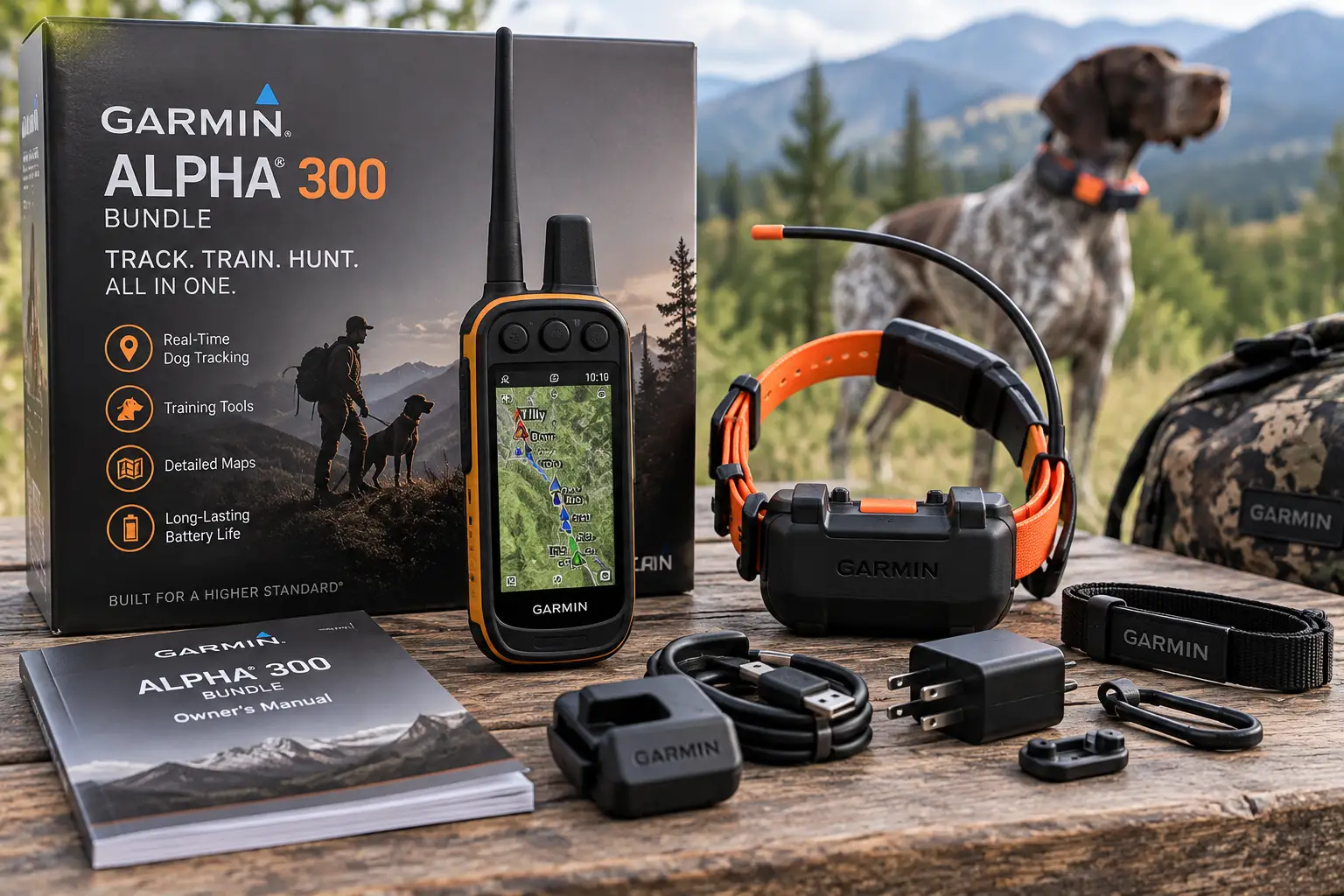
Losing sight of a hard-charging bird dog in six-foot switchgrass has a very specific kind of panic to it — and it’s exactly the problem Garmin built its track-and-train lineup to solve. A garmin alpha 300 bundle pairs a rugged handheld GPS unit with a dog collar that both tracks location and delivers training stimulation, so you’re not juggling two separate gadgets in the field. Whether you’re outfitting a single retriever for weekend hikes or running a pack of hounds through timber, the right garmin alpha 300 bundle comes down to which handheld generation, which collar, and which price bracket actually fits how you hunt or work your dogs.
This guide breaks down seven real, currently available configurations — from the flagship Garmin Alpha 300i paired with the extended-range TT15X collar down to budget-conscious alternatives from SportDOG and Dogtra — with honest analysis pulled from manufacturer spec sheets and real aggregated owner feedback, not marketing copy. You’ll also get a practical setup checklist, common first-season mistakes, and a decision framework so you can walk away knowing exactly which garmin alpha 300 bundle (or close alternative) belongs on your truck seat.
What Is a Garmin Alpha 300 Bundle? A garmin alpha 300 bundle is a paired handheld-and-collar system: a Garmin Alpha 300 or 300i handheld GPS unit sold together with a compatible dog collar (such as the TT15X, TT25, or T20) that tracks a dog’s GPS location and, on training-capable collars, delivers tone, vibration, or static correction from the same device.
Quick Comparison: Garmin Alpha 300 Bundle Options at a Glance
Before diving into all seven picks, here’s a fast reference for how the core garmin alpha 300 bundle configurations stack up on the numbers that matter most in the field.
| Bundle | Max Tracking Range | Dogs Tracked | Standout Feature | Best For |
|---|---|---|---|---|
| Garmin Alpha 300 & TT15X | Up to 9 miles | Up to 20 | Longest extended collar battery life | All-around hunters |
| Garmin Alpha 300i & TT15X | Up to 9 miles | Up to 20 | Built-in inReach satellite SOS | Backcountry/remote hunters |
| Garmin Alpha 300 & TT25 | Up to 9 miles | Up to 20 | Wi-Fi collar updates, corner safety lights | Road-adjacent hunting terrain |
| Garmin Alpha 200i & TT15 | Up to 9 miles | Up to 20 | Lower entry price (refurbished available) | Budget-conscious buyers |
| SportDOG TEK 2.0 | Up to 10 miles | Up to 21 | Cold-weather-friendly button interface | Cold-climate hunters |
Looking at the numbers, the biggest split isn’t really range — every system here lands in the same 9-to-10-mile neighborhood in ideal, open-field conditions. It’s the collar generation and add-on features (satellite messaging, Wi-Fi updates, safety lighting) that actually separate a Garmin Alpha 300 bundle from a Garmin Alpha 300i bundle or a competing SportDOG setup. Budget-conscious buyers should also note that real-world range in wooded terrain typically runs well below the advertised line-of-sight maximum for every brand on this list.
💬 Comparing collars and handhelds already? One click below helps you check today’s availability before prices shift.
Top 7 Garmin Alpha 300 Bundle Picks: Expert Analysis
Below are seven real, currently sold configurations spanning entry-level to flagship, plus two respected alternatives worth cross-shopping. Every price is shown as a range — always confirm the current price and exact bundle contents before you buy, since retailers rotate promotions constantly.
1. Garmin Alpha 300 & TT15X Bundle — best all-around track-and-train setup
The Garmin Alpha 300 & TT15X Bundle is the workhorse combination most upland and waterfowl hunters land on when they want tracking and training in a single rugged package. The handheld’s 3.5-inch sunlight-readable touchscreen pairs with the TT15X collar’s extended-life battery, and together they can monitor and correct up to 20 dogs from as far as 9 miles away in open terrain. In practice, that touchscreen means faster menu navigation than older button-only Garmin units, while the physical training buttons stay separate so you’re never fumbling with a screen mid-flush. What most buyers overlook with the TT15X specifically is that “X” designation: it denotes the extended-battery version, which reviewers and retailer spec sheets consistently cite as the longest-running collar in Garmin’s current lineup — a real advantage on multi-day hunts where daily charging isn’t practical. Reviews consistently report that the touchscreen can be sluggish or unresponsive in freezing temperatures or with wet gloves, which is a fair trade-off against the added display real estate. This bundle is best for hunters who run one to three dogs regularly and want a single, dependable system without chasing the newest collar generation. At a price point that typically falls in the $1,000-$1,200 range at the time of writing, it isn’t cheap, but it represents the most field-tested combination in the current Alpha 300 lineup.
Pros:
- ✅ Longest-running collar battery in Garmin’s current lineup
- ✅ Touchscreen speeds up multi-dog list management
- ✅ Field-replaceable handheld battery for multi-day trips
Cons:
- ❌ Touchscreen response can lag in cold or wet conditions
- ❌ No built-in satellite communication for backcountry emergencies
Check the current price before buying, since Garmin and authorized retailers frequently adjust bundle promotions — as a track-and-train combo, it holds solid value against separately-purchased handheld and collar units.
2. Garmin Alpha 300i & TT15X Bundle — best for remote, off-grid hunting
Add the “i” and you get the Garmin Alpha 300i & TT15X Bundle, which builds on the base Alpha 300 with Garmin’s inReach satellite technology baked directly into the handheld. That’s a meaningful upgrade for anyone hunting public land in the mountain West or deep timber where cell service simply doesn’t exist — the inReach function allows two-way satellite messaging and an SOS trigger independent of any phone signal. Based on comparing the specs, the trade-off is battery life: Garmin’s own listings show the handheld runs roughly 50 hours with inReach enabled versus around 55 hours with it off, a modest but real difference. Hunters and backcountry forum commenters who’ve run both the 100 and 300 generations consistently describe the inReach integration as the single feature that justifies upgrading, particularly for solo hunters without a hunting partner nearby. What the spec sheet doesn’t say plainly is that inReach messaging requires an active satellite subscription plan sold separately by Garmin — a genuine recurring cost that changes the total cost of ownership math (more on that in the Long-Term Cost section below). This bundle is best for guides, solo backcountry hunters, and anyone who regularly works dogs outside cell coverage. Expect to pay in the $1,200-$1,400 range at the time of writing, a real premium over the non-i version.
Pros:
- ✅ Two-way satellite messaging with zero cell coverage
- ✅ SOS trigger works independent of a smartphone
- ✅ Same rugged TT15X extended-battery collar as the base bundle
Cons:
- ❌ Requires a separate, ongoing satellite subscription plan
- ❌ Highest sticker price of any bundle on this list
Prices may vary by retailer and promotion, so check the current price — but for the safety margin it adds in genuinely remote country, most backcountry hunters consider it worth the premium.
3. Garmin Alpha 300 & TT25 Bundle — best updated collar tech
The Garmin Alpha 300 & TT25 Bundle swaps the older TT15X collar for Garmin’s newer TT25, and the differences are more than cosmetic. Retailer documentation notes the TT25’s beacon lights were relocated to the corners of the collar rather than facing only forward, which genuinely improves visibility to oncoming drivers when a dog crosses a road at an angle — a small design change with real safety implications. The TT25 also supports Wi-Fi software updates for both the handheld and collar, meaning you can push firmware fixes over your home network instead of tethering everything to a computer, and it charges via USB-C, matching the cable you probably already carry for a phone or tablet. Here’s what to weigh: the TT25’s standard battery runs roughly 68 hours per collar-vendor documentation, shorter than the TT15X’s extended-life rating, though an optional extended battery pack closes most of that gap. This bundle suits hunters who prioritize newer hardware and simpler firmware updates over squeezing out the absolute longest per-charge runtime. Pricing for the Garmin Alpha 300 paired with a TT25 typically lands in a similar $1,000-$1,200 bracket to the TT15X version, sometimes running a touch lower depending on current promotions.
Pros:
- ✅ Corner-mounted lights improve roadside dog visibility
- ✅ Wi-Fi firmware updates skip the cable-and-computer hassle
- ✅ USB-C charging matches common everyday cables
Cons:
- ❌ Standard battery life trails the TT15X’s extended rating
- ❌ Extended battery pack for TT25 is sold separately
At the time of writing, this is a strong pick if you value the newer safety lighting and simpler update process over raw battery endurance.
4. Garmin Alpha 300 & T20 Bundle — best tracking-only value
Not every dog owner needs a training collar, and the Garmin Alpha 300 & T20 Bundle is built for exactly that buyer. The T20 collar shares the same GPS tracking hardware and dynamic update-rate technology as its training-capable siblings but strips out the static stimulation function entirely, which meaningfully lowers the price. In practice, this means you get the same core benefit most owners actually want — knowing where the dog is in real time on the Alpha 300’s sunlight-readable screen — without paying for e-collar hardware you may never use. Reviews and retailer product notes indicate the T20 uses the same interchangeable battery system as the TT25, so runtime and charging behavior track closely with that collar. This is honestly a smart pick for households with an already well-trained dog, for tracking a dog that already wears a separate e-collar from another brand, or for owners who are philosophically opposed to static stimulation but still want GPS peace of mind. Best for families, trainers who use positive-reinforcement-only methods, or anyone layering GPS tracking onto an existing training setup. Typical pricing runs in the $700-$900 range at the time of writing, making it the most accessible true Alpha 300 configuration.
Pros:
- ✅ Full Alpha 300 GPS tracking without training-collar cost
- ✅ Shares battery and Wi-Fi update tech with the TT25 collar
- ✅ Pairs easily alongside a separate e-collar if you already own one
Cons:
- ❌ No stimulation, tone, or vibration training function at all
- ❌ Still requires the full-price Alpha 300 handheld
Check current pricing before buying, since tracking-only bundles rotate in and out of stock faster than the full track-and-train combos.
5. Garmin Alpha 200i & TT15 Combo — best budget entry point
If the newest handheld generation isn’t a must-have, the Garmin Alpha 200i & TT15 Combo is worth serious consideration, especially when purchased factory-refurbished through an authorized retailer. The Alpha 200i predates the 300 series and relies on a physical button interface rather than a touchscreen, but it retains the core feature set hunters actually rely on: multi-dog tracking, inReach satellite technology on the “i” model, and compatibility with the tried-and-true TT15 collar line. Based on comparing the specs, the button interface is arguably an advantage rather than a downgrade for winter hunters, since physical buttons work reliably with gloves in conditions where a touchscreen can lag. Owners on hunting forums who’ve run both generations for years consistently describe the older Alpha line as “still going strong,” often passing units down to family members rather than replacing them outright. What most buyers overlook is that factory-refurbished units typically carry a full manufacturer warranty identical to new stock, which meaningfully de-risks the lower price tag. This combo is best for budget-conscious hunters, backup-system buyers, or anyone new to GPS dog tracking who wants proven technology before committing to flagship pricing. Refurbished pricing has been seen in the $700-$750 range at the time of writing — genuinely the most accessible way into a Garmin inReach-equipped system.
Pros:
- ✅ Physical buttons stay reliable in cold or wet conditions
- ✅ Refurbished units often carry full manufacturer warranty
- ✅ Lowest entry price for an inReach-equipped Garmin system
Cons:
- ❌ Smaller, non-touchscreen display versus the 300 series
- ❌ Slower GPS update rate than the current-generation handheld
Availability on refurbished stock shifts often, so check the current price and condition details before buying — but for value-focused buyers, this is a legitimately smart alternative to full retail Alpha 300 pricing.
6. SportDOG TEK 2.0 Bundle — best cold-weather alternative
Stepping outside the Garmin ecosystem, the SportDOG TEK 2.0 Bundle is the closest direct competitor and genuinely worth cross-shopping before you commit to a garmin alpha 300 bundle. Industry coverage from Shooting Sportsman notes the TEK 2.0 supports Bluetooth connectivity, ships with preloaded topo maps, and is rated for up to a 10-mile range with expandability to 21 dogs — edging out the Alpha 300’s 20-dog cap on paper. What sets it apart operationally is the wheel-and-button control scheme instead of a touchscreen; multiple long-time users on hunting forums specifically call out that this interface stays functional in cold weather and wet gloves where touchscreens can falter. Here’s what to weigh: SportDOG offers 99 stimulation levels versus the Alpha’s lower level count, giving trainers finer-grained correction control, though more levels doesn’t automatically mean better training outcomes — what matters more is how precisely you can dial in a level your specific dog responds to. Reviews consistently describe SportDOG’s ecosystem as a strong value alternative, particularly for hunters who’ve compared both systems side-by-side and prioritize interface durability over touchscreen convenience. Best for hunters in consistently cold climates or anyone who’s had reliability issues with capacitive touchscreens in the field. Bundle pricing has historically run in the $750-$950 range, though confirm current pricing, as promotions shift regularly.
Pros:
- ✅ Physical wheel-and-button interface excels in cold weather
- ✅ Rated range and dog capacity both edge out Alpha 300
- ✅ 99 stimulation levels for fine-grained training control
Cons:
- ❌ Smaller 1-inch screen versus Garmin’s larger display
- ❌ Fewer third-party accessories than the established Garmin ecosystem
At the time of writing, this remains the strongest non-Garmin option for hunters who prioritize button-based reliability.
7. Dogtra Pathfinder 2 — best phone-based alternative
The Dogtra Pathfinder 2 takes a fundamentally different design approach worth understanding even if you ultimately choose a garmin alpha 300 bundle instead. Rather than a dedicated handheld screen showing the map, the Pathfinder 2’s handheld functions primarily as an antenna and transmitter, while all mapping, dog status, and training controls run through a companion smartphone app. A detailed 2026 comparison from Lion Country Supply found the Pathfinder 2 refreshes dog position slightly faster than the Alpha’s 2.5-second rate, and its rated 60-hour battery life edges out Garmin’s non-inReach runtime. Based on comparing the specs, real-world range tells a more nuanced story: that same field research found both systems dropping sharply in dense woods, with the Pathfinder 2 realistically delivering 1.5-2.5 miles in wooded terrain despite a 9-mile ideal-condition rating — closely mirroring what Garmin owners report as well. What most buyers overlook is the trade-off in reliability: a phone-dependent system means a dead phone battery, a cracked screen, or an app crash can take your tracking offline mid-hunt, a risk dedicated-handheld systems like the Alpha 300 simply don’t carry. This is best for tech-forward dog owners already comfortable managing everything from a phone, particularly casual trainers rather than all-weather field hunters. Pricing tends to run somewhat below the flagship Garmin Alpha 300i configuration, though always confirm the current price, as Dogtra bundle contents and promotions vary by retailer.
Pros:
- ✅ Companion app feels intuitive for smartphone-native users
- ✅ Slightly faster position refresh rate than Garmin’s 2.5 seconds
- ✅ Competitive battery life versus the base Alpha 300
Cons:
- ❌ Full functionality depends on your phone staying charged and working
- ❌ Touchscreen-only training controls aren’t ideal in wet conditions
Check the current price and confirm exact bundle contents, since the Pathfinder 2’s app-first design is a genuine lifestyle trade-off, not just a spec difference.
Full Comparison: All 7 Garmin Alpha 300 Bundle Options
| Product | Price Range | Max Range | Battery (Handheld) | Best For |
|---|---|---|---|---|
| Garmin Alpha 300 & TT15X | ~$1,000-$1,200 | Up to 9 miles | ~55 hours | All-around hunters |
| Garmin Alpha 300i & TT15X | ~$1,200-$1,400 | Up to 9 miles | ~50 hours (inReach on) | Backcountry/remote use |
| Garmin Alpha 300 & TT25 | ~$1,000-$1,200 | Up to 9 miles | ~55 hours | Newer collar tech fans |
| Garmin Alpha 300 & T20 | ~$700-$900 | Up to 9 miles | ~55 hours | Tracking-only buyers |
| Garmin Alpha 200i & TT15 | ~$700-$750 (refurb) | Up to 9 miles | Varies by unit | Budget buyers |
| SportDOG TEK 2.0 | ~$750-$950 | Up to 10 miles | Not publicly listed | Cold-weather use |
| Dogtra Pathfinder 2 | Below Alpha 300i tier | Up to 9 miles | ~60 hours | Phone-native owners |
Stacking all seven side by side, the pattern is clear: the Garmin Alpha 300 & T20 Bundle offers the lowest cost of entry into the genuine Alpha ecosystem, while the Garmin Alpha 300i & TT15X Bundle sits at the top for anyone who needs satellite communication. If raw range and dog capacity matter most on paper, SportDOG TEK 2.0 edges out both, though real-world wooded-terrain performance tends to level the playing field across every brand here.
Garmin Alpha 300 Bundle vs. Traditional Bell-and-Beeper Tracking
Before GPS track-and-train systems existed, hunters located working dogs with a bell clipped to the collar or a beeper box that chirped on a timer — and plenty of hunters still use both methods today, often as a backup even after buying GPS gear. A bell tells you a dog is moving and roughly which direction, but only within earshot, which in dense cover or heavy wind can shrink to a hundred yards or less. A beeper improves on that slightly with a “point mode” alert when the dog stops, but neither method gives you an actual location, a distance, or a bearing — you’re still walking toward a sound, not a coordinate. A garmin alpha 300 bundle solves the core limitation of both: it shows exact position on a map regardless of how far the dog has ranged, works in total silence for stealth-sensitive game, and layers in training correction from the same device. That said, bells and beepers still have real advantages worth acknowledging — they need no charging, cost a fraction of the price, and never lose satellite lock under heavy canopy the way GPS occasionally can. Many experienced hunters run a beeper alongside their GPS collar specifically as a low-tech backup, and that’s a genuinely reasonable hedge rather than an admission that GPS tracking is unreliable.
How to Choose a Garmin Alpha 300 Bundle
- Decide if you actually need training stimulation. If your dog is already reliably trained or you use positive-reinforcement-only methods, a tracking-only collar like the T20 saves real money over a full track-and-train bundle.
- Weigh whether you truly need satellite communication. The inReach-equipped 300i models add genuine backcountry safety value, but only if you regularly hunt outside cell coverage — otherwise you’re paying for a subscription-dependent feature you may rarely use.
- Match collar battery life to your typical trip length. Weekend hunters can get by on standard batteries; multi-day backcountry trips favor extended-life collars like the TT15X.
- Count your dogs honestly. A single-dog household doesn’t need to pay a premium for 20-dog capacity, though it’s worth having headroom if you plan to add a second dog later.
- Consider your climate. Hunters in consistently cold or wet conditions may prefer button-based interfaces (Alpha 200i, SportDOG TEK 2.0) over capacitive touchscreens that can lag when cold or damp.
- Check collar compatibility before buying used or refurbished. Not every Garmin handheld generation pairs with every collar — the American Kennel Club has approved specific GPS tracking systems for field trial use, and compatibility rules matter just as much for casual buyers piecing together a secondhand system.
- Budget for accessories up front. Splitter cables, spare chargers, and protective collar shields aren’t included in most bundles but are close to essential for long-term reliability.
What to Expect: Everyday Performance in the Field
Spec sheets tell you the theoretical maximum, but daily use tells a more honest story. That advertised 9-mile range assumes flat, open terrain with clear sky — the kind of conditions you’ll rarely get hunting timber, brush, or hill country. In practice, expect the effective range of any Garmin Alpha 300 bundle to shrink to somewhere between 1 and 5 miles once you’re working through moderate woods, and it can drop further in steep canyon terrain where the radio signal has to fight topography as well as foliage. The 2.5-second update rate feels responsive when a dog is moving at a walk or trot, but during a full sprint after flushed game, you’ll notice the dot on your screen jumping between positions rather than sliding smoothly — that’s normal, not a malfunction. Touchscreen responsiveness on the 300-series handhelds is genuinely good in temperate weather but does slow down noticeably below freezing or when your gloves aren’t touchscreen-compatible, which is worth testing with your actual winter gloves before a big trip. Battery life claims from Garmin assume moderate screen usage; if you’re constantly checking the map rather than glancing at it, expect real-world runtime to land somewhat below the published maximum.
Setting Up Your Garmin Alpha 300 Bundle: The First 30 Days
Getting a new track-and-train system dialed in correctly during the first month prevents most of the frustration owners report later. Start by fully charging both the handheld and collar before first use, then complete the pairing process indoors where you have a strong Wi-Fi connection for any initial firmware updates — trying to update software in the field with a weak signal is a common source of early frustration. Next, spend your first few outings simply tracking without training, letting the dog range naturally while you get comfortable reading the map, distance readouts, and dog-status icons before you start layering in stimulation. When you do introduce training correction, start at the lowest stimulation level that produces a visible response and work upward gradually rather than guessing at a mid-range setting — this single habit prevents the most common complaint in aggregated owner reviews, which is dogs becoming collar-shy from starting too strong. Keep a simple charging routine (charge both units the night before every outing, no exceptions) since a dead collar mid-hunt is almost always a preventable oversight rather than a hardware failure. Finally, register your product with Garmin and photograph your serial numbers; refurbished-unit buyers in particular should confirm warranty status is properly transferred before the return window closes.
Real-World Scenarios: Matching the Right Bundle to How You Hunt
Consider three genuinely different dog owners shopping for a garmin alpha 300 bundle. The first is a weekend upland hunter with one well-behaved pointer who hunts public land within an hour of home a dozen times a season — for this profile, the Garmin Alpha 300 & T20 Bundle or even the refurbished Garmin Alpha 200i & TT15 Combo delivers everything actually needed without paying for satellite messaging or extended battery packs that would mostly sit unused. The second is a professional guide running three to five pointers through remote canyon country multiple days a week, often outside cell range — here, the Garmin Alpha 300i & TT15X Bundle genuinely earns its premium price tag, since the inReach SOS function and extended battery life directly address real operational risks in that environment, not just nice-to-have convenience. The third is a family with a single retriever that already wears a well-fitted e-collar from another brand and simply wants GPS peace of mind on off-leash hikes — for that household, a tracking-only T20 setup or even a lower-cost SportDOG alternative may make more financial sense than a full Garmin track-and-train bundle. None of these buyers are wrong; they’re simply optimizing for different combinations of budget, terrain, and risk tolerance, which is exactly the calculation worth working through before you check current pricing.
✨ Ready to compare real-time availability? Take a closer look at current bundle options below to see what fits your setup.
Common Mistakes to Avoid When Buying a GPS Dog Tracking System
The most frequent misstep buyers make is assuming range specs translate directly to their hunting terrain, then feeling misled when wooded performance falls well short of the advertised maximum — reading the fine print on “ideal conditions” before buying prevents this disappointment entirely. A close second is buying a full track-and-train bundle out of habit when a tracking-only collar would have served the dog and the budget better, particularly for already well-trained dogs. Buyers also frequently skip confirming exact collar-and-handheld generation compatibility when shopping secondhand or refurbished listings, which can leave you with a functioning handheld and a collar it simply can’t pair with. Another common error is underestimating accessory costs — chargers, splitter cables, and collar protectors add up and are rarely included in advertised bundle pricing. Finally, plenty of first-time buyers skip researching the ongoing subscription cost of inReach satellite service before purchasing a 300i model, only to be surprised by the recurring bill after the initial purchase.
Features That Actually Matter (and Ones That Don’t)
Cutting through the marketing, a handful of specs genuinely change your day-to-day experience: real-world range in your actual hunting terrain, collar battery life relative to your typical trip length, and interface reliability in the weather conditions you actually hunt in. Stimulation level count, by contrast, gets more marketing attention than it deserves — the practical difference between 18 levels and 99 levels matters far less than whether you can find and hold the one level your specific dog reliably responds to. Screen size sounds like a meaningful differentiator on paper, but in the field, most hunters glance at the map for a second or two at a time, meaning contrast and sunlight readability matter more than raw screen dimensions. Satellite messaging is either essential or irrelevant depending entirely on where you hunt — there’s no middle ground, so don’t let upsell pressure talk you into paying for it if you’re never outside cell range to begin with.
Long-Term Cost and Maintenance
The sticker price on any garmin alpha 300 bundle is only part of the real cost of ownership. Collar batteries, while long-lasting, do eventually degrade with repeated charge cycles and typically need replacement every few seasons of heavy use, adding a real recurring cost that’s easy to overlook at purchase time. The Alpha 300i’s inReach satellite feature requires an ongoing subscription plan billed separately from Garmin, and skipping that step means the satellite hardware you paid a premium for sits functionally dormant. Collars also take the brunt of field wear — brush, water, and general abuse mean a protective collar shield or replacement strap is a near-certain future purchase, even if it’s not included in your initial bundle. On the positive side, the handheld units themselves tend to be remarkably durable; forum posts from long-time owners routinely describe Alpha handhelds still functioning reliably after five, six, or more years of regular field use, which meaningfully offsets the higher upfront price when amortized across a dog’s working lifetime.
| Cost Category | Garmin Alpha 300/300i Bundle | SportDOG TEK 2.0 | Dogtra Pathfinder 2 |
|---|---|---|---|
| Upfront bundle cost | Highest | Mid-range | Lower |
| Ongoing subscription | Only on 300i (inReach) | None | None |
| Typical handheld lifespan | 5+ years (per owner reports) | Not widely documented | Not widely documented |
| Collar replacement parts | Widely available | Available | Available |
Looking at the table above, the Garmin Alpha 300i carries a real ongoing cost that neither the SportDOG TEK 2.0 nor the Dogtra Pathfinder 2 shares, which matters if you’re budgeting year over year rather than just at checkout. That said, the reported multi-year handheld lifespan across Garmin’s Alpha line helps justify the higher initial spend for buyers planning to keep the system for several dogs’ working lives, not just one season.
Safety, Regulations, and Standards
Every handheld and collar in this guide operates on radio frequencies regulated under the FCC’s Part 15 rules for unlicensed radio frequency devices, meaning manufacturers must certify these units before they can legally be sold in the United States, and owners don’t need any special license to operate them. That certification process is part of why buying from authorized US retailers matters — gray-market imports aren’t guaranteed to meet the same emissions and interference standards. Beyond radio compliance, training-collar use itself is subject to increasing scrutiny; while there’s no federal ban on static-stimulation training collars in the US, always check state and local regulations before use, since several jurisdictions have proposed or enacted restrictions in recent years. From a physical safety standpoint, properly fitted collars matter more than most buyers realize — a collar that’s too loose can rotate and cause uneven pressure points, while one that’s too tight risks skin irritation on long outings, so checking fit regularly during the first weeks of use is worth the extra few minutes.
Frequently Asked Questions
❓ What's the difference between the garmin alpha 300 vs 300i?
❓ Which collar works with a garmin alpha 300 bundle?
❓ How far can a Garmin Alpha 300 bundle track a dog?
❓ Is a Garmin Alpha 300 bundle worth it for non-hunting dog owners?
❓ Can an older Garmin dog collar pair with a new Alpha 300 handheld?
Conclusion
Choosing the right garmin alpha 300 bundle really comes down to being honest about how and where you actually hunt or work your dog, rather than chasing the highest spec sheet number. For most all-around hunters, the standard Garmin Alpha 300 & TT15X Bundle hits the sweet spot of proven reliability and reasonable cost. Backcountry hunters and guides working genuinely remote terrain get real, tangible value from the Garmin Alpha 300i’s satellite messaging, while budget-conscious buyers and tracking-only households can save meaningfully with the T20 collar or a refurbished Alpha 200i combo. It’s also worth cross-shopping SportDOG’s TEK 2.0 and the Dogtra Pathfinder 2 before you commit — both are legitimate, well-reviewed alternatives with genuinely different design philosophies rather than inferior copies of the Garmin formula. Whichever direction you land on, match the bundle to your terrain, your climate, and how many dogs you’re actually running, and you’ll end up with a system that earns its keep for years rather than sitting in a drawer after one disappointing season.
✨ Found the right garmin alpha 300 bundle for your setup? Check today’s pricing and availability before you head out for the season! 🐾
Recommended for You
- 7 Best Training Collars for Big Dogs in 2026 (Pros & Cons)
- 7 Best Electric Collar for Large Dogs in 2026 (Real Picks)
- Best E Collars for Dogs in 2026: 7 Picks That Actually Work
Disclaimer: This post contains affiliate links. As an Amazon Associate, I earn from qualifying purchases made through these links, at no additional cost to you.
✨ Found this article helpful? Share it with someone who needs it! 💬🤗