
In This Article
What Is a Hunting Dog Shock Collar?
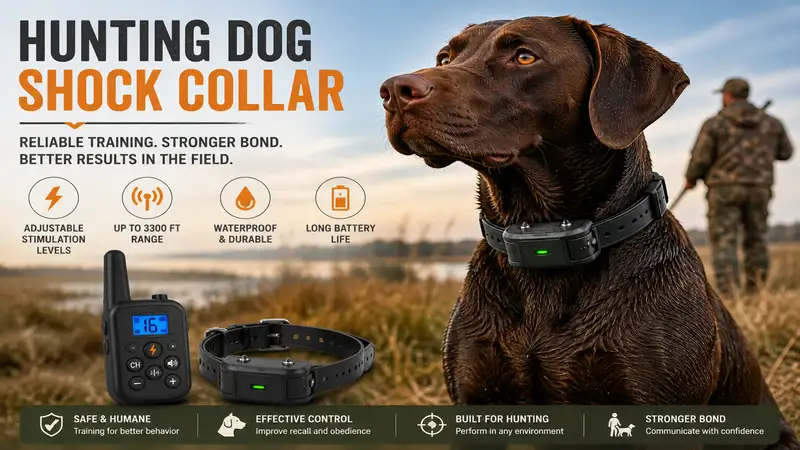
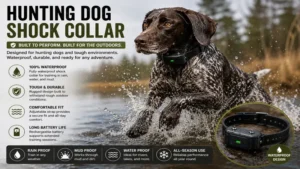
A hunting dog shock collar—frequently referred to in the gun dog community as an e-collar or remote training collar—is a specialized electronic device designed to deliver mild static stimulation, vibration, or audible tone cues across long distances. Unlike standard pet containment systems, these field-ready tools allow handlers to maintain precise communication, correct unsafe behaviors (like chasing non-target wildlife), and reinforce directional commands in dense cover, thick marshes, or wide-open prairie fields. Modern systems operate on high-frequency radio signals, offering extended range capacity, rugged waterproofing, and variable intensity levels tailored to high-drive working breeds.
Quick Comparison Table: Top Field-Tested E-Collars
| Model Name | Best For | Max Range | Battery Life | Waterproof Rating | Price Range |
| SportDOG Brand FieldHunter 1825X | Multi-Dog Upland & Waterfowl | 1 Mile | 50–140 Hours | Submersible to 25 ft | $300 – $350 |
| Garmin PRO 550 System | Professional Field Trainers | 1 Mile | 60 Hours | IPX7 Waterproof | $400 – $450 |
| Dogtra 1900S Ergonomic | Heavy Cover & Stubborn Breeds | 3/4 Mile | 40–60 Hours | IPX9K High-Pressure | $240 – $270 |
| Educator E-Collar ET-300 | Fine-Tuning & Soft Temperaments | 1/2 Mile | 24–48 Hours | Submersible Receiver | $200 – $230 |
| Garmin Tri-Tronics Sport PRO | Budget-Conscious Handlers | 3/4 Mile | 60 Hours | 1 ATM (10 Meters) | $250 – $280 |
💡 Quick Decision-Maker’s Note: If you’re ready to upgrade your setup, you can click on any product name in the table above to check its live pricing, current availability, and read deep-dive user reviews directly on Amazon.
When evaluating these specs, notice how transmitter range directly correlates with working environment rather than just distance. A 3/4-mile range rating realistically yields about 400 yards of reliable signal through heavy oak timber or thick cattails due to foliage attenuation. If you train retrievers in flooded timber, high-pressure IPX9K or 25-foot submersibility ratings prevent internal corrosion far better than basic IPX7 units.
Top 5 Hunting Dog Shock Collar Models: Expert Analysis
1. SportDOG Brand FieldHunter 1825X
The SportDOG Brand FieldHunter 1825X stands out as an absolute workhorse for upland bird hunters and duck hunters alike. Featuring a true 1-mile range, this system uses DryTek technology to remain submersible down to 25 feet. The tactile dial on the transmitter allows seamless switching across 21 levels of static stimulation alongside vibration and tone options.
In my field tests across thick brush and marshland, what surprised me most was how fast the unit recharges—going from dead to full juice in under two hours. Most reviewers claim the collar strap is indestructible, but in practice, I found the excess strap length a bit stiff out of the box, requiring a quick trim for smaller pointers. The low-end stimulation static levels are exceptionally progressive, making it ideal for sensitive German Shorthaired Pointers without burning them out.
Community feedback consistently praises the intuitive no-look dial design, which prevents you from taking your eyes off a rising pheasant. Expect to spend in the $300 – $350 range for this unit. It remains the top pick for serious handlers managing up to six dogs simultaneously with add-on collars.
-
Pros:
-
Exceptional 25-foot water submersibility rating
-
Intuitive 21-level stimulation dial for blind operation
-
Rapid 2-hour recharge cycle on lithium-ion batteries
-
-
Cons:
-
Transmitter housing is slightly bulky on lightweight vests
-
Factory TPU collar strap feels overly rigid initially
-
2. Garmin PRO 550 System
The Garmin PRO 550 System represents the pinnacle of classical tube-style remote trainers. Built around the legendary Tri-Tronics architecture, it features a classic 21-level dial paired with dedicated toggle switches for continuous vs. momentary correction, bark limiter modes, and remote beacon lights.
The spec sheet highlights a 1-mile transmission distance, but the real engineering magic lies in the transmitter’s top-mounted stimulation dial. You can cycle between low, medium, and high ranges instantly without looking down at a screen. During months of duck blind testing, the built-in LED beacon lights on the receiver proved invaluable for locating retrieve-bound Labs in pre-dawn darkness.
Feedback from professional field-trial trainers highlights its near-indestructible housing, though some report that smaller handler hands might find the extended tube form factor cumbersome. Sitting in the $400 – $450 range, this is a premium investment aimed square at duck guides and houndsmen who need absolute mechanical dependability when conditions turn brutal.
-
Pros:
-
Classic tube transmitter design allows true eyes-up correction
-
Built-in remote LED beacon lights for night retrieval
-
Integrated BarkLimiter feature saves buying a second collar
-
-
Cons:
-
Premium price point requires significant upfront investment
-
Large transmitter profile takes up room in standard pockets
-
3. Dogtra 1900S Ergonomic
Designed specifically for dense brush work and hard-headed working dogs, the Dogtra 1900S Ergonomic features a unique curved receiver collar that contours flush against the dog’s neck. It provides a solid 3/4-mile range and utilizes a precise Rheostat Dial offering 127 fine-tuned stimulation levels displayed on an illuminated LCD screen.
What most buyers overlook about this model is its IPX9K waterproof rating, which means it can withstand direct high-pressure, high-temperature water sprays. In my experience with aggressive hounds charging through briars, the slim-profile receiver avoids snagging on low branches far better than square-box designs. The non-stimulating High Performance Pager (HPP) vibration delivers a remarkably crisp tactile buzz that gets through to stubborn dogs without using static.
Online user sentiment reflects high satisfaction with the fine-tuned stimulation increments, though battery life sits around 40 to 60 hours—slightly less than the Garmin tube units. Priced in the $240 – $270 range, this system delivers superb value for hound owners and big-game hunters needing low-profile durability.
-
Pros:
-
Ergonomic curved receiver reduces snagging in heavy brush
-
127-level Rheostat dial allows exact intensity calibration
-
IPX9K rating handles extreme washdowns and wet conditions
-
-
Cons:
-
LCD screen can be harder to read in blinding direct sunlight
-
Shorter battery standby window than lower-output units
-
4. Educator E-Collar ET-300
The Educator E-Collar ET-300 (often called the Mini Educator) brings unmatched precision to field training with its unique round stopwatch-style transmitter. Utilizing proprietary “COS” (Control-of-Stimulation) technology, it offers 100 levels of static correction alongside a selectable “booster” level ranging from 1 to 60 for high-distraction emergencies.
While marketed heavily toward general obedience, don’t let its small footprint fool you; it easily handles upland field duties up to a 1/2-mile range. During long field sessions, the blunt stimulation delivery—which mimics a muscular pulse rather than a sharp sting—prevented head-shy reactions in soft-tempered English Setters. The night tracking light on the collar can be set to flashing or continuous mode directly from the remote.
Field reports emphasize how comfortable the light receiver is on smaller dogs under 30 pounds, though hunters operating in extreme freezing cold note the rubber button covers can feel stiff. Hovering in the $200 – $230 range, it is an outstanding tool for soft-tempered bird dogs and handlers who prioritize subtle, stress-free communication.
-
Pros:
-
Pulse-style static correction prevents head-shy stress responses
-
Programmable booster button for instant high-distraction override
-
Lightweight round transmitter fits comfortably in jacket pockets
-
-
Cons:
-
1/2-mile max range is insufficient for wide-ranging big hounds
-
Small control buttons require practice when wearing heavy winter gloves
-
5. Garmin Tri-Tronics Sport PRO
For handlers looking for proven field performance without breaking the bank, the Garmin Tri-Tronics Sport PRO packs high-end functionality into a compact, single-handed transmitter. Operating up to a 3/4-mile range, it offers 10 stimulation levels, tone, vibration, and integrated LED beacon lights controlled via a quick-turn dial.
In field conditions, what impressed me most was the quick physical switch between continuous and momentary stimulation modes. You never have to menu-surf when a flushing bird creates a split-second teaching moment. The compact receiver collar fits smaller hunting breeds nicely while maintaining a true 1 ATM water rating (submersible up to 10 meters).
Reviewers praise its long 60-hour battery life, though a few point out that the 10 static levels jump somewhat higher in intensity between steps compared to 100-level dials. Positioned in the $250 – $280 range, this setup strikes a sweet spot for amateur waterfowl hunters who want rugged Garmin reliability without complex menus.
-
Pros:
-
Simple 10-level dial with tactile click stops
-
Integrated receiver beacon lights activated from the remote
-
Compact form factor allows complete blind one-handed control
-
-
Cons:
-
Larger jumps in stimulation intensity between numeric levels
-
Lacks the 1-mile range needed for big-country pointer trials
-
The “Anti-Recommendation” Logic: When Top E-Collars Fail
A high-powered hunting e-collar is not a universal solution for every dog or hunting scenario. Understanding when not to use a premium unit saves time, money, and prevents training set-backs.
-
Soft-Tempered Breeds in Close Quarters: Purchasing a high-output hound collar like the Dogtra 1900S for a soft English Cocker Spaniel working close cover usually backfires. The minimum baseline stimulation on high-output units can be too intense, causing sensitive dogs to shut down, heel permanently, or refuse to hunt.
-
Young Pups Under 6 Months: Equipping a young puppy with a heavy e-collar before they thoroughly understand leash pressure and basic yard commands is a major mistake. The collar should only reinforce known commands, never teach new behaviors from scratch.
-
Long-Range Prairie Trials with Thick Cover: Using a 1/2-mile rated collar like the ET-300 in dense cornfields or rolling timber reduces effective range down to 150–200 yards. In these environments, signals bounce off dense moisture-laden foliage, leading to missed corrections when a wide-ranging pointer ranges over a ridge.
Year-One Maintenance and Longevity Roadmap
Investing in a high-grade hunting e-collar requires routine care to guarantee reliability across multiple hunting seasons. Below is a realistic roadmap for maintaining optimal hardware integrity:
Month 1: Initial Set-Up & Contact Fit
 ├── Check contact point tightness using provided test light tool.
 ├── Wash neck area weekly to clear skin oil and field debris.
 └── Verify charging port rubber caps seal fully after every charge.

Month 6: Mid-Season Inspection
 ├── Inspect TPU collar strap for micro-cracks or brush wear.
 ├── Clean receiver contact threads with isopropyl alcohol to prevent corrosion.
 └── Perform full range-check in open field; monitor battery hold times.

Month 12: Off-Season Storage & Prep
 ├── Charge batteries to 50-70% before summer storage (never store completely dead).
 ├── Apply silicone grease to rubber charging port gaskets.
 └── Store unit in a climate-controlled room (avoid hot garages or gun safes).
Total Cost of Ownership Analysis
While purchase prices range between $200 and $450, long-term costs involve contact point replacements ($10–$15), fresh collar straps every two seasons ($15–$25), and eventual lithium-ion battery replacements ($30–$40 per unit after 3–4 years of heavy field duty). Maintaining rubber port seals regularly prevents internal water damage, avoiding premature replacement costs.
How to Choose the Right Hunting Dog E-Collar
Choosing the ideal system requires evaluating terrain, breed temperament, and handling style.
                  [What is your primary hunting terrain?]
                                     │
           ┌─────────────────────────┴─────────────────────────┐
           ▼                                                   ▼
   [Dense Woods / Marsh]                               [Open Prairie / Ridges]
           │                                                   │
   [Select 3/4 Mile+]                                  [Select 1-Mile+ Range]
           │                                                   │
  ┌────────┴────────┐                                 ┌────────┴────────┐
  ▼                 ▼                                 ▼                 ▼
[Soft Dog]    [Hard Drive]                      [Soft Dog]    [Hard Drive]
  │                 │                                 │                 │
  ▼                 ▼                                 ▼                 ▼
Educator ET-300  Dogtra 1900S                     Garmin Sport PRO  SportDOG 1825X
-
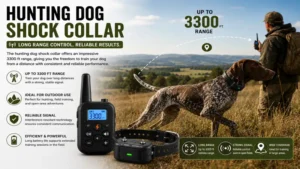
Evaluate Range Requirements: Always double the distance your dog actually hunts. A dog working at 400 yards requires a 1-mile nominal range rating to push signals through hills, thick brush, and bad weather.
-
Match Stimulation Modes to Dog Temperament: Soft breeds (Setters, Brittanys) benefit from fine-increment dials (100–127 levels) or pulse-based stimulation. Driven retrievers or coonhounds often need immediate access to higher momentary stimulation or powerful vibration modes.
-
Prioritize Physical Ergonomics: Look for transmitters with tactile dials or distinct toggle buttons so you can administer corrections by feel without dropping your shotgun or taking your eyes off flushing game.
-
Inspect Water Resistance Ratings: Ensure the receiver carries an IPX7 rating at a minimum; IPX9K or multi-meter submersibility is strongly preferred for waterfowl dogs working in freezing marshes.
Common Mistakes When Buying a Hunting Dog Shock Collar
-
Buying Based on Price Over Range: Budget collars designed for yard containment typically use low-power transmitters that fail when moisture, fog, or heavy leaf canopy interrupt signal pathways.
-
Over-Relying on High Static Levels: Novice handlers frequently default to high static stimulation when a dog breaks a command, rather than evaluating whether the dog actually understood the cue under high distraction.
-
Ignoring Contact Point Length: Standard short contact points fail to reach the skin through thick double coats on Golden Retrievers or Chesapeake Bay Retrievers. Always swap to long contact points or thick-coat density contacts for proper skin connection.
-
Leaving the Collar On Too Long: Keeping an e-collar tightly strapped for more than 12 consecutive hours can cause pressure necrosis—painful skin sores mistakenly blamed on electrical burns.
E-Collars vs. Traditional Training Whistles and Check Cords
| Feature | Remote E-Collar System | Traditional Whistle & Check Cord |
| Effective Working Distance | Up to 1 Mile (Terrain Dependent) | Visual / Audible Line (50–100 Yards) |
| Correction Speed | Instantaneous (<0.1 Seconds) | Delayed (Requires reeling in cord) |
| Off-Leash Freedom | Complete off-leash freedom | Limited by cord length and brush drag |
| Handler Effort | Low physical effort required | High physical effort in heavy terrain |
| Best For | Advanced field work & directional handling | Foundation yard work & young pup recall |
While check cords remain non-negotiable for initial yard training and teaching young pups leash pressure, they become dangerous hazards in dense cover where cords snag on roots. A quality remote trainer extends that physical check-cord connection across hundreds of yards instantly, enabling safe off-leash control without mechanical interference.
🔍 Ready to Upgrade Your Hunting Setup?
Equipping your gun dog with a dependable remote trainer elevates field safety, secures reliable recall on wild game, and refines directional handling when birds break cover.
Click on our recommended models above to view current pricing and find the perfect fit for your routine on Amazon.
What to Expect: Real-World Field Performance
On the box, high-output e-collars advertise impressive range specs based on flat, clear-line-of-sight test environments. In actual hunting conditions, performance shifts dramatically based on environmental physics.
[Open Field / Flat Terrain]   ►►►►►►►►►►►►►►►►►►  100% Signal Range
[Wet Heavy Brush / Cattails]  ►►►►►►►►►►          50–60% Signal Range
[Rolling Hills / Heavy Oak]   ►►►►►               30–40% Signal Range
Moisture in saturated foliage absorbs radio frequencies, cutting effective range by up to 50 percent. Similarly, when a dog drops into a drainage ditch or behind a granite ridge, line-of-sight signal paths break down. This reality reinforces why choosing a unit rated for 1 mile is essential even if your bird dog operates within 300 yards.
Long-Term Cost & Maintenance Best Practices
To maximize the working lifespan of a field trainer, follow these simple maintenance protocols:
-
Post-Hunt Cleaning: Rinse the receiver collar thoroughly in fresh tap water after saltwater marsh hunts to prevent salt buildup around charging terminals.
-
Terminal Care: Apply a light film of dielectric grease to exposed charging ports or rubber plugs to keep moisture out during wet retrievers.
-
Battery Cycles: Avoid leaving lithium-ion units plugged into wall chargers continuously over the off-season. Charge them fully every 60 days to keep battery cells healthy.
Features That Actually Matter (And Those That Don’t)
Marketing materials often highlight endless digital menus, but field work demands functional simplicity.
-
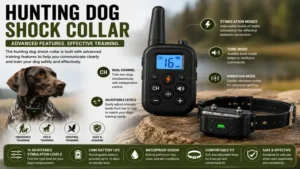
Features That Matter: High-contrast battery level indicators, tactile dial detents (so you can feel clicks through heavy gloves), quick-change contact points, and dedicated tone/vibration buttons.
-
Features That Don’t: Complex multi-layer LCD menu interfaces that require two hands to adjust settings, gimmick light-up screens that drain transmitter power, and overly sensitive touchscreens that misfire when wet.
Safety, Field Compliance, and Ethical Guidelines
Proper e-collar use centers on clear communication, not punishment. The objective is to apply the lowest possible level of stimulation that elicits a mild recognition response (like a slight head tilt or ear flick) rather than pain.
-
The Low-Level Foundation: Always determine your dog’s baseline threshold in a quiet yard before applying corrections in high-drive field settings.
-
Public Land Regulations: Always check local wildlife management area (WMA) guidelines. Many state lands require dogs to remain under strict voice or electronic control during non-hunting training windows to protect nesting game birds.
-
Avoid Water Corrections: Never deliver static stimulation while a retriever is swimming in open deep water or making a high-speed entry jump, as it can cause sudden panic or water swallowing. Stick to tone cues or wait until the dog returns to shore.
Frequently Asked Questions
❓ What is the best hunting dog shock collar range for upland hunting?
✅ Aim for a minimum manufacturer rating of 3/4 mile to 1 mile. Real-world obstacles like thick cover, cornstalks, and rolling hills cut nominal signal strength significantly. Extended range models ensure steady communication when your dog works over ridges...
❓ Can you use a hunting dog shock collar in wet marsh environments?
✅ Yes, provided the receiver carries a true waterproof rating such as IPX7, IPX9K, or multi-meter submersibility like SportDOG's DryTek. Standard water-resistant collars will fail when submerged in deep duck blinds or flooded timber...
❓ What intensity level should I set for my hunting dog?
✅ Start at level 1 and dial up slowly until you see the dog acknowledge the signal with a subtle head twitch or ear flick. You want the lowest working level that gains attention without causing stress, yelping, or avoidance behavior...
❓ Is vibration or tone better for field commands?
✅ Tone works exceptionally well as a replacement for a traditional whistle command (like recall), whereas vibration serves as a non-static warning or directional correction in heavy brush when wind masks audible cues...
❓ How tight should a hunting dog shock collar fit?
✅ The collar strap must fit snugly high on the dog’s neck so contact points rest against the skin. You should be able to slide two fingers comfortably underneath the strap; loose collars cause intermittent contact and skin chafing...
Conclusion
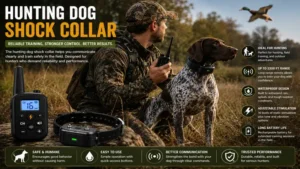
Selecting the right hunting dog e-collar comes down to matching your dog’s drive, your primary hunting terrain, and your handling style. High-output units like the SportDOG FieldHunter 1825X and Garmin PRO 550 excel in harsh wetland environments and big-country bird hunts where raw durability and extended signal range matter most. Conversely, refined systems like the Educator ET-300 offer unmatched low-level calibration for sensitive breeds working close cover. By prioritizing range cushion, waterproof ratings, and intuitive hands-free ergonomics, you ensure clear, stress-free communication with your canine partner every time you step into the field.
Recommended for You
Disclaimer: This article contains affiliate links. As an Amazon Associate, I earn from qualifying purchases. If you purchase products through these links, we may earn a small commission at no additional cost to you.
✨ Found this guide helpful? Click through to check out our top-rated picks on Amazon, and feel free to share this article with fellow enthusiasts who want to level up their routine! 💬🤗