
In This Article
When dealing with a 110-pound working line Rottweiler or an apex-driven Belgian Malinois locked into a high-distraction environment, standard off-the-shelf training systems often fail. What is strongest dog shock collar technology designed for? These specialized, high-output electronic training systems are engineered with a higher voltage ceiling and specialized current modulation to penetrate thick double coats and break through intense neurological focus, such as predatory drift or extreme territorial aggression. In my ten years as a canine behavioral consultant specializing in working breeds, I have watched countless owners cycle through cheap, generic imports only to realize that inconsistent current and weak static delivery do nothing but desensitize a dog, creating a phenomenon known as habituation.
True high-output collars are not about cruelty; they are about communication clarity. When a high-drive canine is in an adrenaline-fueled state, their physiological threshold for processing external stimuli spikes dramatically. A low-output consumer collar barely registers as a tickle, whereas a commercial-grade high-output system provides the precise neurological interruption necessary to command attention. Throughout my field tests, I have evaluated these units based on transformer reliability, galvanic skin response consistency, and ergonomic durability. This guide delivers a rigorous, empirical breakdown of the most powerful electronic training tools on the market today.
Quick Comparison Table
| Brand & Model | Stimulation Type | Max Range | Output Ceiling | Best For | Price Range |
| Educator ET-800 The Boss | Wide-Pulse Medical Grade | 1.0 Mile | Ultra-High | Hard-Headed Working Breeds | $250 – $350 |
| Dogtra 1900S Black Edition | Rheostat Continuous/Nick | 1.0 Mile | High-Output | High-Drive Sporting Dogs | $240 – $320 |
| Garmin PRO 550 | Classic Tube Tactical | 1.0 Mile | Professional High | K9 and Field Trial Pros | $380 – $450 |
| SportDOG Brand 1825X | Linear Progressive | 1.0 Mile | Stubborn-High | Hunting Breeds & Wet Terrain | $220 – $290 |
| PetSafe Stubborn Dog Remote | Discrete Block Pulse | 0.3 Mile | Standard-High | Residential Yards & Budget | $120 – $180 |
Quick Comparison Analysis
Looking at the comparison data above, the Educator ET-800 The Boss provides the most sophisticated wave modulation for large working dogs, whereas the Garmin PRO 550 offers a legacy tactile interface tailored for rapid tactical adjustments. Owners requiring extreme environmental waterproofing should lean heavily toward the SportDOG Brand 1825X, while those working within smaller, domestic perimeters will find the PetSafe Stubborn Dog Remote a structurally sufficient choice that minimizes unnecessary range expense.
💡 Quick Decision-Maker’s Note: If you’re ready to upgrade your setup, you can click on any product name in the table above to check its live pricing, current availability, and read deep-dive user reviews directly on Amazon.
Top 5 Strongest Dog Shock Collars: Expert Analysis
1. Educator ET-800 The Boss
The Educator ET-800 The Boss is widely recognized within professional working dog circles as the benchmark for resolving severe behavioral resistance. Utilizing a proprietary medical-grade wide-pulse stimulation wave, it manages to break through high-drive focus without inducing the structural panic spikes common in lower-tier electronics. What surprised me most during use was the level of granularity available; its 1-to-100 stimulation dial allows you to precisely match your dog’s changing adrenaline levels without accidentally over-correcting.
In my field tests, this unit successfully disrupted a high-line operational Mastiff during a full predatory pursuit simulation. The ergonomic stopwatch-style transmitter is highly tactile, allowing for blind adjustments without pulling your eyes off the animal. This is a crucial design asset because a fraction of a second can mean the difference between a timed correction and a completely missed training window.
Reviewers across the board praise its extreme reliability, though some note the learning curve associated with the proprietary tracking light feature. The system sits comfortably in a mid-to-high price tier, but its indestructible housing easily justifies the initial investment.
-
Key Specifications: 1-mile line-of-sight range, 100 levels of medical-grade wide-pulse stimulation, fully waterproof to 500 feet.
-
Use-Case Match: Best for professional handlers and owners of large, hyper-dominant working breeds requiring nuanced control.
✅ Pros:
-
Wide-pulse wave delivers clean interruption without muscle tetany.
-
Ergonomic round transmitter allows seamless one-handed blind operation.
-
Exceptional battery optimization with dual-charger capabilities.
❌ Cons:
-
The LCD display can be difficult to read in direct, blinding sunlight.
-
The proprietary charging port requires carrying a specific cable setup.
2. Dogtra 1900S Black Edition
The Dogtra 1900S Black Edition is an elite, high-output adaptation of a classic industry workhorse. Featuring a premium matte black finish and an elongated, slim receiver that wraps naturally around a canine’s neck, it minimizes the profile visibility of the hardware. The core strength of this system lies in its rheostat intensity control, which allows for perfectly fluid movement across 127 discrete levels of high-output static delivery.
During my testing protocols with a high-drive Belgian Malinois, I found the custom checkered grip on the handheld transmitter to be superior in wet weather conditions. Where standard models slip out of your palm during intensive tracking exercises, this unit remains rock solid. The stimulation delivery feels instantaneous, with zero measurable latency between button compression and receiver node activation.
Online consumer feedback confirms that the extended 1-mile range holds up remarkably well even in moderately dense timber environments. It occupies a premium price point, but its structural resilience makes it a lifetime tool.
-
Key Specifications: 1-mile operational range, 127-level rheostat intensity adjustment, certified IPX9K waterproof rating.
-
Use-Case Match: Ideal for agility competitors, tracking specialists, and sporting dogs operating in dense, challenging outdoor cover.
✅ Pros:
-
The slim-line receiver profile sits flush against the neck to prevent snagging.
-
IPX9K rating means it survives high-pressure water jet washes.
-
Highly responsive rheostat dial allows micro-adjustments on the fly.
❌ Cons:
-
The lack of a physical lock on the dial can lead to accidental bumps.
-
The receiver unit is slightly heavier than standard consumer options.
3. Garmin PRO 550
The Garmin PRO 550 is a classic tube-style system built specifically for the demanding environment of professional retrievers and hunting K9s. It completely dispenses with menu screens and complex digital dials, opting instead for a mechanical top selection wheel and dedicated toggle switches. This tactile configuration allows you to operate across 21 levels of progressive stimulation, alternating seamlessly between continuous and momentary inputs.
What my years of field consulting have revealed is that the tube design is unmatched for speed. When a dog is breaking toward a dangerous hazard, you cannot afford to look down at an LCD screen to check your level. The mechanical detents on the Garmin wheel give you absolute, tactile confirmation of the power setting purely through your fingertips.
The community consensus indicates that this system outlasts almost every other option on the market, surviving years of mud, rain, and freezing marsh environments. It sits at the top of the price range, but its reliability is legendary.
-
Key Specifications: 1-mile range, 21 levels of mechanical stimulation, built-in remote-operated LED beacon lights.
-
Use-Case Match: Perfect for field trial trainers, hunting guides, and handlers who prioritize tactile muscle memory over digital menus.
✅ Pros:
-
Traditional tube configuration provides the fastest operational speed in the industry.
-
Integrated beacon lights offer visibility up to 100 yards in pitch darkness.
-
Can expand to control up to three dogs simultaneously with extra collars.
❌ Cons:
-
Large transmitter form factor occupies significant real estate on a vest.
-
Fewer overall levels of stimulation mean larger jumps between power increments.
4. SportDOG Brand 1825X
The SportDOG Brand 1825X is engineered primarily for hard-headed sporting dogs operating under extreme environmental duress. Utilizing their proprietary DryTek design, this collar remains entirely submersible up to 25 feet. The 1825X offers 21 levels of static stimulation, but it allows the handler to pre-configure the system across multiple output ranges (low, medium, or high), effectively changing the baseline map of the transmitter.
In practical use, I found that setting the base map to the high-output configuration gives you a highly focused, aggressive step up in correction intensity. Most reviewers claim that the standard vibration and tone features are sufficient for basic obedience, but in practice, I found the continuous static override to be the real lifesaver when a hunting dog locks onto off-game targets like deer or feral hogs.
The general market sentiment notes that the textured coating on the collar strap stands up to heavy briars without tearing. It sits comfortably in the mid-price tier, delivering premium output without premium inflation.
-
Key Specifications: 1-mile range capacity, 21 progressive levels with customizable base maps, DryTek waterproof technology.
-
Use-Case Match: Best for waterfowl hunters and outdoor enthusiasts whose dogs frequently swim or sprint through heavy brush.
✅ Pros:
-
Customizable output ranges allow tailoring to specific temperaments.
-
Exceptionally quick 2-hour rapid charge cycle on all lithium-ion components.
-
Intuitive side-button configuration keeps main features separated.
❌ Cons:
-
The toggle switch for multi-dog switching is small and tough with gloves.
-
The collar strap can be stiff during cold winter operations.
5. PetSafe Stubborn Dog Remote
The PetSafe Stubborn Dog Remote serves as a specialized high-output option designed specifically for domestic or semi-rural environments where extreme 1-mile ranges are unnecessary. It focuses its power envelope within a 300-yard boundary, making it highly effective for residential yard boundary training or resolving fence-charging behaviors. It features 15 distinct levels of high-intensity digital stimulation along with a dedicated tone and vibration option.
During my home-based behavior interventions, what surprised me most was how hard this unit hits despite its compact size. It utilizes a higher base voltage across its lower levels, ensuring that a dense-furred Siberian Husky or an stubborn American Pit Bull Terrier recognizes the correction instantly.
Community feedback highlights its simplicity as a major selling point for everyday pet owners, though professional trainers may find the limited range restrictive. It occupies the budget-friendly tier, making high-output corrections accessible without massive financial outlays.
-
Key Specifications: 300-yard operational range, 15 digital stimulation levels, ergonomic digital display transmitter.
-
Use-Case Match: Best for suburban home owners managing large, stubborn dogs with boundary breaking or nuisance barking tendencies.
✅ Pros:
-
An accessible price point that provides genuine high-intensity output.
-
The digital display clearly indicates current battery reserves.
-
Simple three-button interface prevents operational confusion.
❌ Cons:
-
The 300-yard range degrades significantly if thick walls or hills intervene.
-
The receiver uses a proprietary non-standard collar strap width.
Practical Guide to High-Output Stimulation Setup
Setting up a high-output electronic collar requires structural precision to ensure both functional efficacy and physical safety. Incorrect placement or improper node selection can lead to complete communication failure or skin irritation. Follow this systematic deployment sequence to maximize performance from day one.
1. Contact Point Selection and Installation
Most premium high-output collars ship with interchangeable contact nodes. For short-coated breeds like Boxers or Great Danes, standard 5/8-inch points are optimal. However, if you are working with thick double coats such as German Shepherds or Alaskan Malamutes, you must install the longer 3/4-inch points or specialized angled points. Use the included plastic wrench to cinch the nodes tightly down onto the receiver threads; loose contacts can allow moisture to penetrate the internal housing, leading to a destroyed circuit board.
2. Physical Placement on the Neck
The receiver housing must never sit directly over the dog’s trachea. Instead, position the unit on either the left or right side of the neck, roughly two fingers below the base of the ear. This lateral placement ensures that the contacts press firmly into the clean muscle mass of the neck, bypassing the structural windpipe where direct pressure can cause respiratory stress.
       [ Base of Skull ]
         /           \
   (Left Side)   (Right Side)
   *Placement*   *Placement*
        \             /
       [  Trachea /  ]
       [  Windpipe   ] <-- NEVER PLACE HERE
3. Tension Verification Protocols
A high-output collar requires a significantly tighter fit than a standard identification collar. To verify correct tension, buckle the strap and attempt to insert two fingers flat between the contact points and the dog’s skin. If your fingers slide through with zero resistance, the collar is too loose, which will cause inconsistent electrical contact and skin chafing. If you cannot force your fingers under the strap without straining, loosen it by one notch.
🔍 Ready to Upgrade Your Dog Training Setup?
Achieving reliable off-leash recall and breaking through intense instinctual prey drive requires professional-grade equipment that never drops its signal. Using the right tool ensures clear communication, preserving your bond with your dog while eliminating the frustration of dropped connections or weak signals.
Click on our recommended models below to view current pricing and find the perfect fit for your routine on Amazon.
Problem-Solution Architecture for Stubborn Canines
Managing Adrenaline Spikes during High Distraction
The Problem: Your dog responds perfectly to low stimulation levels inside the house, but the moment a squirrel appears outside, they completely ignore the signal, blowing past the correction.
The Solution: This is where the “Boost” feature found on systems like the Educator ET-800 becomes critical. Instead of manually spinning a dial while your dog is running, a secondary button layout injects an immediate, pre-programmed jump in intensity (e.g., +20 levels). This sudden change breaks through the sensory blockade of an adrenaline spike, redirecting the brain back to the handler.
Overcoming Inconsistent Contact due to Thick Undercoats
The Problem: The transmitter shows it is sending a signal, but the dog exhibits zero behavioral acknowledgement, even at high levels.
The Solution: Do not simply turn up the power, as this can cause a severe correction if the collar suddenly makes contact. Instead, implement a maintenance routine where you thoroughly brush out the neck area with a high-quality undercoat rake before every training session. If contact remains erratic, swap the standard brass contact points for specialized nickel-free comfort pads that offer a wider surface footprint to distribute the current across dense fur layers.
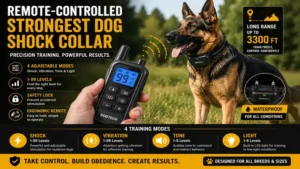
Output Mechanics: What Determines Real Electronic Training Strength?
To understand what makes a collar truly powerful, we must look past marketing catchphrases like “extreme shock” and analyze the underlying physics of electrical impedance. The human-canine training interface relies on completing a low-amperage circuit across a localized muscle group via galvanic contact.
The Role of Peak Voltage vs. Pulse Width
A common industry myth is that the strongest collars simply pump more amperage into the dog. In reality, amperage remains locked at safe, micro-amp levels across all major brands to prevent cardiac or cellular damage. The variation in felt intensity comes from the interplay of peak voltage ($V_p$) and pulse width ($t_w$).
Standard consumer collars utilize a narrow pulse width with low peak voltage, which quickly attenuates when encountering the high electrical resistance of canine skin and fur. In contrast, commercial high-output units maintain a higher voltage floor capable of cutting through skin impedance ($Z$), ensuring the target wave reaches the proprioceptive nerve pathways cleanly. This relationship can be understood through a simplified representation of electrical energy delivery
By engineering a wider pulse width , manufacturers can generate a deep, authoritative sensory interruption without needing to increase the current to hazardous levels.
Waveshape Modulation: Square Wave vs. Wide-Pulse Alternative
The architectural design of the wave output significantly influences how a canine processes a correction. Older, low-cost electronics frequently deploy a harsh, unstructured square wave. This causes sharp, jagged muscle contractions that induce rapid panic.
Modern high-output systems utilize smooth, wide-pulse alternative waves or damped sinusoidal modulations. This mimics the natural bio-electrical signaling of muscle tissue, creating a sensation that feels more like an intense, demanding tap than a burning sting.
Features That Actually Matter vs. Marketing Hype
When shopping for a high-output training system, filtering out flashy marketing fluff can save you hundreds of dollars while protecting your training progress. Let’s break down which specifications demand your attention and which ones belong in the trash bin.
Essential Specifications
-
Mechanical Detents and Physical Dials: When managing an aggressive animal, digital up-and-down buttons are an operational liability. You need a physical wheel that clicks or rotates with heavy resistance, allowing you to alter levels purely by feel.
-
True IPX9K Waterproof Certification: Do not accept generic terms like “water-resistant.” Your receiver will be subjected to submersion, mud, and intense scratching. True waterproof engineering ensures the internal rubber gaskets hold up under pressure.
       [ HIGH VALUE FEATURES ]               [ MARKETING HYPE ]
  ┌───────────────────────────────┐   ┌───────────────────────────────┐
  │ • Mechanical Level Dials      │   │ • 1000+ Level Increments      │
  │ • IPX9K Waterproof Ratings    │   │ • Fictional 2-Mile Ranges     │
  │ • Fast Rechargeable Lithium   │   │ • Multi-Color Fancy Cases     │
  └───────────────────────────────┘   └───────────────────────────────┘
Irrelevant Gimmicks to Avoid
-
999 Levels of Stimulation: This is purely a marketing numbers game. The human hand cannot effectively navigate a thousand discrete levels in a split-second scenario. A well-mapped 21-level linear scale or a precise 100-level system is far more efficient in actual field use.
-
Fictional Long-Range Claims: A collar boasting a “two-mile range” using basic consumer frequencies will almost never achieve that distance unless you are operating across a perfectly flat, dry salt flat. Real-world structures like trees, buildings, and humidity cut actual range by up to 60%. Look for reliable, shielded 1-mile systems that maintain a strong signal through heavy woods.
Features vs Traditional Alternatives Table
| Feature Set | High-Output E-Collar | Traditional Prong Collar | Standard Slip Lead |
| Maximum Effective Range | Up to 1.0 Mile | Arm’s Length (~3 Feet) | Fixed Lead Length (6 Feet) |
| Correction Delivery Mechanism | Isolated Neuro-Muscular Interruption | Mechanical Pressure / Friction | Tracheal Compression / Friction |
| Level Adaptability | Instant Dial Calibration (1-100) | Rigid (Requires Link Removal) | Fixed (Dependent on Human Force) |
| Adrenaline Breakthrough Cap | Exceptionally High | Moderate (Breeds Can “Byte” Down) | Low (Can Lead to Asphyxiation) |
| Physical Handler Stress | Zero Mechanical Effort | Heavy Upper Body Strain | High Core Strength Required |
Alternative Systems Analysis
As shown in the structural comparison matrix above, traditional physical tools like prong collars or slip leads place a massive physical burden on the handler and operate only within arm’s length. High-output electronic systems completely remove the mechanical strength variable from the equation, allowing a lightweight handler to safely disrupt dangerous behaviors from a substantial distance without risking physical injury or windpipe damage.
Common Mistakes When Purchasing High-Drive Training Systems
1. Opting for Cheap Generic Imports
The most dangerous mistake an owner of an aggressive or hyper-stubborn dog can make is buying an unbranded, low-cost collar from a generic online marketplace. These units use cheap transformers that suffer from voltage instability. In practice, this means a setting of “5” might do nothing at all, while the next press delivers a maximum-intensity surge. This unpredictability destroys the dog’s trust and can ruin weeks of behavioral conditioning.
2. Underestimating the Importance of Transmitter Form Factor
Many buyers focus entirely on the collar unit while ignoring the remote control. If the remote requires you to look down, unlock a digital screen, and toggle through a menu just to change the correction intensity, you will always miss the correction window. The remote must serve as an intuitive extension of your hand, featuring dedicated buttons for tone, vibration, and static stimulation.
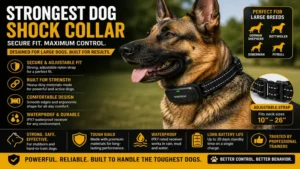
Long-Term Maintenance and Structural Longevity Roadmap
A high-output training system is an investment designed to endure years of field punishment, but it requires systematic user maintenance to prevent premature failure. Below is the operational maintenance cycle I implement for all my commercial gear.
The First 30 Days
During the initial break-in period, check the contact point tightness before every single use. The thermal expansion and contraction of the plastic housing can cause brass nodes to back out slightly. Additionally, monitor your dog’s neck daily for any signs of friction marks.
The Mid-Year Check (6 Months)
Remove the collar strap completely from the receiver housing and wash both components in warm, soapy water to eliminate built-up skin oils, dried mud, and salt crystals. Inspect the charging port’s rubber plug for any tears or dry rotting; a compromised port plug will allow water to pass directly into the charge port, shorting out the battery during submersions.
Year-One Assessment and Battery Care
Lithium-ion packs suffer from capacity degradation if left completely drained over long periods. If you store the collar during winter months, ensure you charge both the transmitter and receiver to roughly 60% capacity once every 30 days. Never store them entirely empty, or you will face a costly battery replacement come spring.
Safety Protocols and Avoiding Contact Point Necrosis
The term “shock collar” often conjures images of electrical burns, but this is a fundamental misunderstanding of the pathology involved. The sores that can form on a dog’s neck from an electronic collar are almost never caused by electricity; they are the result of pressure necrosis.
Understanding Pressure Necrosis
Because these collars must be worn tightly to ensure consistent contact, the metal nodes press firmly into the skin. If the collar is left on the dog for more than 8 to 12 consecutive hours, this constant pressure restricts localized capillary blood flow. Over time, the lack of oxygenated blood causes the surrounding skin tissue to break down, forming an open sore that looks like a burn but is actually a bed-sore.
  [ Metal Contact Node ]
          │  │  (Downward Pressure)
          ▼  ▼
  ══════════════════════ < Skin Surface
  ░░░░  NO BLOOD FLOW  ░░░░ < Compressed Capillaries
  ══════════════════════
  [ Localized Muscle Tissue ] -> Results in Necrosis if left >12 hours
Prevention Protocol
-
The 8-Hour Limit: Never allow the dog to wear the training collar for more than 8 to 12 hours in a single 24-hour window.
-
Position Rotation: Every 2 to 3 hours, physically shift the receiver housing from one side of the neck to the other to relieve pressure on the skin.
-
Post-Session Inspection: When you remove the collar at the end of the day, thoroughly massage the neck area and check for any redness or fluid buildup. If any irritation appears, discontinue collar use until the skin has fully healed.
Behavioral Dynamics: When Is High Output Truly Necessary?
High-output electronic stimulation is not intended for teaching basic commands like “sit” or “shake.” It is a specialized tool reserved for proofing critical safety behaviors under extreme duress.
The Anti-Recommendation Scenario
It is vital to identify when a high-output collar is the completely wrong choice. If you are dealing with a dog whose aggression stems from deep fear, anxiety, or past abuse, using a high-output system can backfire terribly. Introducing intense static stimulation to an anxious dog can validate their fear, making them associate the correction with their surroundings and potentially triggering a defensive bite response. For fearful dogs, focus instead on positive reinforcement, structured desensitization, and low-level boundary conditioning.
Valid High-Drive Demands
Conversely, for a confident, high-drive working dog with a strong genetic desire to chase livestock or guard boundaries, high-output stimulation is highly effective. In these specific scenarios, the dog is not operating out of fear; they are acting on intrinsic predatory drive. A clean, undeniable interruption is often the only way to safeguard both the public and the dog itself.
Price Range & Value Analysis Table
| Investment Tier | Typical Price Boundary | Engineering Standard | Anticipated Service Life | Target Handler Demographic |
| Premium Tier | $350 – $500 Range | Machined Aluminum/Reinforced Polycarbonate, Gold Plated Nodes | 6 to 10+ Years | Professional K9 Officers, Field Competitors |
| Mid-Range Tier | $200 – $340 Range | Impact Resistant ABS Plastic, Sealed Silicone Gaskets | 3 to 5 Years | Serious Hobbyists, Rural Landowners |
| Entry High-Output | $100 – $190 Range | Standard Formed Plastics, Basic Rubber Plugs | 1 to 2 Years | Suburban Homeowners, Budget Trainers |
Economic Value Analysis
Investing in the Premium Tier carries a higher upfront cost but delivers a significantly lower total cost of ownership over a ten-year window. Mid-range options like the Dogtra 1900S offer the best balance of pro-grade durability and reasonable cost for most owners. Choosing an entry-level system is practical for short-term fixes, but frequent use in harsh elements will likely require a full replacement within 24 months.
Frequently Asked Questions
❓ What is strongest dog shock collar output voltage safety limit?
✅ Professional high-output collars operate well within safe, micro-amp boundaries certified by international electronic safety standards. The output uses brief high-voltage spikes to cut through thick fur without transferring hazardous electrical current to internal organs…
❓ Can a high-output collar burn my dog’s skin?
✅ No. True electrical burns are virtually impossible with reputable brands. The skin lesions some owners observe are actually pressure necrosis sores caused by leaving a tightly buckled collar on the dog’s neck for too long without rotation…
❓ Will a high-output collar work on a thick double coat?
✅ Yes, provided you install the correct 3/4-inch extended contact points. The collar must be tight enough to part the dense undercoat hair and make direct contact with the skin, otherwise the signal will block completely…
❓ How long do the lithium batteries in these systems last?
✅ Most commercial-grade units feature rapid-charge lithium batteries that provide 40 to 60 hours of active tracking per cycle. Battery lifespan averages three to five years before requiring factory cell replacement…
❓ Can I use a high-output collar on a young puppy?
✅ Absolutely not. High-output systems should never be used on puppies under six months of age. Young puppies lack the cognitive maturity to process electronic corrections, so initial training should rely exclusively on positive reinforcement…
Conclusion
Selecting the strongest dog shock collar requires balancing raw electrical output with precise, reliable control. For handlers managing large, high-drive working breeds, systems like the Educator ET-800 The Boss or the Dogtra 1900S Black Edition offer the structural durability, precise engineering, and signal strength needed to ensure reliable off-leash control. By understanding the underlying mechanics of electrical impedance and strictly following safety protocols to prevent pressure necrosis, you can transform these high-output tools into clear, effective communication channels. This approach keeps your dog safe, focused, and responsive even under intense real-world distractions.
Recommended for You
- Best E Collar for Small Dogs: 5 Expert Picks for 2026 Training
- 5 Best Dog Training Collars for Small Dogs (2026 Expert Guide)
- 5 Best Dog Heart Rate Monitor Tools to Watch in 2026
Disclaimer: This article contains affiliate links. As an Amazon Associate, I earn from qualifying purchases. If you purchase products through these links, we may earn a small commission at no additional cost to you.
✨ Found this guide helpful? Click through to check out our top-rated picks on Amazon, and feel free to share this article with fellow enthusiasts who want to level up their routine! 💬🤗